
LASIK or LASEK? Your cornea thickness usually decides
LASIK or LASEK is rarely a matter of taste. Both lasers reshape the same corneal tissue, so the real question is how much cornea you have to spare and how long you can wait for your vision to settle. Here is how the doctors at Sky Eye Clinic in Seoul weigh the two.
By Sky Eye Clinic medical team
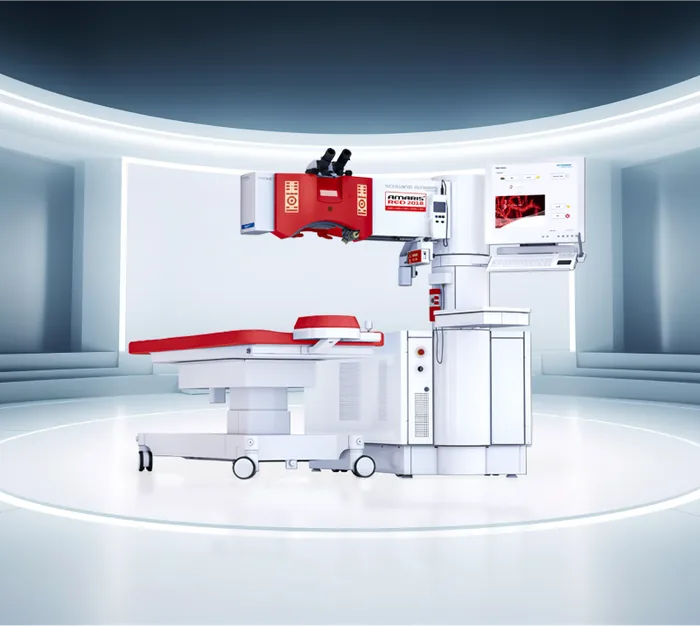
LASIK or LASEK: the short answer depends on your cornea
Corneal thickness is the main dividing line. If your cornea is thinner than a certain threshold, the doctors recommend a LASEK-type surgery, which preserves the most residual cornea, instead of LASIK. If the cornea has enough tissue to spare, LASIK stays on the table.
The examination result is what settles it. Serious visual side effects, although rare, have occurred when surgery went ahead despite an examination result advising against it.
Flap or no flap: what changes in the operating room
LASIK starts with a thin flap of about 160 micrometers, cut from the upper cornea with a microkeratome. The laser works on the tissue beneath, then the flap is laid back. LASEK skips the flap. Only the surface epithelium, about 50 micrometers, is removed before the laser is applied, and a protective contact lens covers the eye while the surface regrows.
| LASIK | LASEK | |
|---|---|---|
| Route to the cornea | Thin flap lifted, laser on the stroma | Surface layer removed, laser on the stroma |
| If the cornea is thin | May not suit; a LASEK-type surgery is advised | Fits when LASIK would leave too little cornea |
| First-day discomfort | About half a day | Up to 3 to 4 days |
| Flap risk | Flap-related complications can occur | No flap, so none of those complications |
Situations where LASEK usually fits better
When comparing LASIK or LASEK, these cases tend to point toward LASEK:
- A cornea too thin for your degree of myopia, which would leave too little stroma after LASIK.
- Contact sports, or a job where the eye could take a direct hit.
- A cornea that is unusually flat or steep, which raises the flap risk in LASIK.
- A need for extra correction after cataract surgery or ICL surgery.
High myopia with thin corneas has another route. New SMILE LASIK uses a 2mm micro-incision and no flap, and it is listed for that situation.
Recovery: how the first days compare
After LASIK, expect irritation, tearing and a grainy feeling for about half a day. Steroid eye drops are not used afterwards. Dry eye may last longer than it does after LASEK.
LASEK asks for more patience. Vision stays blurred for 5 to 7 days, and a mild to moderate foreign body sensation lasts 2 to 3 days. Light sensitivity or glare can linger for weeks to months. Steroid drops are required, and since they can raise eye pressure, you attend regular check-ups while taking them.
The pre and post-op guide covers preparation and aftercare for both.
Questions to bring to your exam
- How thick is my cornea, and how much would remain after treatment?
- Do I qualify for LASIK, or is a LASEK-type surgery advised?
- Is New SMILE LASIK listed for my prescription?
- How long would I need drops and check-ups afterwards?
The consultation and checkup are free, even if you decide against surgery. The whole range of options is laid out on our vision correction in Korea page.
If you are still torn between LASIK or LASEK, message us to book a free consultation and have your corneal thickness measured first.
Every surgery carries a risk of complications, and your doctor will go through them with you before you decide. Results vary by individual.
Questions answered
Is LASEK safer than LASIK?
It depends on your eyes. LASEK has no flap, so flap complications do not occur, but recovery is slower and steroid drops are required. Your examination decides which one fits.
Which has the longer early recovery, LASIK or LASEK?
LASEK. Early discomfort lasts about half a day after LASIK and up to 3 to 4 days after LASEK, and LASEK vision stays blurred for 5 to 7 days.
Do I need steroid drops after surgery?
After LASEK, yes, with regular eye pressure check-ups. After LASIK, steroid eye drops are not used.
I am nervous about the flap. Can I choose LASEK?
LASEK has no flap, and it is often recommended for thin corneas, contact sports or an unusually flat or steep cornea. Whether it suits you is decided at your exam.
Get your free consultation before you decide
- Free consultation and checkup, even if you decide against surgery
- Same price as Korean patients, no overseas surcharge
- Interpreters in English, Japanese and Chinese

