
Cataract & presbyopia
Cataract surgery Korea: lenses, laser and presbyopia care
If hazy vision or trouble reading up close is getting in the way, our Seoul center can help. We offer cataract surgery Korea patients travel for, plus care for presbyopia. Specialists operate in person, with laser and ultrasound equipment and a lens chosen for your eyes and daily life.
In this guide
Presbyopia & cataract basics
Holding your phone farther away, or seeing the world through fog, can both feel like aging eyes.
02Cataract tests & diagnosis
Good vision after surgery starts with a thorough exam.
03IOL types
The lens you choose decides how you see after surgery.
04Secondary cataract
Vision turning cloudy again after cataract surgery does not mean the cataract came back.
05Pre & post-op guide
Most daily activities are possible the day after surgery, but your eyes still need protection.
What our cataract and presbyopia center covers
Both conditions change how the lens inside your eye works. A cataract clouds the lens. Presbyopia makes the lens slower to focus on near objects. They can feel alike, so an eye exam is the only reliable way to tell them apart.
For cataract surgery Korea visitors and local patients alike, our center looks after both, from the first exam to follow-up care. A team of surgeons, optometrists and counselors checks each eye and manages the whole path, including aftercare.
Guides in this section
- Presbyopia and cataract symptoms and causes: how to tell the two apart, what each feels like and how cataract surgery works.
- Cataract tests and diagnosis: the exam before surgery, IOL power measurement and the laser and ultrasound systems we use.
- Cataract IOL types: monofocal and multifocal lenses compared, with each premium lens we use.
- Secondary cataract treatment: what to do when vision turns cloudy again after surgery.
- Cataract surgery recovery guide: day-by-day care and precautions after surgery.
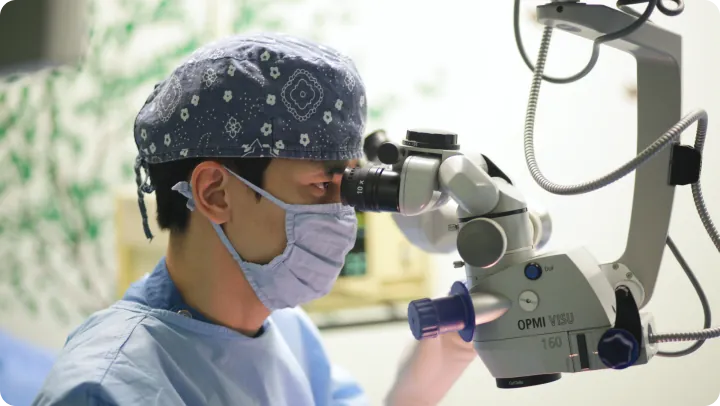
Surgeons who operate themselves
Results with multifocal lenses depend heavily on the surgeon's experience and technique. That is why it matters to have surgery at a clinic with deep surgical experience.
Complications can also appear during surgery, such as a tear in the posterior capsule, a displaced lens or vitreous prolapse. Our experienced medical staff can perform surgery safely and handle these problems if they occur.
Dr. Hahn Tae-Won leads the center as Center Director and specializes in cornea and cataract. Meet the full team on our doctors page.
Four reasons patients choose this center
- Research for safer care
A dedicated team of surgeons, optometrists and counselors assesses each eye and manages everything from examination to post-operative care.
- Wide range of equipment
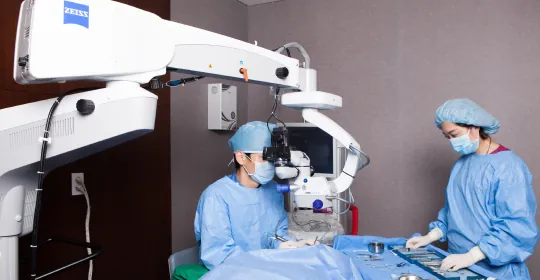
We use laser surgical equipment, ultrasound phacoemulsification equipment and many examination devices. See the full list on our equipment page.
- 1:1 lens matching
No two eyes are the same, so we offer many intraocular lenses. Lens size and power are calculated precisely for you.
- Strict infection control
Surgical staff disinfect their hands thoroughly, supplies are strictly sterilized and the operating room is kept at controlled temperature and humidity around the clock, in every season.
How we decide whether you need surgery
We avoid over-treatment. We recommend surgery only when your exam results, living environment and occupation suggest that your vision can improve.
We also aim for honest care: we do not charge excessive fees for examinations or surgery. Overseas and domestic patients pay the same fees, and your consultation is free. Interpreters who speak English, Japanese and Chinese are on site.
Not sure where to start? Read about presbyopia and cataract symptoms, then book your free consultation to have your eyes checked.
Questions answered
Is a cataract the same as presbyopia?
No. Presbyopia is a loss of focusing ability as the lens loses elasticity, so near objects look blurry. A cataract is a cloudy lens that makes everything look hazy. An eye exam tells them apart.
Who performs the surgery at Sky Eye Clinic?
Experienced surgeons operate directly. Results with multifocal lenses depend on the surgeon's experience and technique, so this is a key part of how the center works.
Do I need surgery as soon as I am diagnosed?
Not automatically. We recommend surgery only when your exam, work and living environment suggest your vision can improve.
Can I get both cataract and presbyopia corrected in one operation?
Cataract surgery with an advanced lens can correct presbyopia and astigmatism at the same time. Your surgeon will choose a lens after your exam.
Get your free consultation before you decide
- Free consultation and checkup, even if you decide against surgery
- Same price as Korean patients, no overseas surcharge
- Interpreters in English, Japanese and Chinese

