
Retina & glaucoma
Macular degeneration treatment Korea: types, symptoms, options
Macular degeneration damages the center of your retina, so reading and faces start to blur. If you need macular degeneration treatment Korea has a specialist option: Sky Eye Clinic's retina team in Seoul examines you, identifies dry or wet disease and explains injection and laser options.
What macular degeneration is
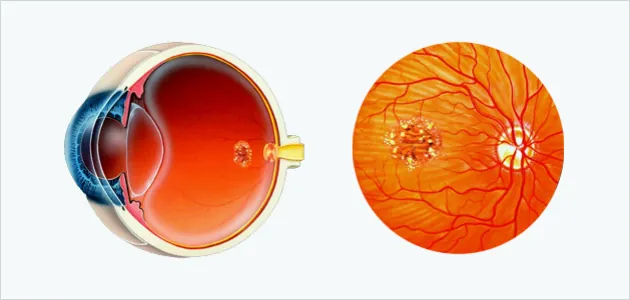
The retina works like camera film. It lets you tell colors and objects apart. The macula is the spot at its center where your sight focuses. When the macular tissue changes and your vision suffers, the condition is called macular degeneration.
It is one of several conditions handled by our retina clinic. Here is what to know before you seek macular degeneration treatment Korea clinics offer.
Causes and risk factors
- Retinal aging. The macula loses function as the retina ages. Risk rises with age and the disease generally appears around age 50.
- Genetic and lifestyle factors. Family history, dietary habits, hypertension and other conditions can contribute.
- Light damage. Retinal damage from light, such as ultraviolet rays, can also lead to the disease.
Symptoms to watch for
Early on, you may notice nothing clear. It is easy to mistake for presbyopia. Vision can dip when your eye is under strain and recover when it is in better condition.
- Middle stage: letters look shaky, or straight lines look curved.
- Advanced stage: the center of what you look at appears black, leaving gaps in words as if the middle had been erased.
Because early signs are subtle, a retinal exam is the reliable way to check. Test one eye at a time if you notice distortion.
Dry and wet macular degeneration
Dry type
Waste products called drusen build up in the retina, making it hard to supply oxygen and nutrients. Photoreceptor cells are destroyed gradually and the macula can no longer form clear images. About 80% of patients have this type. It can progress to the wet form, so regular follow-up is needed.
Wet type
New abnormal blood vessels grow from the choroid beneath the retina. They cause swelling, exudates and bleeding that lead to vision loss. About 20% of patients have the wet type, but once symptoms start it progresses quickly and can cause blindness in severe cases.
Treatment options
Injection treatment
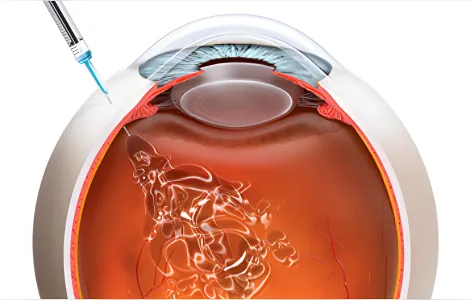
Antibodies that suppress new vessel growth are injected into the eye. The abnormal vessels regress without destroying the photoreceptors. Injections can maintain and improve vision, but repeat treatments are needed.
Photodynamic laser treatment
A light-sensitive substance is applied to the abnormal choroidal vessels so that only those vessels coagulate. This laser aims to slow or prevent further decline rather than improve vision.
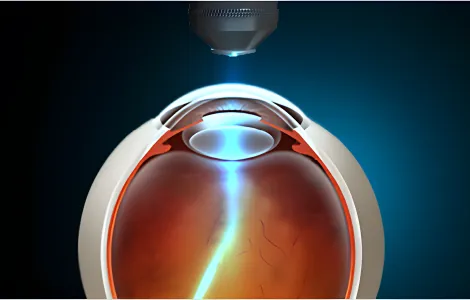
The medication reacts to strong light. Avoid direct sunlight and bright indoor lighting for about 48 hours after treatment.
When to see a doctor
See a retina specialist if lines look bent, letters look broken or a dark spot sits in your central vision. Related conditions include diabetic retinopathy and retinal vascular disease. Book your free consultation to be examined with an interpreter present.
Questions answered
What is the difference between dry and wet macular degeneration?
Dry type involves drusen waste products and gradual photoreceptor loss, and is about 80% of cases. Wet type involves abnormal new blood vessels that bleed and swell, and is about 20% of cases.
Can macular degeneration be mistaken for presbyopia?
Yes. Early on there are few obvious signs, so it is easily confused with presbyopia. An eye exam can tell them apart.
Do injections cure macular degeneration?
Injections can maintain and improve vision by making abnormal vessels regress, but repeated treatments are required.
What should I do after photodynamic laser treatment?
Avoid direct sunlight and bright indoor lighting for about 48 hours, because the medication reacts to strong light.
Get your free consultation before you decide
- Free consultation and checkup, even if you decide against surgery
- Same price as Korean patients, no overseas surcharge
- Interpreters in English, Japanese and Chinese

