
Vision correction
LASIK in Korea: who it suits and what to expect
LASIK in Korea corrects myopia, astigmatism and hyperopia by lifting a thin corneal flap and reshaping the tissue beneath with a laser. Sky Eye Clinic in Seoul offers it with the Amaris Red SPT laser and Co-Wave customisation. Here is who qualifies, what the steps are, and what to weigh.
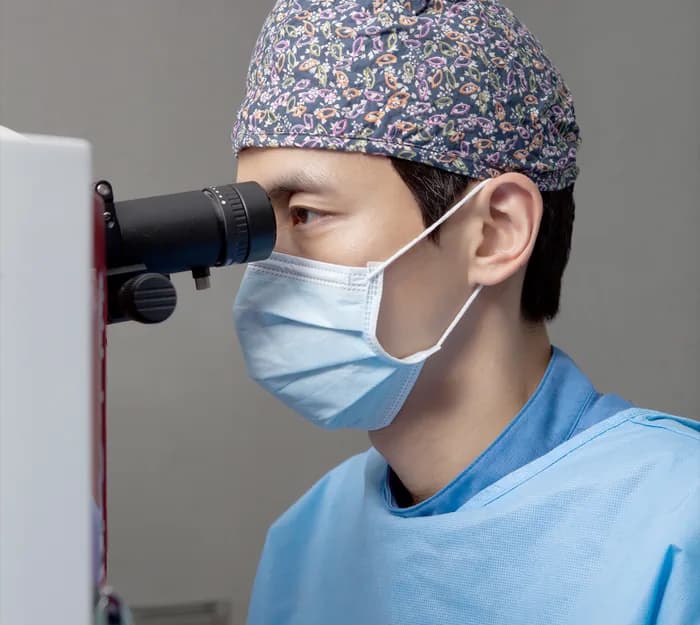
How LASIK works
LASIK stands for laser in-situ keratomileusis. It is performed worldwide and is known for stable, predictable results. A microkeratome creates a thin flap, about 160 micrometers thick, on the upper cornea. This protects the surface epithelial cells and Bowman's membrane. That is why many people choose LASIK in Korea for a short recovery.
The laser then reshapes the corneal stroma underneath, and the flap goes back in place. Surgery uses numbing eye drops only.
- Create the flap
A microkeratome makes a thin flap on the cornea.
- Fold the flap aside
The flap is folded to the side to expose the stroma.
- Apply the laser
The laser corrects your refractive error.
- Reposition the flap
The flap is laid back in place.
Who LASIK suits
- You are 18 or older.
- A doctor has judged you suitable after a comprehensive examination.
- Glasses or contact lenses cause you discomfort or side effects.
- Work or appearance makes glasses or lenses hard to wear.
- Your prescription has not changed in the past year.
If you are weighing LASIK in Korea against other options, the criteria below show who the procedure suits.
LASIK is not for everyone. If your cornea is thinner than a certain threshold, a LASEK-type procedure that preserves the most residual cornea is recommended. Serious visual side effects, although rare, have occurred when surgery went ahead despite an examination result advising against it. Read about LASEK and New SMILE LASIK.
Advantages and disadvantages
Advantages
- Recovery is short, so working professionals can often return quickly.
- Risk of corneal haze and myopia recurrence is very low.
- Eye drops numb the eye, protecting epithelial cells and keeping pain low.
- No steroid eye drops are used afterwards, so steroid-related glaucoma or cataract is very unlikely.
- Re-treatment or additional correction is easy if needed.
Disadvantages
- It needs an experienced surgeon with a delicate technique.
- Flap-related complications can occur that do not occur in LASEK.
- Dry eye symptoms may last longer than after LASEK.
- A thin cornea may rule it out.
LASIK, LASEK and New SMILE compared
| LASIK | LASEK | New SMILE LASIK | |
|---|---|---|---|
| Method | Thin flap, laser on stroma | Surface epithelium removed, laser on stroma | 2mm micro-incision, tissue removed, no flap |
| Thin cornea | May not suit; LASEK-type advised | Suitable when LASIK leaves too little cornea | Listed for high myopia with thin corneas |
| Early discomfort | About half a day | Up to 3 to 4 days; blurring 5 to 7 days | Minimal corneal damage |
| Flap | Flap-related complications possible | No flap; epithelium regrows under a protective lens | No flap, so no flap complications |
Details: LASEK, New SMILE LASIK, and the hub page on vision correction in Korea.
Laser options for LASIK
Amaris Red SPT LASIK
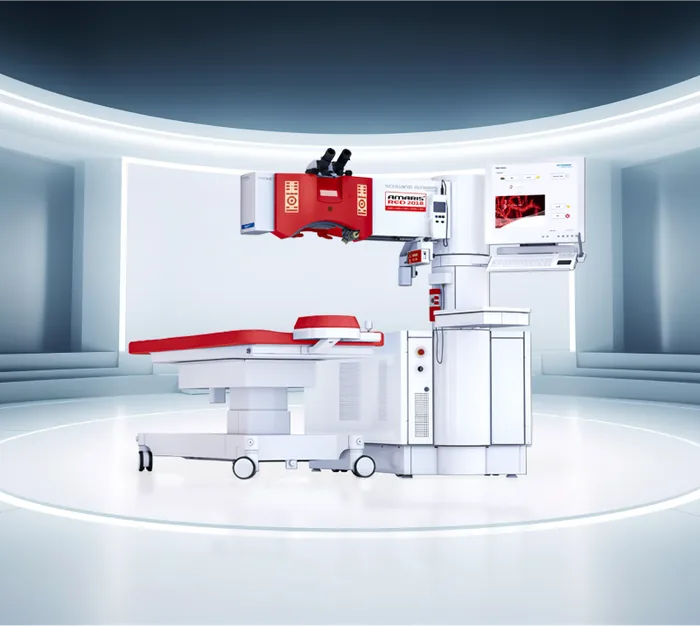
The Amaris Red laser fires at 1050Hz, with ablation of under 1.3 seconds per diopter. It tracks eye movement in 7 dimensions and measures corneal thickness in real time. Its spot size is 0.54mm. Smart Pulse Technology (SPT) ablates the surface more smoothly to support recovery and visual quality. See the equipment page.
Co-Wave LASIK
Co-Wave uses a wavefront examination to find high-order aberrations and smooth the corneal surface. Your data is stored on a personal memory chip and carried to the operating room. The clinic says it suits high myopia with astigmatism, presbyopia correction over 40, asymmetric corneal topography and high-order aberrations. A related option, corneal cross-linking, strengthens a cornea thinned by surgery.
Prepare using the pre and post-op guide, then book your free consultation to see whether LASIK in Korea fits your eyes, or whether another option does.
Questions answered
How thick is the LASIK flap?
A microkeratome creates a flap about 160 micrometers thick on the upper cornea. After the laser treatment, the flap is repositioned.
Who can have LASIK?
Adults aged 18 or older whom a doctor has approved after a comprehensive examination, and whose prescription has not changed in the past year. It particularly helps people who struggle with glasses or lenses.
Is LASIK painful?
Surgery uses numbing eye drops. On the day, you may feel irritation, tearing and a grainy feeling. For LASIK this discomfort may last about half a day.
What if my cornea is thin?
If the cornea is thinner than a certain threshold, a LASEK-type surgery that preserves the most residual cornea is recommended instead of LASIK.
Get your free consultation before you decide
- Free consultation and checkup, even if you decide against surgery
- Same price as Korean patients, no overseas surcharge
- Interpreters in English, Japanese and Chinese

