
Vision correction
Presbyopia LASIK and LASEK in Korea: see near and far
Presbyopia LASIK and LASEK in Korea is a surgical method tailored to how far your presbyopia has progressed. It corrects mild presbyopia and your myopia in one procedure. Sky Eye Clinic in Seoul explains below what presbyopia is, how the correction works and how to check your own symptoms.
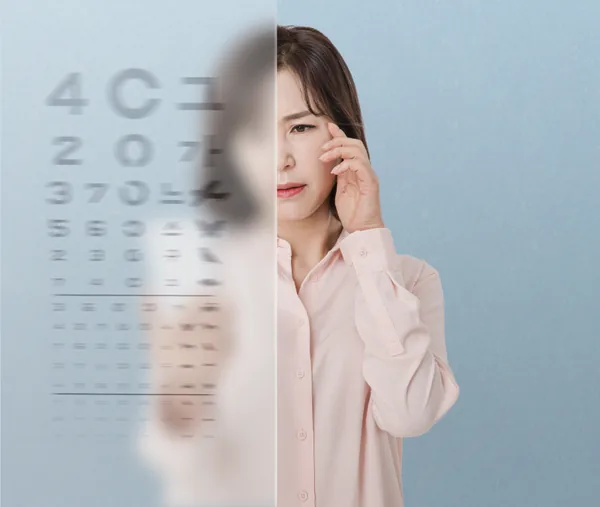
What presbyopia is
Presbyopia is difficulty seeing near objects, about 25cm away, that appears with age. In a healthy eye, the lens thickens and thins automatically to focus on the retina at near and far distances. With age, the lens loses elasticity and its cells decline in function.
Near work then becomes harder. Many people unconsciously hold newspapers or books farther away. The focus becomes unstable after about age 40. If you also have cataracts, see our cataract and presbyopia pages and presbyopia and cataract basics.
How presbyopia LASIK and LASEK works
The surgery matches each patient's presbyopia progression. It corrects mild presbyopia and aims to prevent presbyopia from developing further. It also solves myopia in the same procedure. The two eyes are corrected for different jobs.
- Dominant eye
Corrected to see distance clearly.
- Non-dominant eye
Corrected to see near objects clearly.
- Both eyes together
Over time, you can see both far and near clearly.
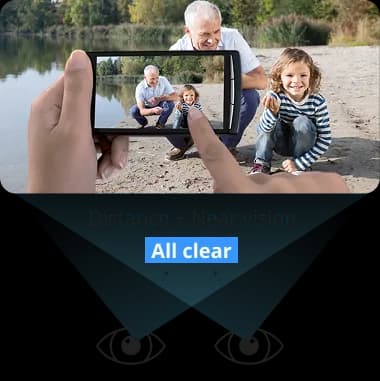
The laser step follows the same principle as standard LASIK or LASEK. Your surgeon chooses between them based on your cornea. Co-Wave, which customises correction using wavefront data, is listed for presbyopia correction patients over 40; see the LASIK page.
Presbyopia self-check
If three or more of these apply, have your eyes examined:
- Text messages on your phone look blurry and hard to read.
- You squint or rub your eyes during close work.
- Reading causes eye fatigue and headaches.
- Symptoms get worse in dim light.
- Your eyes take longer to refocus between far and near.
- Reading glasses make your vision clear and accurate.
- The distance at which you hold a book or newspaper keeps growing.
- Your eyes feel dry and heavy.
Only an examination can confirm presbyopia and show whether this surgery suits you. The clinic describes this method for mild presbyopia, so more advanced lens changes need a separate assessment.
Plan your visit
Prepare for the exam by reading the pre and post-op guide. Contact lenses must be removed beforehand. Browse every procedure on the vision correction in Korea hub, then book your free consultation to find out whether your near vision can be corrected at the same time as your distance vision.
Questions answered
What is presbyopia?
Presbyopia is difficulty seeing near objects, about 25cm away, caused by the lens losing elasticity with age. People often hold reading material farther away without noticing.
How does presbyopia LASIK or LASEK work?
One eye, the dominant eye, is corrected for distance. The other is corrected for near vision. Over time, both eyes work together to see far and near.
How many self-check symptoms should worry me?
If three or more of the eight listed symptoms apply, such as blurry phone text or eye fatigue when reading, the clinic recommends an accurate eye examination.
Does this surgery stop presbyopia from progressing?
The clinic says it corrects mild presbyopia and is meant to prevent future presbyopia development. Your surgeon can explain what to expect for your own eyes.
Get your free consultation before you decide
- Free consultation and checkup, even if you decide against surgery
- Same price as Korean patients, no overseas surcharge
- Interpreters in English, Japanese and Chinese

