
Retina & glaucoma
Glaucoma treatment Korea: types, symptoms and options
Glaucoma damages the optic nerve and narrows your visual field, often without early symptoms. For glaucoma treatment Korea has Sky Eye Clinic in Seoul, where doctors measure your eye pressure, identify your type and explain eye drops, laser and surgical options.
What glaucoma is
The optic nerve carries what your eye sees to the brain. When it is damaged by high eye pressure or poor blood flow, your visible range (visual field) gradually narrows. That is glaucoma.
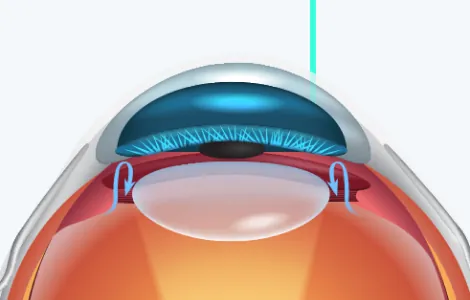
A small amount of fluid called aqueous humor feeds the front structures of the eye, the cornea and lens. When its outlet narrows or blocks, pressure rises, the pressure-sensitive optic nerve is damaged and severe cases can end in blindness. Glaucoma care sits within our retina and glaucoma clinic, so glaucoma treatment Korea patients receive is planned alongside retinal findings.
Causes and risk factors
The cause is not fully clear. The main factor is high intraocular pressure, which is the most dangerous factor for optic nerve damage. Poor blood flow to the eye also affects onset and worsening.
- Family history: genes play a role.
- Age 40 and above: risk grows with age.
- Myopia: the optic nerve and surrounding structures weaken, so nerve damage can occur at a young age.
- Diabetes and hypertension: the risk is 4 times higher with diabetes and 2 times higher with hypertension.
Symptoms
There are no clear symptoms early on. They become noticeable late. Once the optic nerve is damaged, your visual field narrows a great deal, making daily life harder and reducing your ability to react in emergencies. Regular eye exams are the way to find it early.
Types of glaucoma
- Open-angle: the most common type. The drainage outlet gradually deteriorates and it progresses slowly. Pressure is high but there are no noticeable symptoms and the eye looks normal, while vision slowly narrows.
- Angle-closure: mostly acute. The drainage pathway suddenly blocks and pressure rises rapidly. It can cause eye pain, redness, headache, nausea and halos around lights.
- Normal-tension: a form of open-angle glaucoma with normal eye pressure but typical optic nerve changes and visual field loss. Early detection depends on regular exams. It is more likely with a family history or heart disease such as arrhythmia.
- Secondary: linked to other eye or systemic disease, such as trauma, inflammation, tumors, bleeding, surgery, long-standing cataract, developmental abnormalities or steroid medication.
- Congenital: the drainage pathway did not form properly before birth. Suspect it if a newborn's eyes look very large or tear often.
Treatment options
Medical treatment
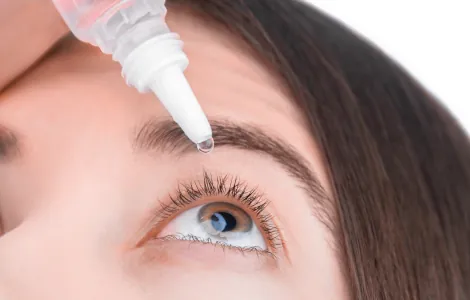
This is the basic treatment. Your doctor selects medication by your condition and response, then checks through regular follow-up that it works. The main aim is lowering eye pressure. With more eye drop types and better pressure-lowering effect, drops alone are often enough.
Laser treatment
Laser iridotomy makes a hole in the iris in angle-closure glaucoma and can control pressure much faster than medication. Trabeculoplasty directs laser at the trabecular meshwork to help fluid drain when medication is difficult.
Surgical treatment
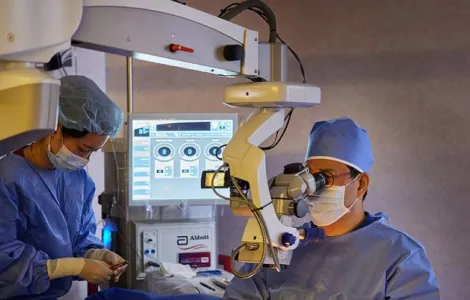
Surgery lets fluid in the eye drain into the space under the conjunctiva, the white of the eye, to control pressure. It is done when medication or laser does not lower pressure enough. Methods include trabeculectomy and aqueous shunt implantation.
When to see a doctor
Book an exam if you are over 40, have myopia, diabetes, hypertension or a family history. Get urgent care for eye pain with redness, headache, nausea or halos. Related conditions: uveitis and retinal vascular disease. Book your free consultation for an exam with an interpreter.
Questions answered
Does glaucoma cause early symptoms?
Usually not. Symptoms become obvious only in the late stages, when the visual field is already narrow. Regular exams are the way to catch it early.
Who is at higher risk of glaucoma?
People with high eye pressure, a family history, age 40 or older, myopia, diabetes (4 times the risk) or hypertension (2 times the risk).
What are the signs of angle-closure glaucoma?
Sudden eye pain, redness, headache, nausea and halos around lights. It needs urgent care.
Can glaucoma be treated with eye drops alone?
Often yes. Lowering eye pressure is the main aim, and modern eye drops lower pressure better. Laser or surgery is used when drops are not enough.
Get your free consultation before you decide
- Free consultation and checkup, even if you decide against surgery
- Same price as Korean patients, no overseas surcharge
- Interpreters in English, Japanese and Chinese

