
Retina & glaucoma
Diabetic retinopathy treatment Korea: types and options
Long-term diabetes slowly damages the blood vessels in your eyes, often without early warning. For diabetic retinopathy treatment Korea has a dedicated option: Sky Eye Clinic's retina clinic in Seoul examines your retina and explains injection, laser and surgical options for your stage.
What diabetic retinopathy is
Diabetic retinopathy is a complication that occurs in most people with diabetes. When diabetes lasts a long time, the vessels in your eyes are damaged. The retina, which distinguishes colors and objects, is damaged too. Left untreated, or treated too late, it can lead to blindness.
It is part of the care offered at our retina clinic, and the diabetic retinopathy treatment Korea patients receive depends on the stage found at exam.
Cause and symptoms
The cause is diabetes. Persistent high blood sugar gradually damages the tiny retinal vessels, and poor circulation leads to eye complications.
Symptoms
Early on there may be no symptoms. Over time you may notice:
- Decreased vision
- Glare
- Distorted vision (metamorphopsia)
- Floaters
- Flashes of light (photopsia)
- Poorer night vision
Noticeable symptoms often appear only after the disease has advanced, so treatment timing is frequently missed. If you have diabetes, regular retinal exams matter even when your vision feels fine.
Proliferative and non-proliferative types
The two types differ in whether new vessels grow through the retina's boundary membrane.
Non-proliferative
This accounts for 80% of cases. Symptoms include reduced vision, trouble telling colors apart and poorer night vision. It progresses slowly over several years, with vessel changes confined to the retina. Vision loss comes from bleeding or swelling in the macula. Because it can progress to the proliferative type, blood pressure and blood sugar control should start early.
Proliferative
When blood does not reach the retina smoothly, new vessels form. They cannot build normal walls and rupture easily. This leaks plasma proteins and fluorescent substances, and can cause vitreous contraction and retinal detachment. Severe vitreous hemorrhage causes sudden vision loss, so take it seriously.
Treatment options
Injection treatment
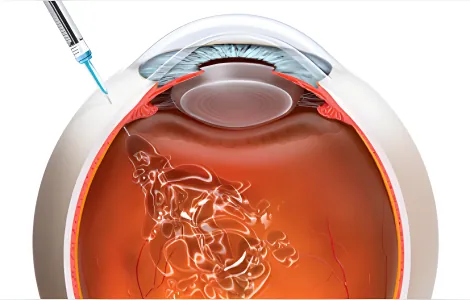
Steroid or anti-VEGF injections place antibodies into the eye to suppress vitreous hemorrhage and new vessel growth, and can even improve vision. The procedure takes only 5 minutes, so patients in poor overall health can receive it.
Laser treatment
Focal laser and panretinal photocoagulation treat the ischemic retina that causes fragile new vessels. Laser can reduce severe vitreous hemorrhage and tractional retinal detachment. It is used to prevent severe vision loss when the disease is far advanced.
Surgical treatment: vitrectomy
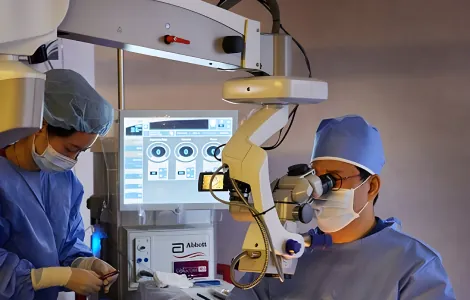
Surgery removes new vessels and surrounding membranes on the retina. It is used for vitreous hemorrhage or opacity that does not absorb, repeated vitreous hemorrhage, tractional detachment threatening the macula or with tears, severe macular hemorrhage, cases where laser is not possible, and new vessels on the iris.
When to see a doctor
If you have diabetes, book a retinal exam even without symptoms. Seek care quickly for sudden vision loss or new floaters. Related conditions are retinal detachment and retinal vascular disease. Book your free consultation for an exam with an interpreter.
Questions answered
What causes diabetic retinopathy?
Diabetes. Persistent high blood sugar gradually damages the microvessels of the retina, leading to circulation problems and eye complications.
Does diabetic retinopathy have early symptoms?
Often not. Symptoms such as blurred vision, glare, floaters and poorer night vision usually appear after the disease has progressed.
What is the difference between proliferative and non-proliferative types?
Proliferative disease forms new, fragile vessels that can bleed or cause detachment. Non-proliferative disease stays within the retina, and can progress to the proliferative type.
How long does an anti-VEGF injection take?
The procedure takes only 5 minutes, so even patients in poor overall health can receive it.
Get your free consultation before you decide
- Free consultation and checkup, even if you decide against surgery
- Same price as Korean patients, no overseas surcharge
- Interpreters in English, Japanese and Chinese

