
Vision correction
New SMILE LASIK in Korea: flapless correction through a 2mm incision
New SMILE LASIK in Korea removes a thin lens-shaped piece of corneal tissue through a 2mm micro-incision, with no corneal flap. It uses the ATOS laser at Sky Eye Clinic in Seoul. Here is how it works, who it suits, and how it compares with LASIK and LASEK.
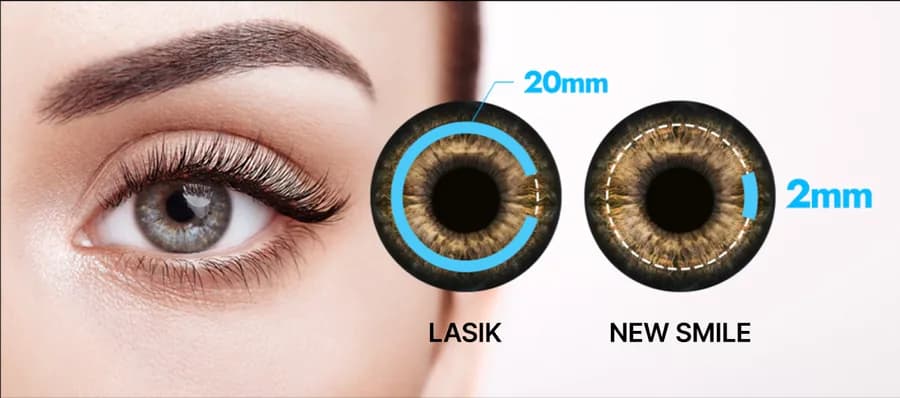
What New SMILE LASIK is
New SMILE LASIK uses the ATOS laser to separate corneal tissue by the amount of correction you need. The surgeon then extracts that tissue through a 2mm micro-incision. The clinic says this reduces side effects such as dry eye, corneal haze and keratoconus compared with older methods.
Because the cornea is barely opened, daily life resumes quickly. For an upgraded version that also corrects eye movement during docking, see Smart Nova LASIK.
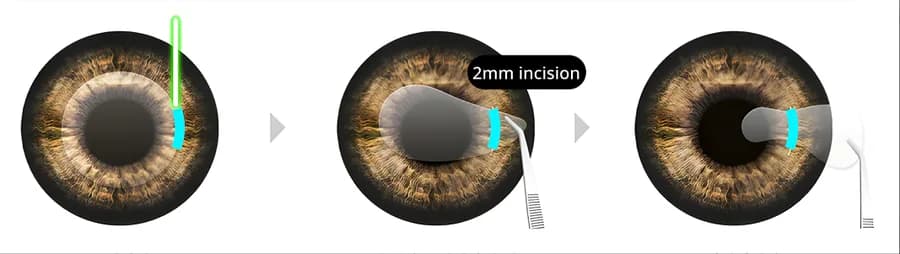
The procedure step by step
- Cut the lenticule
The ATOS laser cuts a lens-shaped piece of tissue, the lenticule, inside the cornea.
- Make a 2mm micro-incision
A very small opening is made on the corneal surface.
- Remove the tissue
The lenticule is removed through the 2mm opening, reshaping the cornea.
The lenticule is created and removed smoothly, without diagonal cuts, which the clinic links to good visual quality after surgery.
How it differs from LASIK and LASEK
| LASIK | LASEK | New SMILE LASIK | |
|---|---|---|---|
| Access to the cornea | Thin flap of about 160 micrometers | Surface epithelium removed (about 50 micrometers) | 2mm micro-incision, no flap |
| Dry eye | May persist longer than after LASEK | Milder than LASIK | Less nerve damage, so lower dry eye incidence |
| Corneal haze | Very low risk | Can develop, mainly in high myopia | Laser reaches only the stroma, so haze is reduced |
| Early recovery | Short; discomfort about half a day | Blurring for 5 to 7 days; discomfort up to 3 to 4 days | Face washing, basic makeup and light exercise from the next day |
Full details are on our LASIK and LASEK pages.
Three side effects it aims to reduce
- Dry eye: creating a flap can affect the nerves that regulate tear production. A minimal incision damages fewer of them.
- Corneal haze: LASEK applies laser to the corneal surface, which can weaken it. New SMILE LASIK sends the laser only to the stroma.
- Keratoconus: only the necessary tissue is separated, so enough cornea is preserved. See keratoconus treatment for this condition.
Who New SMILE LASIK suits
- You have high myopia with thin corneas.
- You worry about side effects or pain after surgery.
- You want quick vision recovery.
- You want precise astigmatism correction.
Suitability is confirmed in a full examination. Your surgeon may recommend LASIK, LASEK or an ICL lens implant instead.
The ATOS laser
The clinic describes New SMILE LASIK as a fifth-generation method on the new ATOS equipment. It lists these features, and you can see the machine on our equipment page.
- 7-dimensional eye tracking and cyclotorsion compensation: it follows tiny eye movements and corrects astigmatism axis shifts caused by eye rotation.
- 4MHz laser speed: much faster than the 500kHz of conventional SMILE surgery, for smoother lenticule creation and shorter surgery.
- Higher suction pressure: this helps keep the eye fixed and reduces cases of fixation release.
- No corneal flap: the cornea resists external impact better, according to the clinic.
Book your free consultation to learn whether this method fits your eyes.
Questions answered
What makes New SMILE LASIK different from LASIK?
LASIK creates a flap of about 160 micrometers. New SMILE LASIK uses no flap. The lenticule is removed through a 2mm micro-incision.
How soon can I wash my face and exercise?
The clinic says face washing, basic makeup and light exercise are possible from the day after surgery, because corneal damage is minimal. Follow your surgeon's instructions.
Is New SMILE LASIK suitable for thin corneas?
The clinic lists high myopia with thin corneas among the people it suits. Your surgeon confirms this with a full corneal examination.
What is the laser speed of the ATOS equipment?
The ATOS laser runs at 4MHz, compared with 500kHz for conventional SMILE surgery. The faster speed shortens surgery time.
Get your free consultation before you decide
- Free consultation and checkup, even if you decide against surgery
- Same price as Korean patients, no overseas surcharge
- Interpreters in English, Japanese and Chinese

