
Vision correction
Corneal cross-linking in Korea: strengthening a thin or weak cornea
Corneal cross-linking in Korea strengthens the cornea by building up its collagen fibers with riboflavin and UVA light. It is used to help prevent corneal ectasia, which is keratoconus, including after laser vision correction. Sky Eye Clinic in Seoul uses the Avedro system. Here is how it works and who needs it.
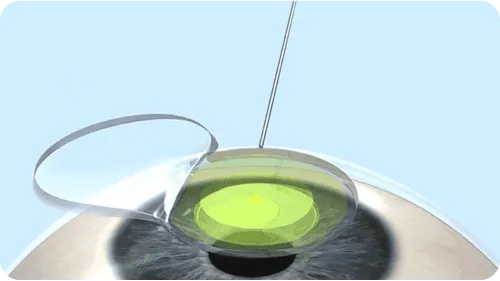
What corneal cross-linking does
Collagen makes up about 70% of the corneal stroma and gives the cornea its elasticity and strength. Cross-linking enriches the collagen fibers and strengthens the bonds between them. This mechanical strengthening can prevent corneal ectasia, the condition known as keratoconus.
Learn about the disease itself on our keratoconus treatment page.
Riboflavin and the Avedro system
Riboflavin is the key ingredient. UVA activates it, and it also protects the cornea. The clinic uses VibeX-Xtra, a higher-concentration solution with about 2.5 times the riboflavin compound concentration. It absorbs quickly, wipes off cleanly and helps flap repositioning.
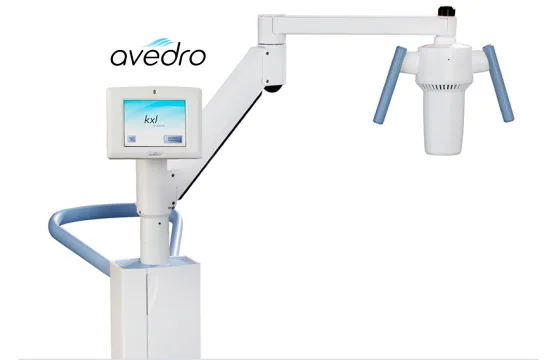
Avedro KXL delivers UVA at 365nm for 90 seconds. It offers continuous or pulse mode, built-in calibration, a 92mm working distance and a touchscreen. You can find it on the equipment page.
Cross-linking after LASIK or LASEK
The clinic adds cross-linking to vision correction surgery to strengthen a cornea thinned by the procedure. The sequence follows your LASIK or LASEK treatment:
- Correct the stroma
Part of the stroma is corrected as in LASIK or LASEK.
- Apply VibeX-Xtra
The cross-linking solution is applied and absorbed.
- Clean and reposition
The surface is cleaned and the flap is repositioned.
- Irradiate with UVA
Avedro KXL delivers 365nm UVA for 90 seconds.
This healing step is not part of traditional LASIK or LASEK alone. For keratoconus, cross-linking can be combined with Co-Wave to partly correct irregular astigmatism, and followed by an ICL lens implant.
Who needs cross-linking
The clinic recommends it to strengthen the cornea and prevent ectasia, especially if you:
- Have hyperopia, which regresses more.
- Have a cornea that is not thick enough.
- Have irregular corneal topography.
- Rub your eyes or have atopic dermatitis.
- Are concerned about ICL implantation surgery.
- Have a family history of keratoconus.
Cross-linking is only possible when the cornea is thick enough. A corneal scan decides whether you qualify.
Intacs corneal rings
Intacs are thin, crescent-shaped plastic rings placed in the cornea. They flatten the corneal shape, reduce irregularity, improve vision and make contact lenses easier to wear. Cross-linking and rings can be used for different stages; see all options in vision correction in Korea, then book your free consultation.
Questions answered
How does corneal cross-linking strengthen the cornea?
It enriches the collagen fibers in the stroma and strengthens the tissue bonds. Riboflavin, activated by UVA light, drives the process.
How long is the UVA treatment?
The Avedro KXL system irradiates UVA at 365nm for 90 seconds.
Who should consider cross-linking?
People with thin corneas, irregular topography, eye-rubbing habits or atopic dermatitis, a family history of keratoconus, or hyperopia with more regression.
Can everyone have cross-linking?
No. It is only possible when corneal thickness is sufficient.
Get your free consultation before you decide
- Free consultation and checkup, even if you decide against surgery
- Same price as Korean patients, no overseas surcharge
- Interpreters in English, Japanese and Chinese

