
Cataract Surgery Cost Korea: What Decides It? Lenses, Days in Seoul and Risks
Cataract surgery cost Korea: is the figure you're quoted the figure you'll actually end up paying?
On this page
Cataract surgery cost Korea: what moves the number?
Read this before you line up quotes or book a flight.
By the end you'll know which choices move the cost, how one eye or two changes your days in Seoul, what can go wrong once you're home, and how to get a figure for your own eyes. That should make it clear whether a trip fits your eyes and your budget.
Hello, I'm Dr. Kim Dong-Soo, Center Director for presbyopia and cataract at Sky Eye Clinic in Seoul, and a full member of the Korean Society of Cataract and Refractive Surgery.
Professional interpreters on site speak English, Japanese and Chinese. The same medical team supports you from the exam and consultation through surgery and the key checks afterward.
I'm writing this because cataract quotes tend to get compared as single numbers, when most of the difference sits in the lens and in what each quote covers.
The cost of cataract surgery in Korea depends mainly on four things: the lens implanted, one eye or both, whether a laser performs part of the operation, and the tests and follow-up visits around it.
If you have a recent eye exam report, send a photo of it on WhatsApp, say which eye bothers you (or both), and ask one question: which lens types are worth considering for eyes like mine, and what would each cost?
Two people can book the same operation and leave with very different bills. Here is where the difference usually comes from.
| Factor | How it changes the cost |
|---|---|
| Lens type | Monofocal, multifocal and specialty lenses differ in cost; the lens is usually the largest variable |
| Method | Standard ultrasound surgery, or laser-assisted surgery where a laser handles some steps |
| One eye or both | Each eye is a separate operation with its own lens |
| Your eye's other conditions | Glaucoma, retinal disease or a past LASIK can mean extra tests or a different plan |
| Days in Seoul and follow-up | Your own hotel and flights, plus any later care such as a YAG laser for secondary cataract |
For the method, we have both options on site: the Signature Pro for ultrasound surgery and the LENSAR laser for laser-assisted surgery. The laser is a tool for specific steps, and whether it adds anything for your eye is a medical question first and a cost question second.
Your doctor confirms the procedure and the final fee at your exam. That isn't a way of dodging the question. The lens power comes from measurements of your own eye, and a retina problem found on the day can change what makes sense to do.
To get a working idea before you fly, ask on WhatsApp what it would cost for your case, and mention whether you've had LASIK or LASEK in the past and which kind of lens you're leaning toward.
The lens decides more than anything else
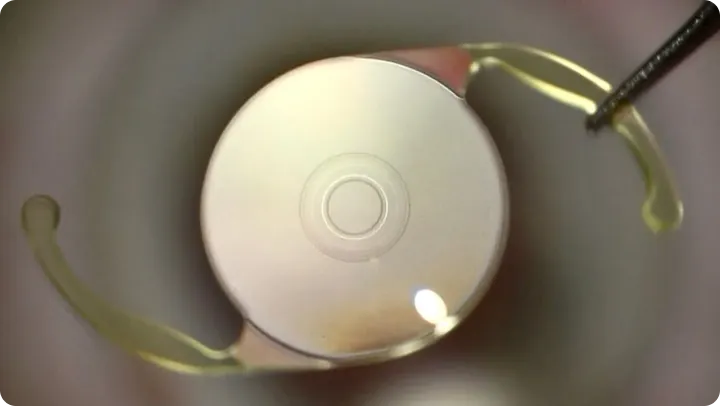
The American Academy of Ophthalmology describes the main lens families plainly. A monofocal lens is set for one distance, usually far, so most people still wear reading glasses. Multifocal and extended-depth lenses aim to reduce dependence on glasses, but some people notice halos or glare around lights at night. Toric lenses are designed to correct astigmatism.
We offer monofocal, multifocal and specialty lenses, and the guide to IOL types for cataract surgery goes through each one. The lens you pick is also the one you live with for decades, so it deserves more of your attention than the operation itself.
Before any lens is chosen, the eye is measured. We use the IOL Master 700, a non-contact device that measures the eye for lens planning, and OQAS, which assesses the optical quality of the eye. If you had laser vision correction years ago, say so early: the reshaped cornea makes the lens calculation harder, and it's one reason I'd ask for your old records. If you're unsure what you had, our post on how LASIK and LASEK differ in what they do to the cornea helps you tell which one it was.
A multifocal lens costs more and asks more of the rest of your eye. If the retina or the cornea isn't healthy enough to use it well, I'd rather put in a monofocal lens and have you wear reading glasses than sell you a lens your eye can't make the most of. I'd rather recommend what fits your eye than add treatment you don't need.
One eye or both, and how many days in Seoul?
The US National Eye Institute notes that when both eyes need surgery, they are usually operated on separately. That's the single biggest influence on how long you stay and what your trip costs outside the clinic.
After it, you rest in the recovery room, the doctor checks your eye, and you go over aftercare and follow-up appointments before going home.
When you plan your dates, work around our hours. We see patients Monday to Wednesday and Friday from 10:00 to 16:30, with lunch from 13:00 to 14:00. Saturday runs 10:00 to 14:30 for exams and surgeries only. We're closed on Thursdays for equipment inspection, and on Sundays and public holidays.
I won't give you a fixed number of days here, because it depends on whether one or both eyes are done and on how your eye looks at each check. Leave room in your plans, and ask before you buy a non-refundable ticket.
What would a case like yours look like?
Say you're 66, both lenses are cloudy, you had LASIK in your thirties, and you'd like to read a menu without glasses. Three things shape the plan before cost even comes up.
First, the earlier LASIK. It doesn't rule out surgery, but it makes lens power calculation less predictable, so I'd want your old prescription and surgery records if you can find them. Second, the retina. If the exam shows changes at the macula, a multifocal lens is usually a poor trade, and a monofocal lens with reading glasses becomes the sensible choice. Third, two eyes means two operations on different days, which stretches your stay.
In a case like that, the lens and the second eye move your total far more than the method. Knowing that before you call helps you ask the right questions.
What can go wrong after you fly home
In short, this is the part people think about least when comparing quotes, and it's the part I'd plan first.
Risks and side effects to know
In the first days to weeks, blurry vision, a scratchy feeling, sensitivity to light and mild redness are common and usually settle. Less often there is inflammation inside the eye or a rise in eye pressure, which need drops and checks. Rare but serious problems include infection inside the eye and retinal detachment. Months or years later, the capsule behind the new lens can turn cloudy; this is called secondary cataract, and a short YAG laser treatment usually clears it. Our page on secondary cataract treatment explains it.
As general guidance, you may need to wait or address something first if you have an active eye infection or inflammation, diabetes that isn't under control, a retinal condition that needs treatment of its own, or health that makes travel hard. Recovery differs from person to person.
Once home, a sudden drop in vision, pain that gets worse rather than better, increasing redness, or new flashes, floaters or a shadow across your vision need an eye doctor the same day, near where you are. The US CDC's advice to medical travelers is to arrange follow-up care at home before you go and to carry copies of your records. Bring your surgery notes and the name and power of your implanted lens, so any ophthalmologist can pick up where we left off.
If you'd like to plan this part before anything else, send your travel dates on WhatsApp and the city you'll fly home to, and ask how many days you should leave before your return flight.
Do you need to speak Korean?
No. Professional interpreters on site speak English, Japanese and Chinese, and WhatsApp messages can be written in English. Ask the interpreter to repeat anything about your lens choice until it's clear, because that's the decision you'll live with.
If your exam turns up a retinal problem, we also have a Retina Center in the same clinic, which matters when cataract and retinal disease overlap.
If you're still weighing the trip, start small. When you come in, I'll examine your eyes and recommend the lens and method that fit them.
Results vary by individual.
Questions answered
Can I get an exact figure before I travel?
You can ask on WhatsApp what your case would likely cost, with a photo of your latest eye report. The doctor confirms the procedure and the final fee at your exam, because lens measurements and the health of your retina can change the plan.
Will my insurance at home cover cataract surgery in Korea?
That depends on your insurer. Ask before you go whether they reimburse treatment abroad and which documents they need, and keep copies of your records and receipts.
If I develop secondary cataract later, do I have to come back to Seoul?
Not necessarily. A YAG laser treatment for secondary cataract is a common outpatient procedure that many ophthalmologists perform. If you're in Seoul again, the clinic has a YAG laser.
Does having had LASIK or LASEK change things?
It can change the planning. Lens power calculations after corneal laser surgery need extra care, so mention it in your first message and bring old records if you have them.
Get your free consultation before you decide
- Free consultation and checkup, even if you decide against surgery
- Same price as Korean patients, no overseas surcharge
- Interpreters in English, Japanese and Chinese


