
How Long Does Cataract Surgery Take? Minutes, Then Weeks
How long does cataract surgery take once you count the operation, the first checks and the weeks of healing, and can all of it fit into one trip to Seoul?
On this page
How long is the operation, and why does the day run longer?
The operation on one eye is short, about an hour at most, and you go home the same day. Most people feel better within a day or two, full healing takes about four to eight weeks, and the second eye is usually done around a month after the first.
Hello, I'm Dr. Kim Dong-Soo, Center Director for presbyopia and cataract at Sky Eye Clinic in Seoul.
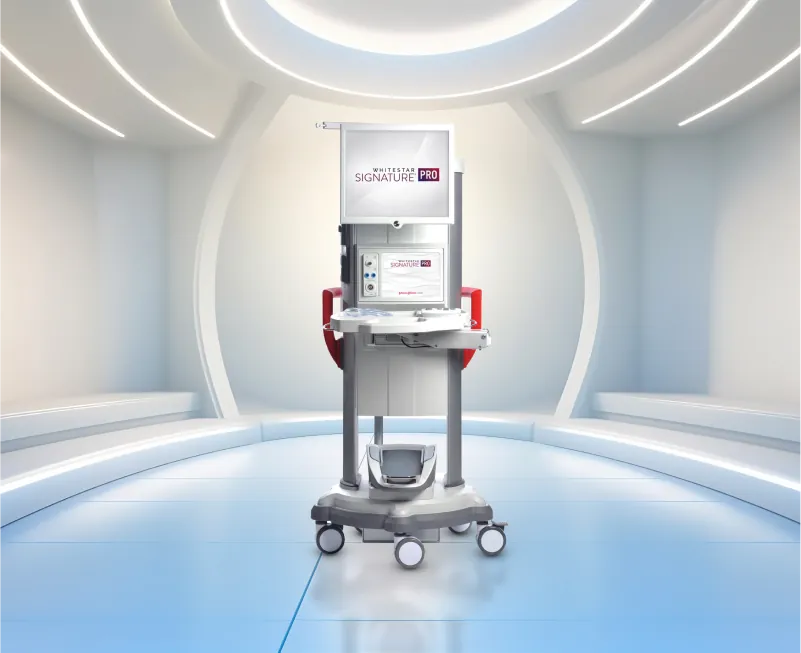
Three things here bear on your calendar more than the minutes on the table. The surgeon who consults with you performs your surgery, and the same team stays with you from the exam through the key checks afterward. The clinic has IOLMaster biometry for the lens measurements, a LENSAR laser and a Signature Pro phaco system for the operation, and a medical interpreter for your language at no extra charge.
If you have a recent eye report or your current glasses prescription, send a photo of it on WhatsApp with the weeks you could travel, and ask whether that window fits the surgery and the first checks after it. The consultation is free, and you can write in English.
The surgery itself is the shortest part of the day. Through a tiny cut at the edge of the cornea, the clouded natural lens is broken up and removed, and a folded artificial lens opens inside the thin capsule that held the old one. Think of a camera whose glass has fogged: the casing stays, only the glass is swapped.
What stretches the day is everything around it. Dilating drops need time to open the pupil fully, numbing drops go in, and afterward you usually rest for 15 to 30 minutes before you leave. Your vision will be blurry and you won't be able to drive.
Treat surgery day as a whole day with nothing else in it, and have someone to walk you back to your hotel. From Gimpo Airport, Line 9 runs straight to Sinnonhyeon Station, Exit 2, about a five-minute walk from the clinic, so a hotel along Line 9 keeps that ride short.
How long does cataract surgery take to heal? The weeks, step by step
Healing comes in two speeds. The surface of the eye and the small incision settle within days. The inside of the eye, where inflammation has to calm down and the new lens has to sit still in its capsule, takes weeks.
| When | What's typical | What it means on a trip |
|---|---|---|
| Surgery day | Blur, a gritty feeling, a shield over the eye | Stay close to the clinic, no driving |
| Days 1–2 | The eye feels better, vision often already clearer | The first check after surgery usually falls here |
| First week | Drops on schedule; no rubbing, no water in the eye | Walks and meals out are fine; skip pools and saunas |
| Weeks 2–4 | Vision settles; the two eyes may feel mismatched | The second eye is often done around a month after the first |
| Weeks 4–8 | Most eyes are fully healed; the glasses prescription stabilizes | New glasses are made at home once things settle |
The table describes a typical eye. A very dense cataract, a longer operation or an eye with other conditions can push every row later.
One stretch catches strongly nearsighted people off guard. If your glasses are strong, say minus 8, and only one eye has been operated on, the two eyes suddenly disagree: one sees the distance well without glasses, the other still needs its thick lens. Your old glasses won't feel right, and the size difference between the two images is tiring. It passes once the second eye is done, but plan for it.
Some people pop the lens out of the operated side of their old frames; others wear a contact lens in the other eye until the second surgery, if their surgeon agrees.
Routine cataract surgery doesn't leave a gas bubble in the eye the way some retinal operations do, so cabin pressure isn't the usual concern. What decides your flight is when the checks after surgery happen and whether the eye looks quiet at them.
What an earlier LASIK or a strong prescription changes
Two kinds of eye make the lens calculation harder, and both are common among people who travel for surgery. If you had LASIK, LASEK or another laser correction years ago, the front of your cornea was reshaped, and the standard formulas that turn corneal measurements into a lens power become less reliable. Old records help: the prescription before your laser surgery and any corneal readings from that time.
If you aren't sure which procedure you had, the post on how LASIK and LASEK treat the cornea differently explains what each one changes.
A long, nearsighted eye has its own points.
Lens choice also changes how long it takes to feel settled. A monofocal lens is usually quick to get used to, while lenses that spread focus across several distances can bring halos around lights at night that the brain takes weeks to tune out. The types of cataract lens and who each one suits are laid out on a separate page.
One eye per trip, or both
That leaves two ways to plan: two shorter trips, or one longer stay that covers both eyes and the checks in between.
Say you're 64, live in Denver, have worn minus 9 glasses since your teens, and the cataract in your right eye is much denser than the left. You have three weeks off. Three weeks is enough for the right eye and its first checks, but not for both eyes with a month between them. The worse eye goes first. You fly home with a clear right eye and an unbalanced pair for a while, which is the price of not rushing the second eye.
Whether the left one needs surgery soon or can wait for a later trip comes from the measurements of that eye.
Build your dates around the clinic's week. Thursday is closed for equipment inspection, Sundays and public holidays are closed, and Saturday runs 10:00 to 14:30 for exams and surgeries only. A spare weekday between your last check and your flight costs little and absorbs a check that needs repeating.
If you can manage only one trip, I'd still rather operate on one eye well than squeeze both eyes into a calendar with no room for the checks after each. The first days after surgery are when a pressure rise or inflammation shows up, and I want you near the clinic while they can. The same team that examined you sees you through those key checks, which is why staying in Seoul for them matters more than the length of the operation.
If you've had laser eye surgery before, send the year and any old records you still have, together with your current glasses prescription, on WhatsApp, and ask whether one eye or both makes sense for your travel window.
Aftercare once you're home
Most of the healing happens after you land, so set up the home side before you fly. Book an appointment with a local ophthalmologist for the weeks after you return, and bring them the details of your surgery: the lens model and power in each eye, the date, and your drop schedule.
Keep the drops going even when the eye feels fine, because the inflammation inside calms down more slowly than the surface. For the first few weeks, don't rub the eye, keep tap water and shampoo out of it, and skip pools, hot tubs and heavy lifting.
Months or years later, the capsule behind the new lens can turn hazy and blur vision again. It's called posterior capsule opacification, it's not unusual, and it's treated with a short YAG laser procedure that an ophthalmologist at home can do. The clinic has a YAG laser for secondary cataract if you happen to be in Seoul when it appears.
Inflammation, pressure and infection: the risks to know
In the first days, grittiness, watering, light sensitivity and some blur are expected and usually fade within a week. Less often, the eye stays inflamed, the pressure inside it rises, or the center of the retina swells, which can keep vision blurry for weeks and needs treatment with drops. Rare but serious problems include infection inside the eye and retinal detachment, the latter more likely in very nearsighted eyes.
Some people should wait or prepare more:
- Active inflammation in the eye, such as uveitis, generally needs to be quiet for a while first.
- Poorly controlled diabetes makes swelling at the retina more likely, so blood sugar is worth settling first.
- A tablet for an enlarged prostate or urinary flow can make the iris floppy during surgery; tell your surgeon about it.
Healing speed differs from eye to eye, so treat the weeks in this post as a typical range, not a promise.
The clinic runs a complication-prevention program with daily equipment checks, and it publishes the name of the operating surgeon, so you can see who will operate before you arrive.
If, after you fly home, your vision drops, the pain doesn't ease with ordinary painkillers, the eye turns very red, or you see flashes or a shower of new floaters, see an eye doctor or go to an emergency department that same day.
What should you ask any clinic before you book?
Wherever you have it done, these questions settle most of the trip:
- Will the doctor at my consultation be the one who operates?
- Which measurements set my lens power, and will my old laser-surgery records be used?
- How many days after surgery should I stay nearby, and when are the checks?
- Is an interpreter there for the exam and surgery, and is there a charge for it?
- What do I take home: lens model and power, drop schedule, a summary for my eye doctor?
- If the capsule clouds later, how is that handled?
It doesn't have to be us. A clinic that answers all six plainly, before you pay for flights, is one you can plan around.
Where I stand on the calendar
I'd plan the trip around the checks after surgery, not around the surgery. An hour in the operating room is easy to schedule; the days after it are what keep a small problem small. You don't need to settle the lens type or the second eye before you've been measured.
For a first message, a photo of your latest eye report or glasses prescription and the weeks you could travel are enough. Send them on WhatsApp and ask how many days after surgery you'd need to stay in Seoul; the consultation is free. What sets your stay is how dense the cataract is, whether you've had laser surgery before, and how the eye looks at the first check afterward. The clinic is at 723-26 Banpo-dong, Seocho-gu, Seoul, about five minutes on foot from Nonhyeon or Sinnonhyeon Station.
— Dr. Kim Dong-Soo, Center Director
Results vary by individual.
Sources
Questions answered
How long does cataract surgery last? Will I need it again?
The artificial lens is meant to stay in place for life, and a cataract can't grow back on it. What can happen months or years later is a hazy capsule behind the lens, which is cleared with a short YAG laser procedure rather than a second operation.
Am I awake during cataract surgery?
Usually yes. The eye is numbed with drops, and some people are also given medicine to relax. You may see light and movement but not the instruments in detail.
When can I look at screens or read after surgery?
Most people can use a phone or read on the day after surgery, though near vision may stay soft until the eye settles, especially with a distance-set monofocal lens. Reading glasses are usually prescribed once healing is complete.
Can I fly home the day after cataract surgery?
Routine cataract surgery leaves no gas bubble, so the flight itself is rarely the problem. The limit is the check after surgery: plan your flight for after it, and keep a spare day in case the eye needs to be seen again.
Will I still need glasses afterward?
With a standard monofocal lens set for distance, most people still need glasses for reading. Lenses that spread focus over several distances reduce that need for many people, at the cost of possible halos at night while the brain adapts.
Get your free consultation before you decide
- Free consultation and checkup, even if you decide against surgery
- Same price as Korean patients, no overseas surcharge
- Interpreters in English, Japanese and Chinese


