
Is There a Fee to Book a Cataract Consultation in Korea? What's Free, What's Paid Later, and When to Wait
Wondering whether there's a Korea cataract consultation booking fee to pay before anyone has even looked at your mother's or father's eyes?
On this page
What do you pay for, and when?
The cost of the operation itself is confirmed at that exam, once the lens and the number of eyes are clear.
Hello, I'm Dr. Kim Dong-Soo, Center Director for presbyopia and cataract at Sky Eye Clinic in Seoul.
If you're arranging this for a parent from abroad, you'll want to know who would be looking at those eyes. I'm a LENSAR Certified Laser Cataract Specialist (USA), a J&J and Alcon Certified Cataract Specialist (USA) and a PhysIOL Certified Cataract Specialist (Belgium). A medical interpreter for your parent's language is provided at no extra charge, and the full checkup comes with the consultation even if the answer turns out to be no surgery.
Before anyone books a flight, send a photo of the latest eye report or diagnosis letter from home on WhatsApp, with the months you're looking at.
The surgery fee, any deposit and the way you pay come after the doctor has examined the eye.
That order protects you more than it seems to. A cataract quote given before anyone measures the eye is a guess, because the lens type, its power and sometimes the method depend on numbers taken on the day. Your doctor confirms the procedure and the final fee at the exam, and it is the same fee a Korean patient would be charged.
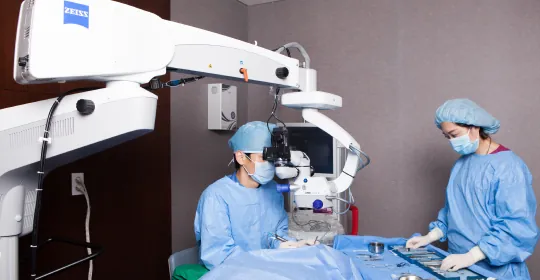
A slit-lamp exam with me is part of the consultation. The clinic also has IOLMaster biometry, which measures the eye so the replacement lens can be given the right power, and fundus photography, which records the retina sitting behind the cataract. Those measurements are what any fee conversation is built on.
Should your parent wait instead of booking?
Sometimes, yes. If the cataract isn't yet getting in the way of daily life, if another eye condition will limit what a new lens can give, or if the trip can't fit the checks after surgery, I'd rather you wait or change the plan than fly in for the wrong operation.
Risks and side effects to know
Start with daily life. The National Eye Institute explains that early cataract symptoms can often be managed with new glasses, brighter lighting and anti-glare sunglasses, and that surgery is the step once the cataract starts to interfere with everyday things like reading or driving. If your father still reads the paper and drives in daylight without trouble, that's worth hearing before a long-haul flight.
Then the back of the eye. A cataract is the part everyone can see. Behind it, diabetic changes in the retina, macular degeneration or glaucoma can cap how sharp vision gets after a well-placed lens. Sky Eye Clinic has separate centers for cataract and presbyopia and for retina and glaucoma, which helps when the fundus photo shows something; it can also mean the order changes, with the retina treated first and the cataract later.
Then old eye surgery. If your parent had LASIK or LASEK years ago, calculating the new lens power is harder, because the front of the eye was reshaped. The background on how LASIK and LASEK change the cornea helps here, and the old surgery records are worth digging out if they still exist.
Then the calendar. The clinic is closed on Thursdays for equipment inspection, and on Sundays and holidays. Saturdays run exams and surgeries only, with no follow-up consultations. Same-day booking isn't available, and online requests are confirmed after the clinic replies, so a trip with no weekday left after the surgery has no room for the check that follows it.
Say your father is 72, lives in Toronto and has two weeks. His ophthalmologist at home calls the right eye's cataract moderate and the left eye's early. I'd reason like this: the right eye may be worth doing on this trip if his retina is healthy and the first checks fit in Seoul, while the left eye may not need surgery yet, and I'd tell him so. One eye done with its early checks completed is a better trip than two eyes squeezed into a calendar.
I'd rather lose a booking than operate on a lens that doesn't need it yet. Cataract surgery is common, but it is still surgery inside the eye, and a lens that is only slightly cloudy can often wait with an updated prescription. When the timing is right, the person living with the blur usually knows it before I say it.
If one of these sounds like your parent, put their other eye conditions and daily medicines in a WhatsApp message and ask whether this trip should be for surgery or for the exam alone.
What decides the cost of the surgery itself?
Five things move it, and none of them can be pinned down before the exam.
- The lens. A monofocal lens sets clear vision at one distance, usually far, with reading glasses afterward. Multifocal and extended-depth lenses spread focus across distances, and the American Academy of Ophthalmology notes they can bring more halos and glare at night. Toric lenses correct astigmatism. The guide to IOL types lays out the lenses the clinic offers.
- One eye or both.
- Laser assistance. The clinic has the LENSAR laser and a Signature Pro phaco system, and whether the laser is used for parts of your parent's operation belongs to the surgical plan.
- Extra tests or treatment, if the retina or the eye pressure needs attention first.
- Days in Seoul. The number of checks after surgery decides how long you stay, and the hotel sits on your side of the budget.
If the Korea cataract consultation booking fee is what you came to check, the consultation is the part that won't cost you; the lens choice is where the number moves. To see what it would come to for your parent, ask on WhatsApp and add one line on whether they'd be happy wearing reading glasses after surgery. Whether a deposit applies and how you'd pay are decided after the consultation, so that question can go in the same message.
Inflammation, pressure, a cloudy capsule: what can happen after you fly home
The first days are usually scratchy, watery and bright, with blur that clears over several days and eye drops for a few weeks. Full healing takes weeks rather than days, and how fast vision settles differs from one eye to the next.
Some situations call for waiting or for extra planning, as a matter of general medicine: active inflammation inside the eye such as uveitis, a recent eye infection, diabetes with untreated retinal changes, and glaucoma pressure that isn't yet controlled. One is easy to miss. Alpha-blocker medicines taken for the prostate can make the iris floppy during surgery; they aren't a reason to cancel, but the surgeon needs to know before the day, so put them on the medicine list, along with any blood thinners and any earlier LASIK or LASEK.
Once home, sudden vision loss, pain that ordinary pain relievers don't touch, flashes of light, a shower of new floaters or a shadow across part of the view need an ophthalmologist that same day. MedlinePlus lists infection, bleeding and retinal detachment among the less common complications of cataract removal. Months or years later, the capsule holding the new lens can turn hazy; this is secondary cataract, treated with a short YAG laser session, and the secondary cataract treatment page explains how it works.
In Seoul, the same team supports you from exam and consultation through surgery and the key checks after it. Once home, that local doctor is the one who handles anything later, and the lens details are what they'll ask for first.
Before anyone buys a plane ticket
Add the one question that matters most for your family, such as whether the second eye would need its own trip.
Results vary by individual.
Questions answered
Can my parent be seen on a Saturday?
For an exam or surgery, yes: Saturday runs 10:00 to 14:30. Follow-up consultations aren't held on Saturdays, so a check after surgery has to fall on a weekday other than Thursday.
Can we get a same-day appointment after landing in Seoul?
No. Same-day booking isn't available, and online requests are confirmed after the clinic replies. Book the consultation before the flight and keep the arrival day free.
Are both eyes operated on during one visit?
How many days apart depends on how the first eye heals, which is why one eye per trip is sometimes the more sensible plan for someone flying home.
What if my parent doesn't speak English or Korean?
Interpreters for English, Japanese and Chinese work on site, and a medical interpreter for your parent's language is provided at no extra charge. Mention the language in your first WhatsApp message.
What should we pack for the exam?
The glasses your parent wears now, the most recent eye report from home, records of any past eye surgery, and a written list of every medicine they take, including eye drops and anything for the prostate or for thinning the blood.
Get your free consultation before you decide
- Free consultation and checkup, even if you decide against surgery
- Same price as Korean patients, no overseas surcharge
- Interpreters in English, Japanese and Chinese


