
Korea cataract recovery center: what a short stay can't cover
A Korea cataract recovery center, in practice, means a few hours of rest on surgery day and several weeks of healing that mostly happen after you've left Seoul. Here, after the operation you rest in a recovery room, the doctor examines your eye and explains the result, and you go over aftercare and follow-up appointments before you leave. If you're fitting this into a short trip, the question under the search is probably this one: what if something feels wrong after I've flown home?
On this page
Most of the healing happens after you fly home
Cataract surgery at Sky Eye Clinic sits in its own cataract and presbyopia center, and the same medical team supports you from examination and consultation through surgery and key post-operative checks. I'm Dr. Kim Dong-Soo, one of the doctors in that center, and the weeks after surgery are where I'd put most of your planning.
If you already have a rough trip window, send your dates on WhatsApp with the one question that worries you most, for example how many days you'd need before boarding a plane. Asking with real dates keeps the conversation about your calendar.
The recovery room covers surgery day. The eye itself takes much longer. The US National Eye Institute says your eye should feel better after one or two days, and that most people are completely healed eight weeks after surgery.
For a short trip, that means you'll board your flight early in that eight-week window, with eye drops, a list of checkups and an eye that is still settling. None of that is unusual. It just means the recovery you're planning for is mostly a home recovery, and the Seoul part is the beginning of it.
Both eyes are a separate question. The National Eye Institute notes that when both eyes have cataracts, each eye is operated on at a separate time, usually about a month apart. If you were hoping to have both eyes done over one long weekend, that's the first part of the plan I'd ask you to rethink. For many people the realistic shapes are one eye per trip, or a stay long enough to cover the gap between the two.
What can go wrong after cataract surgery?
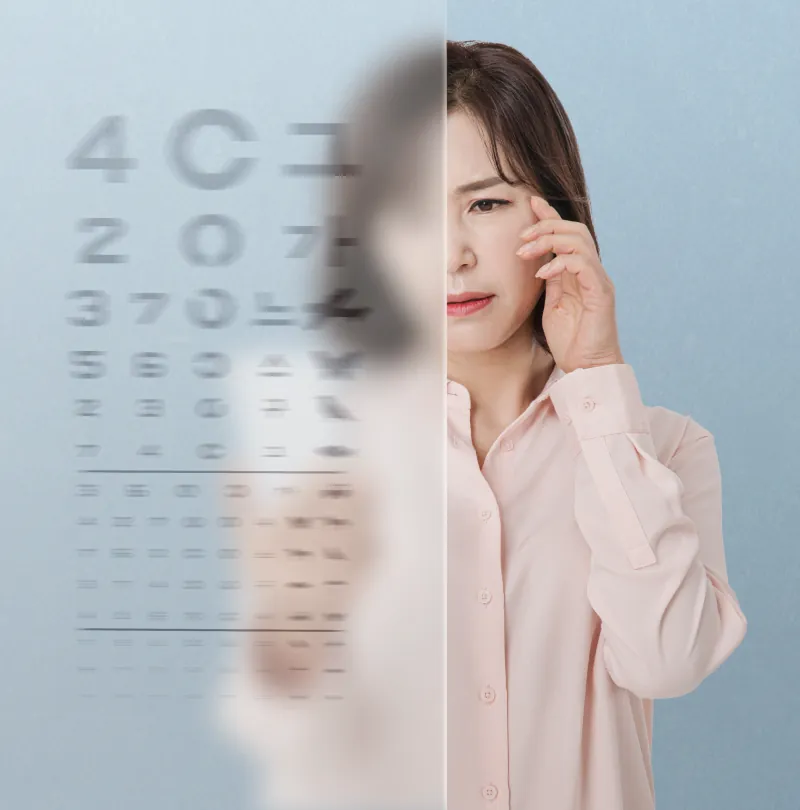
In the first days, a scratchy or watery eye, some blur and sensitivity to light are common, and they usually ease quickly. Those are the expected parts. The ones worth planning around are less common, and some of them appear days or weeks later, which is why the flight home matters so much.
Risks and side effects to know
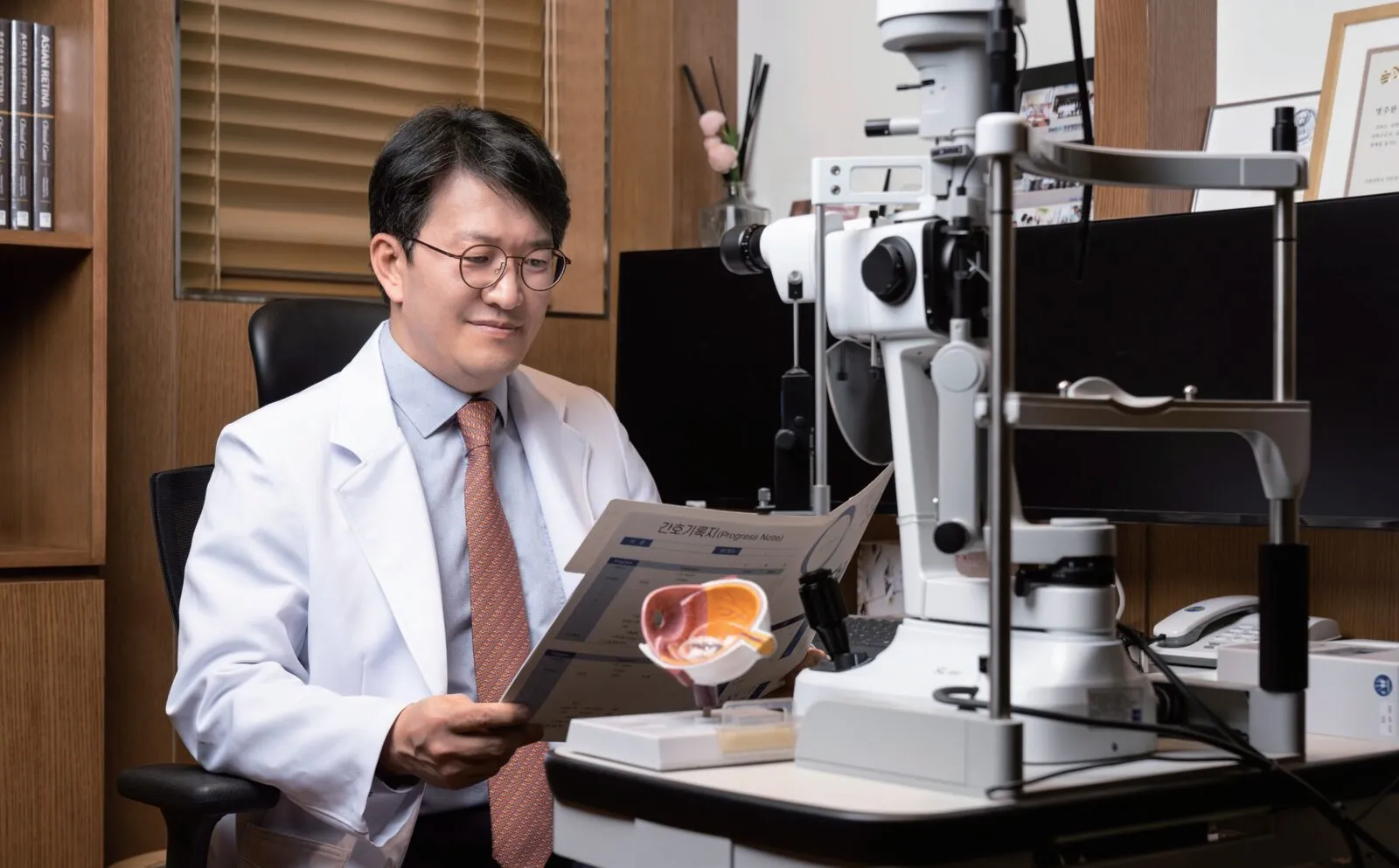
The National Eye Institute lists the complications to know about: swelling, bleeding or infection; vision loss or double vision; unusual changes in eye pressure; retinal detachment; and secondary cataract, where the capsule behind the new lens turns cloudy. Most people never have any of them, but you should know their names before you travel.
Secondary cataract deserves its own sentence because it can show up months or even years later. It is usually treated with a short YAG laser procedure, which many eye clinics at home can perform, so it rarely means another trip to Seoul. We treat it here as well, and our page on secondary cataract treatment with the YAG laser explains what that visit involves.
Some situations are a reason to wait, or to think hard before planning surgery around a trip. As general medicine, these usually call for extra caution:
- Active inflammation in the eye, including uveitis, which generally needs to be settled before lens surgery.
- Diabetes with changes in the retina, where the retina may need treatment or closer watching around the time of surgery.
- A past retinal detachment or other retinal disease, which can change both the risk and the follow-up you need.
- Earlier laser vision correction: the cornea's new shape affects how the lens power is calculated, so bring any records you have. Our article on how LASIK and LASEK reshape the cornea shows why those records matter.
If something happens after you're home, don't wait for a reply from Seoul. The National Eye Institute says to call your eye doctor right away for vision loss, bad pain that won't go away even with pain medicine, very red eyes, or floaters. I'd add a sudden burst of flashes or a shadow moving across your vision, because those can be signs of retinal detachment. See a local eye doctor or emergency department the same day and take your surgery records with you. The CDC's advice for medical travel is to get copies of all your records from the clinic abroad before you return, and to make sure you can get follow-up care at home.
Serious visual side effects, although rare, have happened when surgery went ahead despite an exam result advising against it. So if your exam says the eye isn't ready, or that the retina needs attention first, I'd rather you change the flight than force the plan. An age-related cataract usually changes slowly over months; an operation on an eye that wasn't ready is much harder to undo.
When I'd ask you not to fit this into a holiday
A short trip is the wrong container for cataract surgery in three cases. The first is when you can't stay for the checkups your surgeon schedules after surgery. The second is when both eyes need surgery and you have one week, not one month. The third is when nobody at home has agreed to see you after you land.
The third one is the case people underestimate. A cloudy lens removed in Seoul still needs an eye doctor near your home for the rest of those eight weeks, and for the years after. Line that person up before you book, not after.
If you have a recent report from your eye doctor at home, send a photo of it on WhatsApp and ask whether anything in it, such as a retinal finding or earlier laser surgery, changes the plan. That way your first question is about your own eye history.
How the clinic's week fits a trip
The clinic is open Monday to Wednesday and Friday from 10:00 to 16:30, with lunch from 13:00 to 14:00. Saturday runs 10:00 to 14:30 for exams and surgeries only. Thursday is closed for equipment inspection, and Sundays and public holidays are closed too.
That calendar matters for the first check after surgery. If your surgery fell on a Wednesday, the next day is a Thursday, so ask at booking how your checkups are spaced. Korean public holidays close the clinic as well, so compare your dates with the holiday calendar before you buy tickets.
On the day itself, dilating drops blur your vision for several hours, so plan for someone to go back to your hotel with you rather than navigating the subway alone. The clinic is about a five-minute walk from Nonhyeon Station (Line 7 Exit 5 or Sinbundang Line Exit 4) or Sinnonhyeon Station (Line 9 Exit 2). Professional interpreters on site speak English, Japanese and Chinese. The cataract surgery pre- and post-op guide covers what to prepare before the day and what to avoid afterwards.
What this cataract center has to work with
The clinic has a floor dedicated to each specialty, and cataract and presbyopia care is one of them. Its equipment includes the IOL Master 700, a non-contact device that measures the eye for cataract lens planning, the LENSAR laser and the Signature Pro ultrasonic system used in cataract surgery, and a YAG laser for secondary cataract. Lens options include monofocal, multifocal and specialty IOLs, which are described on the cataract and presbyopia overview.
My own training includes certification as a J&J, ALCON Certified Cataract Specialist in the USA and a PHYSIOL Certified Cataract Specialist in Belgium. If your exam points to the retina, the clinic's Retina Center covers retinal detachment, diabetic retinopathy and macular degeneration with Dr. Yu Hyeong-Gon, who previously served as a professor at Seoul National University Hospital.
One thing to do before you message us: find the eye doctor at home who will see you after you're back, and note their name and city. Send that on WhatsApp with one question, which records you should carry home for them.
Results vary by individual.
Questions answered
How soon can I fly after cataract surgery?
There isn't one number for everyone. The CDC's general advice after major surgeries is to delay air travel 10 to 14 days because of blood-clot risk. Cataract surgery is a much shorter operation, so for your eye the deciding question is usually whether the checkups your surgeon wants have been done. Ask about that before you book the return flight.
Will I still need glasses after cataract surgery?
It depends on the lens chosen and on your eye. Many people with a monofocal lens still use reading glasses, while multifocal and other specialty lenses aim to reduce that need but have their own trade-offs, such as halos for some people at night. The choice is discussed with the doctor after your eye is measured.
Can I go sightseeing in Seoul in the first week?
Walking around is usually fine. In the first weeks, general aftercare advice is to avoid rubbing the eye, dusty places, swimming pools, saunas and hot springs, and to follow the drop schedule exactly. Keep the first days light and leave long day trips for later.
Do I need an exam before my surgery date is fixed?
Yes. Your doctor confirms the procedure at your exam, after measuring the eye and checking the retina. If the exam shows the eye isn't ready, the date should move.
Is there an English-speaking interpreter at the clinic?
Yes. Professional interpreters on site speak English, Japanese and Chinese, so the exam, consultation and aftercare instructions can be explained in English.
Get your free consultation before you decide
- Free consultation and checkup, even if you decide against surgery
- Same price as Korean patients, no overseas surcharge
- Interpreters in English, Japanese and Chinese


