
Korea cataract recovery program for a parent who flies home after surgery
A Korea cataract recovery program is the care that starts once the cloudy lens has been replaced: eye drops on a schedule, a shield at night, check-ups to confirm the eye is healing, and a plan for the second eye if both need surgery. So if you're arranging this for a mother or father, the part that keeps you up at night is probably who checks their eye once they've flown home, and how long the family has to stay in Seoul.
On this page
What the recovery itself involves
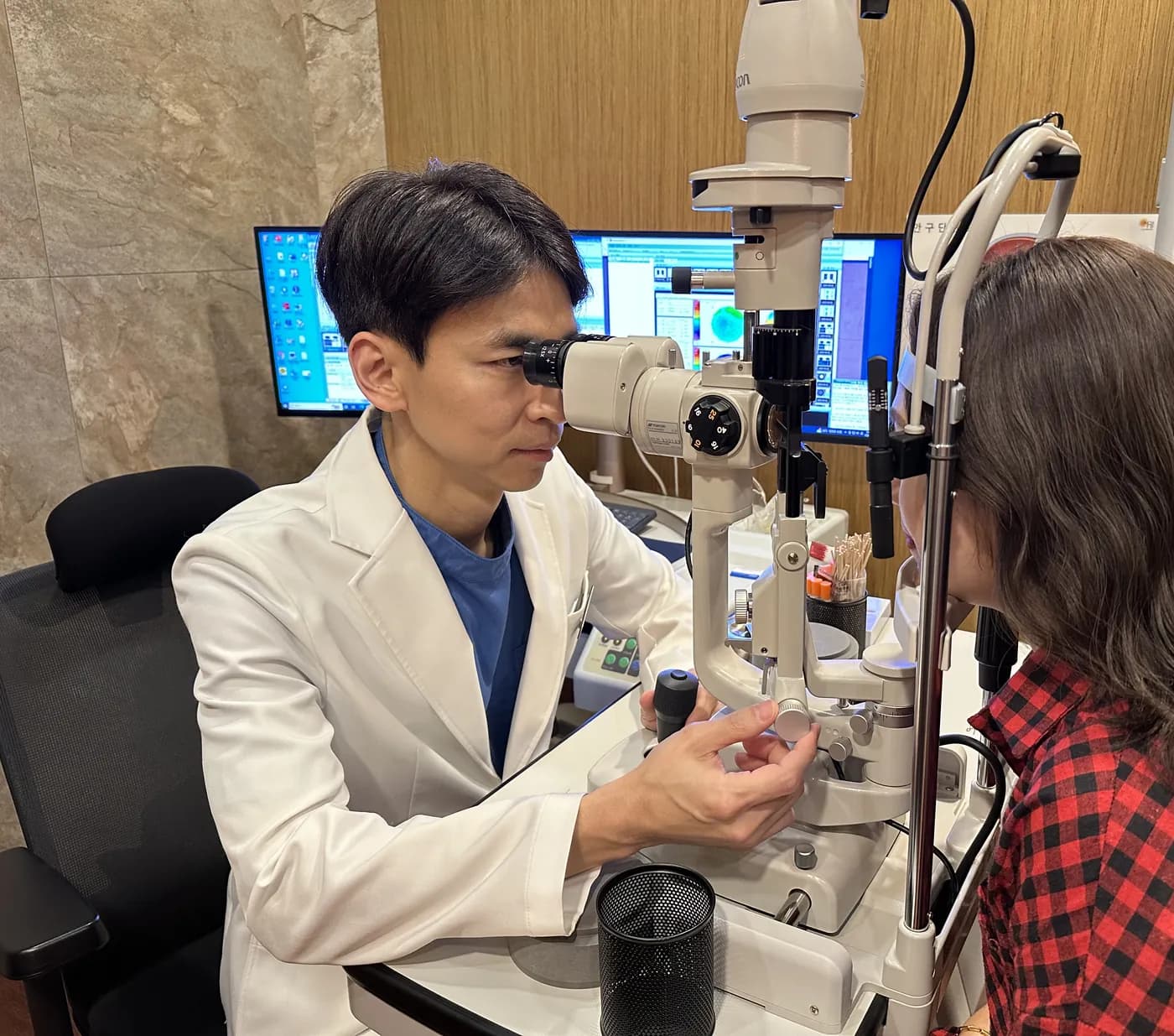
At Sky Eye Clinic the same medical team supports your parent from the exam and consultation through surgery and the key post-operative checks. Interpreters on site speak English, Japanese and Chinese, which helps if your parent is more at ease in Japanese or Chinese than in English.
Add the one question you keep turning over, such as whether both eyes could be done in a single trip.
On surgery day, your parent rests in the recovery room with eyes closed after the operation. A doctor then examines the eye and explains the result, and before leaving you go over how to care for the eye and when the follow-up appointments are.
The weeks after are about protecting the eye while it heals. The AAO and NEI guidance agree on the basics:
- Use the eye drops exactly as directed; they help the eye heal.
- Wear the protective shield while sleeping if one is given.
- Don't rub or press on the eye, and keep soap and water from going directly into it.
- For a few weeks, avoid bending over and lifting heavy things.
That last line is the one families forget when they plan a trip. Suitcases, hotel luggage racks, bending to pull shoes back on at airport security: whoever travels with your parent should expect to do the lifting. You can read our cataract surgery pre- and post-op guide before you settle on dates.
Why does the second eye change the travel plan?
Because the two eyes are usually operated on at separate times, and the National Eye Institute puts the usual gap at about a month. That leaves a family three realistic shapes: two trips, one long stay, or one eye now and a decision about the other later.
Doing one eye at a time means only one eye is healing at once, and the first eye's result can inform the second. If the first eye brings more glare than expected, or focuses at a different distance than your parent hoped, you want to know that before the second lens goes in.
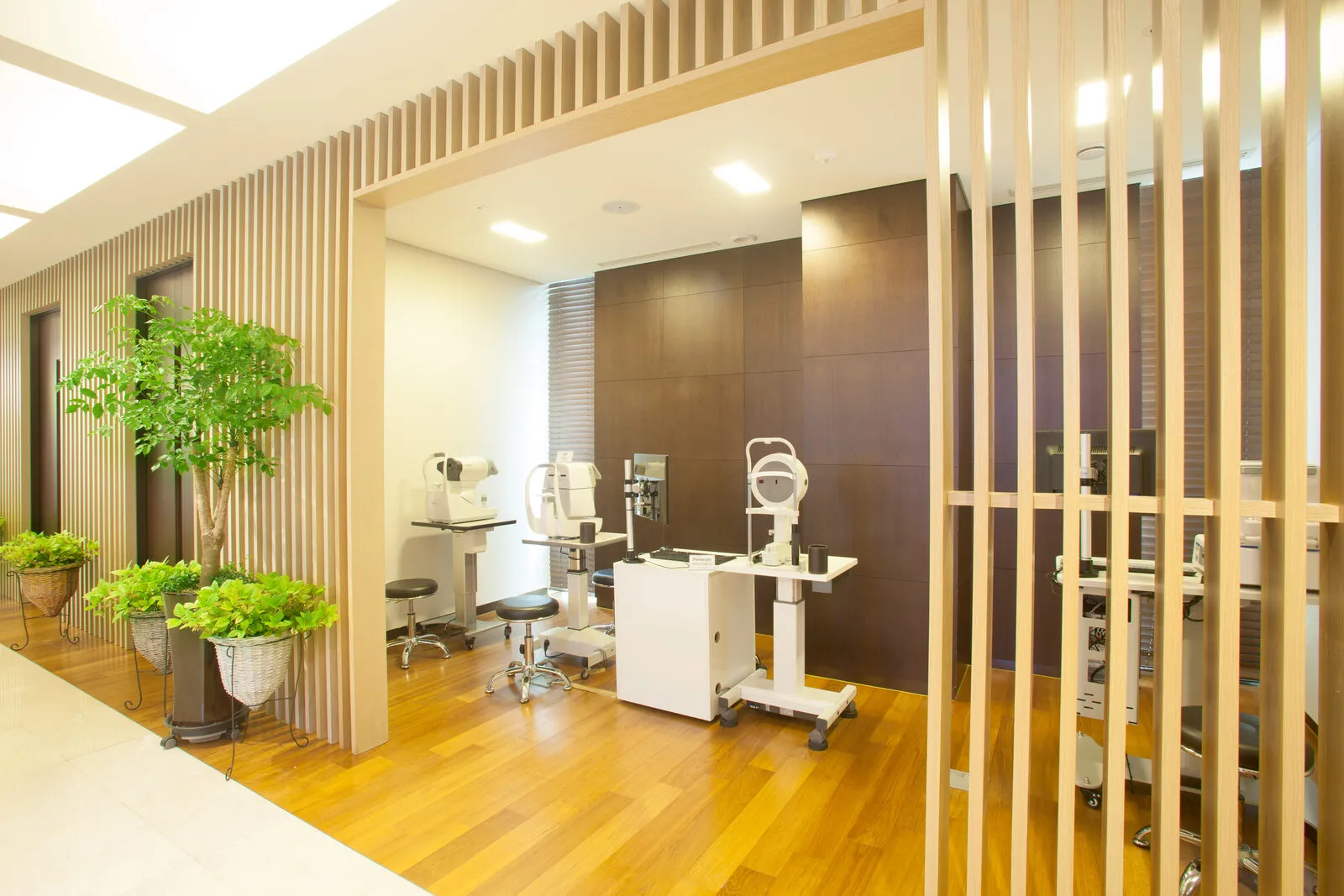
The lens choice is bigger than it first looks. We offer monofocal, multifocal and specialty lenses, and they trade sharpness at one distance against range across several; the cataract lens types page explains each one. We have an IOL Master 700, a non-contact device that measures the eye for lens planning.
If both of your parent's eyes need surgery, I'd plan the second eye before you book the first flight. Squeezing both into one short trip removes the pause in which the first eye shows how the second should be done. For many families, one healed eye now and a return trip about a month later is a plan they can live with.
How long should the family plan to stay in Seoul?
I won't give you a number before the exam, because the check-up schedule depends on how the eye looks after surgery and on the second-eye decision above.
What you can plan now is the calendar around it. We're open Monday to Wednesday and Friday from 10:00 to 16:30, with lunch from 13:00 to 14:00. Thursdays are closed for equipment inspection, Sundays and public holidays are closed, and Saturday (10:00 to 14:30) is for exams and surgeries only.
For the hotel, staying near Nonhyeon Station (Line 7 Exit 5, or Sinbundang Line Exit 4) or Sinnonhyeon Station (Line 9 Exit 2) keeps the walk to about five minutes. That matters on days when your parent is seeing through one blurry eye. When it's fine to fly is a question for the surgeon at the post-operative check, so keep the return date flexible.
Who checks your parent's eye once you're back home?
An ophthalmologist near home, ideally one you've booked before you leave. The National Eye Institute notes that problems after cataract surgery, such as swelling, infection, pressure changes or retinal detachment, can be treated, but treatment works best when it starts early. Your parent needs someone close by who can see them quickly.
Three things make that hand-off work. Book a visit with a local eye doctor for the first days after you land. And keep the warning signs where the family can see them: vision loss, severe pain that medicine doesn't relieve, very red eyes, and flashes of light or many new floaters. Any of those means calling an eye doctor right away rather than waiting for the next appointment. The CDC's medical-tourism advice makes the same point about arranging follow-up care at home and carrying copies of your records.
Months or even years later, some people notice their vision turning cloudy again. That's usually posterior capsule opacification, a cloudy membrane behind the implant, and not the cataract coming back. A YAG laser treatment opens it up. We use a YAG laser for this here, and it's a treatment widely available from eye doctors at home as well.
Who is this kind of trip a good fit for?
A Korea cataract recovery program fits families who can give the healing weeks the room they need. That tends to mean a parent who can walk through an airport and a subway station without much help, someone who can put in their own drops or a companion who can, and a family that can either stay for the first checks or come back for the second eye.
It fits less well when the eyes have other conditions that need close monitoring, such as glaucoma or diabetic retinopathy. Those keep needing an eye doctor long after the cataract heals, so involve the doctor at home before you book anything. It also fits poorly if your parent would travel alone and can't avoid lifting luggage.
Risks and side effects to know before you book
Like any surgery, cataract surgery carries risks. The American Academy of Ophthalmology's list includes infection and bleeding in the eye, swelling at the front or inside of the eye including the retina, retinal detachment, a lens implant that moves out of place, blurred vision, halos, glare or dark shadows, and vision loss.
Two things on the family side lower the chance of a missed problem: following the drops and no-rubbing rules strictly, and calling without delay when a warning sign appears. If your parent had laser vision correction years ago, tell us at the start. It changes the shape of the cornea, which makes choosing the lens power harder, so old records help; this piece on how LASIK and LASEK each reshape the cornea explains the difference between the two.
Healing differs from person to person, and the in-person exam decides whether surgery makes sense now and which lens fits.
The person behind the surgery
My work at the clinic is presbyopia and cataract surgery. My certifications include J&J and ALCON Certified Cataract Specialist (USA) and PHYSIOL Certified Cataract Specialist (Belgium). For cataract surgery we have a LENSAR laser and Signature Pro ultrasonic equipment, and I'm one of ten ophthalmologists here, in a clinic organized into centers for vision correction, cataract and presbyopia, and retina and glaucoma. If an exam turns up something in the retina, the colleague who looks at it works in the same clinic.
If your parent has had any eye surgery before, even LASIK decades ago, write that down along with the name of the eye doctor at home who will see them afterward, and send both in your first WhatsApp message.
Results vary by individual.
Sources
Questions answered
Does my parent need someone with them in Seoul?
We'd strongly suggest it. Vision is often blurry on the day of surgery, the eye has to be protected from rubbing, bending and lifting, and drops need to go in on schedule. A companion who can handle luggage and drops makes the first week much easier.
What is the difference between a monofocal and a multifocal lens?
A monofocal lens focuses at one distance, so most people still use glasses for some tasks, often reading. A multifocal lens spreads focus across distances to reduce dependence on glasses, and some people notice halos or glare at night with it. Which suits your parent depends on the eye measurements and how they use their eyes day to day.
Which languages can we use during the visit?
Interpreters on site speak English, Japanese and Chinese. If your parent is more comfortable in one of those than in English, mention it when you book.
Is laser cataract surgery different from standard cataract surgery?
In laser-assisted surgery, some steps are done with a laser instead of handheld instruments. We have a LENSAR laser for cataract surgery as well as Signature Pro ultrasonic equipment. Whether a laser step suits your parent's eye is decided at the exam.
Get your free consultation before you decide
- Free consultation and checkup, even if you decide against surgery
- Same price as Korean patients, no overseas surcharge
- Interpreters in English, Japanese and Chinese


