
Restrictions After Cataract Surgery: Hands Off, Not Grounded
Worried about which restrictions after cataract surgery will follow you onto the flight home, and how long they'll shape your days once you're back?
On this page
Why almost every rule protects one small incision
For most people the strict part is short. For the first few weeks: no rubbing or pressing on the eye, no bending forward, no heavy lifting, and no soap or water in the eye for the first few days. Flying is usually fine once a surgeon has checked the eye the day after surgery. At home, what matters is spotting four warning signs early.
Hello, I'm Dr. Kim Dong-Soo, Center Director for presbyopia and cataract at Sky Eye Clinic in Seoul.
The surgeon you meet at the consultation is the surgeon who performs your operation, and the same team stays with you from the exam through surgery and the key post-op checks. So the person who clears you to fly is someone who has already seen your eye. If English isn't your parent's first language, a medical interpreter for their language is available at no extra charge.
If you're planning the trip now, start with a free consultation on WhatsApp: send the latest eye exam report from home along with the dates you could travel, and ask how many nights to leave between surgery and the flight.
Modern cataract surgery is done through a cut a few millimetres wide, made so that it usually seals on its own. Picture the slit in a juice pouch after the straw comes out. It closes around itself and holds fine, as long as nobody squeezes the pouch.
That is the logic behind most restrictions after cataract surgery. Pressure from outside (a knuckle rubbing a sleepy eye) or from inside (straining to lift something heavy, hanging your head low) pushes on that seal while it's still fresh. Water and makeup bring germs to it. The US National Eye Institute puts full healing at about eight weeks, but the weeks that need the most care are the first few.
| Restriction | Typical length | Why |
|---|---|---|
| Rubbing or pressing on the eye | First few weeks | Pressure on a fresh incision, germs from fingers |
| Bending forward, heavy lifting | First few weeks | Raises pressure inside the eye |
| Soap or water in the eye | First few days | Infection risk at the incision |
| Pools, hot tubs, the sea | Often about two weeks; ask your surgeon | That water isn't clean |
| Eye makeup | Often about a week | Old products carry bacteria |
| Driving | Only once a doctor confirms your vision | Blur, and the two eyes may not match yet |
| Eye shield at night | Until your surgeon says stop | Stops rubbing in your sleep |
Reading, watching TV and using your phone are not on the list. They won't harm the eye, though your vision may tire quickly in the first days.
If I could keep only one rule, it would be hands off the eye. The itch in the first day or two is real, and people rub without noticing, especially at night. That's why I'd rather you tape the shield on and feel a little silly than wake up with your fist on the eye.
Can you fly home after cataract surgery?
Usually, yes. Cabin pressure is not a problem for an eye after routine cataract surgery. The flight ban you may have read about applies when a gas bubble was placed in the eye during retina surgery, and that isn't part of a standard cataract operation.

One scheduling detail catches people out. The clinic is closed on Thursdays for equipment inspection, so if surgery falls on a Wednesday, the next day is a closed day. Ask at booking how the day-after check fits around that before you fix your dates.
For the flight itself, a few things help more than anything in a brochure:
- Run the drops on elapsed hours, not the clock. A drop schedule written as morning, noon and night falls apart across ten time zones. Count hours since the last dose until you've slept a night at home.
- Keep drops, sunglasses and the shield in your carry-on. Bright airport light is uncomfortable for a few days, and you'll want the shield if you sleep on the plane.
- Don't lift your own suitcase into the overhead bin. That's the heavy lifting and bending in one move. Ask the crew or whoever you're travelling with.
- Bring wipes and keep your hands off your face. Planes and airports are where hands touch the most surfaces.
What's normal in the first two weeks after cataract surgery
Itchiness, mild discomfort and sensitivity to light are common and usually ease within one or two days. Vision is often blurry at first and sharpens over the following days. Many people notice that colours look whiter or bluer, because the cloudy lens that tinted everything yellow is gone.
Say you're arranging this for your father, 73, flying from Toronto, with cataracts in both eyes. He'd like both done in one trip. The common pattern is to operate on each eye separately, often about a month apart, though some health systems do both on the same day. With a long flight home, I'd weigh it this way: one eye per trip means he always has one eye that hasn't just been operated on, and a problem in the first eye can be dealt with before the second. Whether the second eye waits for another trip depends on how dense each cataract is and how much the imbalance between the eyes bothers him in between.
Which warning signs mean a doctor the same day?
In short, these four are the reason to see an eye doctor that day, wherever you are: vision that gets worse instead of better, pain that your pain medicine doesn't relieve, a very red eye, and new flashes of light or a shower of small dark spots or wavy lines. The first three can point to inflammation, a pressure rise or, very rarely, infection. Flashes and floaters can point to a retinal tear, which is uncommon but time-sensitive.
Healing speed differs from person to person, so a friend's timeline isn't yours.
Tell the surgeon before booking if any of these apply, because they change planning more than they rule surgery out:
Risks and side effects to know
- an active eye infection or inflamed eyelids
- diabetes that isn't well controlled, since it also affects the retina
- prostate medicines in the alpha-blocker group, now or in the past, which can make the iris floppy during surgery
- blood thinners or a history of eye inflammation
If a warning sign appears after you're home, go to local emergency eye care the same day and bring your operation records. Don't wait to message Seoul first. Then send us what the local doctor found.
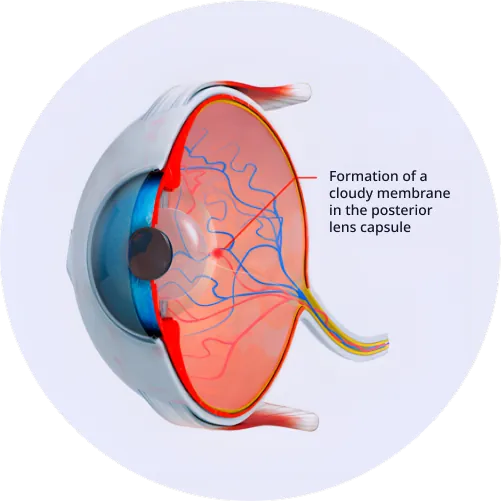
One more thing to know: months or years later, vision can turn hazy again. This is usually not the cataract returning but the thin capsule behind the lens clouding over, and a short laser treatment for secondary cataract clears it.
Before you book flights, send the list of medicines your parent takes every day and any notes from a past eye operation, and ask whether anything on it changes the restrictions or the flight date.
Who looks after the eye once you're home?
In Seoul, the same team that examines and operates handles the key post-op checks. After you land, the checks continue with an ophthalmologist at home, and that appointment is easier to get if you book it before you leave, for the week after you arrive.
What that doctor needs is specific: the date of surgery, which eye, the lens model and power, the biometry measurements taken before surgery, and the drop schedule. Ask for copies before you fly. If you want to understand the lens itself, our page on cataract lens types explains the monofocal and multifocal options.
If you had laser vision correction years ago, bring whatever records you still have to the consultation. A cornea reshaped by LASIK or LASEK makes the lens power calculation harder, and our piece on how corneal thickness shapes the LASIK or LASEK decision explains what those surgeries change. For everyday questions once home, the clinic's WhatsApp Business line is listed in English.
What to ask any clinic before you book
You don't have to choose us. Wherever you go, these questions tell you how your first weeks will be handled:
- Is the surgeon who examines me the one who operates?
- How many post-op checks happen before I can fly, and on which days?
- Will I leave with the lens model, its power and my biometry numbers in hand?
- Is an interpreter there for the exam and for the aftercare instructions?
- If the second eye needs surgery, how far apart are the two operations?
- If vision turns hazy months later, what is the plan?
Where I stand on the rules
The restrictions are short, and they're worth keeping exactly. I'd rather recommend only what fits your eye and your travel than add steps you don't need.
There's no reason to rush the decision. When you're ready, the first step on WhatsApp is a free consultation: send your parent's latest eye report and the travel window, and ask how the day-after check lines up with your flight. If you also want to know about the deposit and how payment works, ask in the same message; both are settled after the consultation. What decides how soon you can fly and swim is how the incision and the inside of the eye look at that first check.
— Dr. Kim Dong-Soo, Center Director
Results vary by individual.
Questions answered
Can I wash my hair after cataract surgery?
Yes, as long as no soap or water runs into the eye for the first few days. Tilting your head back, salon-style, or having someone help keeps the eye dry. Avoid bending forward over a sink.
When can I get new glasses?
Recovery takes about two weeks, and that is usually when new glasses can be fitted. Buying them earlier risks a prescription that no longer matches once the eye settles.
Why do colours look bluer or brighter now?
The cloudy lens that was removed had a yellow tint that filtered everything you saw. The new clear lens lets more blue light through, so whites look whiter. Most people get used to it within days.
Can I sleep on the side of the operated eye?
It's safer not to in the first days, and the night shield is there for that reason. Sleeping on the other side or on your back keeps pressure off the incision.
Do I need to stop my daily medicines before surgery?
Don't stop anything on your own. Some medicines, such as blood thinners and alpha-blocker prostate medicines, matter for planning, so list everything your parent takes and let the surgeon and their regular doctor decide together.
Get your free consultation before you decide
- Free consultation and checkup, even if you decide against surgery
- Same price as Korean patients, no overseas surcharge
- Interpreters in English, Japanese and Chinese