
Retinal Vascular Disease Diagnosis in Korea: How Many Days Do the Scans and Treatment Need?
Is a Korea retinal vascular disease diagnosis something you can get in one visit, or will finding a blocked vessel stretch a short trip into weeks in Seoul?
On this page
What does a Korea retinal vascular disease diagnosis test for?
Your stay is set by what they find: swelling at the center of the retina usually means injections spread over months, so the real planning question is where the second and third treatments happen.
Hello, I'm Dr. Yu Hyeong-Gon, Center Director at Sky Eye Clinic, and I see patients directly at our Retina Center.
I was a professor at Seoul National University Hospital from 2001 to 2022, and the scans this question needs are here: CIRRUS OCT 6000 for swelling, and CLARUS and OPTOS wide-angle imaging for the far edges of the retina. Interpreters on site speak English, the medical interpreter comes at no extra charge, and overseas patients pay the same fees as domestic ones.
If a doctor or optometrist at home has already written something down, send a photo of that report or your latest OCT printout on WhatsApp with the dates you'll be in Seoul, and ask whether those days leave room for the tests and a possible first treatment. The consultation is free, and a scan from home gives the new one something to be measured against.
One situation doesn't belong in trip planning at all. If that's happening to you, go to the nearest emergency department today.
For a vein blockage, or blurred patches that came on over hours or days, the diagnosis is built from a few tests, and the doctor chooses the ones that match your symptoms.
| Test | What it shows | What it means for your days |
|---|---|---|
| Dilated exam | Bleeding and swollen veins on the retina | Near vision blurs for a few hours; no driving |
| OCT | Fluid and thickening at the macula | The finding that most often decides treatment |
| Wide-angle photos | Bleeding and poorly perfused areas far from the center | Shows whether laser may come into the plan |
OCT angiography can show the vessels without any dye, and people under 40 with a vein blockage are usually advised to have blood tests for clotting or thickening as well.
Risks and side effects to know
The OCT number is the one to watch. It measures how thick the center of your retina is, and swelling there is what blurs reading vision. A single reading tells me less than the change between two, which is why a printout from home is worth packing.
How do the results change how long you stay?
Three broad findings come out of the scans, and each sets a different trip. Artery and vein blockages are described in more detail on our retinal vascular occlusion overview.

No swelling, decent vision. Many vein blockages are watched at first, with repeat scans to catch swelling if it develops. Your trip doesn't need to change, but you'll want a follow-up scan booked at home.
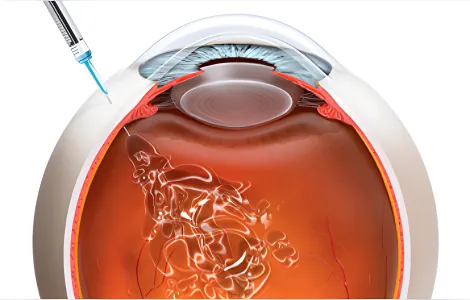
Swelling at the macula. The usual treatment is medicine injected into the eye to bring the swelling down, either an anti-VEGF drug or a steroid. These generally start as a series spaced weeks apart, and improvement usually takes a few months after treatment.
Areas without blood flow, or new abnormal vessels. Laser treatment that places tiny burns on the outer retina lowers the chance of bleeding and keeps eye pressure from climbing. A retinal laser is among the clinic's retina tools, and it is a separate matter from the lasers used for vision correction.
Say an optometrist in Brisbane saw flame-shaped bleeding in one quarter of your left retina, your reading vision is a little soft, and you'll be in Seoul for ten days. I'd put the exam early in the trip. If OCT shows the center is dry, you leave with images and a plan for a repeat scan at home. If it shows swelling and treatment begins in Seoul, the second dose falls after you're back, so the most useful thing to do before flying is to line up a retina specialist at home who will take over with your Seoul scans in hand.
If your travel dates are set, send them on WhatsApp along with the name of the doctor at home who would see you afterward, and ask what you should carry back from the Seoul visit for them. Settling that before the scans keeps a possible course of injections from stalling once you've flown home.
What is a day with dilated pupils like, and what about the days after an injection?
The drops that widen your pupils blur near vision and make daylight glaring for a few hours, so come by subway or taxi, don't plan to drive, and bring sunglasses. The clinic is about a 5-minute walk from Nonhyeon Station (Line 7 Exit 5, Sinbundang Exit 4) or Sinnonhyeon Station (Line 9 Exit 2). We're closed on Thursdays for equipment inspection and on Sundays and public holidays, and Saturdays (10:00 to 14:30) are for exams and surgeries only, so put the exam on a day that leaves a spare day after it.
If a dye test is done, your skin and urine can look yellowish for a day while the dye clears. After an injection, the eye usually feels scratchy for a day or so, a small red patch on the white of the eye is common and fades over a week or two, and a few floating specks from the medicine are normal at first.
Flying after an injection is generally not restricted. The rule against flying applies to a gas bubble, which is sometimes left in the eye after retinal detachment repair; until the gas is absorbed, the altitude change can raise eye pressure sharply.
What should you sort out at home before the scans?
A blocked retinal vessel often says something about the rest of your blood vessels. High blood pressure, diabetes, glaucoma and hardening of the arteries are all linked to vein occlusion, so a recent blood pressure reading and your blood sugar and cholesterol results are worth having before you leave. If you're under 40, the clotting tests mentioned above are easier to arrange with your own doctor before the trip.
Bring a list of your medicines, especially blood thinners, and any earlier retinal photos or OCT printouts. If you've had laser vision correction, mention it: a thinner cornea after surgery can make eye-pressure readings look lower than they are, which matters when glaucoma is on the list of risk factors. If you're still weighing that surgery itself, our piece on choosing between LASIK and LASEK for your cornea covers it separately.
What if bleeding, pressure rise or infection happens after you're home?
The condition itself can progress. Retina starved of blood flow can grow new abnormal vessels, which bleed or push eye pressure up; warning signs are an aching red eye, new haloes around lights or a sudden shower of floaters. The severity of the blockage largely decides whether vision improves with treatment, and some eyes regain little even when everything is done on time.
Injections carry their own small risks. Scratchiness and the red patch are expected. A rare infection inside the eye shows up as pain, increasing redness and falling vision in the days afterward, and it needs same-day care wherever you are.
Travelling for this isn't the right plan for everyone: not with sudden loss of most of the vision in one eye (the emergency above), not while blood pressure is uncontrolled, and with extra care if you're pregnant, since pregnancy can change which treatments are appropriate.
If something goes wrong after you're back, see an ophthalmologist locally that day, and bring the Seoul scan images and the name of any medicine injected. You can send a WhatsApp message with a photo of the treatment record at the same time.
I'd rather tell you that today's scan doesn't need an injection than start a course that ends at the departure gate. Treatment is for your eye, not for volume, and a retina that's dry and stable is often simply rechecked. Many retinal diseases make no noise early, so if only one eye has symptoms, I still want the other one examined on the same day.
A photo of your most recent eye report or OCT, plus the dates you'll be in Seoul, is enough for a first WhatsApp message, and the consultation is free. The question worth asking with it: if swelling shows up, can the first treatment happen during my stay, and what should I take home for the next one? On the day itself, the comparison I'll make first is your new OCT against the one from home, because the change between them tells me more than either picture alone.
Results vary by individual.
Sources
Questions answered
Can I go sightseeing the afternoon after the exam?
Gently. Dilated pupils make bright light uncomfortable and reading hard for a few hours, so sunglasses and an indoor plan such as a museum work better than a map-reading walk. Don't drive until near vision is back.
Is the dye test risky?
For most people the main effects are yellowish skin and urine for about a day, and occasionally brief nausea while the dye goes in. Allergic reactions are uncommon; mention any past reaction to dyes or contrast before the test.
Do overseas patients pay different fees?
No. Overseas and domestic patients pay the same fees. The deposit and payment method are settled after the consultation, so ask on WhatsApp what applies to your visit once you have dates.
Can I fly the day after an eye injection?
Generally yes, because an injection doesn't leave gas in the eye. The flying restriction is for a gas bubble placed during some retinal detachment repairs, which can take weeks to absorb.
Why would someone under 40 need blood tests for a retinal vein blockage?
Vein blockages are uncommon at younger ages, so blood tests for clotting or thickening are recommended to look for a cause outside the eye. Arrange them with your own doctor, ideally before the trip.
Get your free consultation before you decide
- Free consultation and checkup, even if you decide against surgery
- Same price as Korean patients, no overseas surcharge
- Interpreters in English, Japanese and Chinese


