
Am I a LASIK Candidate? Cornea First, Prescription Second
Am I a candidate for LASIK with a strong prescription, or will the scans in Seoul end the plan before it starts?
On this page
Your prescription is rarely the number that rules you out
Your prescription is rarely what decides it. Three readings do: how much cornea would be left under the laser, whether the cornea's shape is regular front and back, and whether your numbers have held steady for about a year.
Hello, I'm Dr. Kim Sang-Myung, an ophthalmologist at Sky Eye Clinic in Seoul. I completed my training at Yonsei Severance Hospital Ophthalmology.
LASIK isn't for everyone, and when a cornea is thinner than the safe threshold I recommend a LASEK-type procedure that preserves more of it. Our equipment includes a Pentacam and a Corvis ST for the cornea, the surgeon who consults with you performs your procedure, and foreign patients get a medical interpreter for their language at no extra charge.
The consultation is free. If you have your current glasses or contact lens prescription and an older one from a year or two back, send photos of both on WhatsApp and ask whether the change between them is small enough to plan surgery around.
A high minus number worries people more than it should. It tells me how much tissue the laser would need to remove, so it matters, but on its own it predicts little. A minus 8 eye with a thick, evenly shaped cornea can have more room to work with than a minus 3 eye with a thin one.
The order I weigh things in is shape first, then the tissue left after correction, then stability. Dry eye, pupil size, your general health and your sport come after that. The U.S. Food and Drug Administration's list of reasons LASIK may not suit someone reads much the same: a prescription that changed in the past year, thin corneas, conditions that slow healing, pregnancy or breastfeeding, and contact sports.
How much cornea is left after the laser?
Most surgeons want at least 250 microns of untouched tissue under a LASIK flap once the laser is done, and many prefer closer to 300. That leftover layer, the residual stromal bed, decides LASIK more often than any other single reading.
Think of planing a door that sticks in its frame. You can shave some wood off the edge, but what's left still has to be thick enough to hang straight for decades. A central cornea commonly measures somewhere around 500 to 560 microns. A LASIK flap is usually about 100 to 160 microns thick, and the laser then removes, very roughly, 12 to 15 microns under it for each diopter of correction.
Add those up for a thinner cornea and a higher prescription, and the bed falls short quickly. Being told your cornea is thick enough isn't an answer to accept from anyone. Ask for the actual figures: central thickness, planned flap thickness, planned ablation depth and the residual bed they leave.
If the bed comes out short, LASEK keeps more tissue because no flap is cut. I've laid out how corneal thickness decides between LASIK and LASEK in a separate post.
What does the shape of your cornea say?
Thickness is one number; shape is a map. A tomography scanner such as the Pentacam reads both the front and the back surface of the cornea, and early keratoconus, a gradual thinning and bulging, often shows on the back surface before glasses or front-surface maps pick it up. The Corvis ST measures something else: it sends a puff of air at the cornea and records how it bends, which gives a picture of its stiffness.
A cornea that steepens toward the bottom, or a back surface that pushes forward, is a reason to stop. Laser surgery removes tissue, and a cornea that is already weak can bulge further afterward. For that eye the conversation turns to cross-linking or a lens implant, and LASIK comes off the table.
One detail catches travelers out. Soft contact lenses gently reshape the corneal surface, and a map taken while that effect lingers can look irregular for the wrong reason, or regular when it isn't. General guidance is to leave soft lenses out for about two weeks before the measurements, soft toric lenses about three, and rigid lenses about four. Count that back from your exam date and pack your glasses for the flight.
I would rather send someone home without surgery than operate on a cornea the scans don't support. Serious visual side effects, although rare, have happened when surgery went ahead despite an exam result advising against it. When a map shows a warning sign, my job becomes finding what fits that eye, and sometimes the answer is to treat nothing yet.
Am I a candidate for LASIK if I have dry eyes or large pupils?
Often yes, but both change which procedure I'd lean toward. Making a LASIK flap cuts many of the corneal nerves that drive tear production, so dryness for weeks to months afterward is common, and eyes that are already dry tend to feel it more. That's a reason to treat the dryness first and to look at options that disturb fewer nerves.
New SMILE LASIK works through a 2mm incision with no flap, and published reviews of the SMILE technique report less disruption of corneal nerves than with LASIK. An ICL lens implant removes no corneal tissue at all, which is why it comes up for dry eyes, thin corneas and high myopia.
Pupils matter mostly at night. If your pupil opens wider in the dark than the treated zone, halos and glare around lights become more likely, so pupil size in dim light belongs in the exam. If you drive a lot after dark, ask about it directly.
A few factors sit outside the eye. Pregnancy or breastfeeding can shift the prescription, autoimmune disease or poorly controlled diabetes can slow healing, and a sport with blows to the face makes a flap a liability. Each of those points away from LASIK, at least for now.
If LASIK is ruled out, what's left?
A no to LASIK is often a yes to something else. Here is how the options on our menu line up against the readings above.
| Option | Often considered when | What to weigh |
|---|---|---|
| LASIK (SCHWIND Amaris Red SPT, Co-Wave) | The residual bed sits well above the threshold and the map is regular | Flap-related complications are possible; early discomfort lasts about half a day |
| LASEK | The cornea is too thin for a flap, or you play contact sports | Discomfort for up to 3 to 4 days and blurring for 5 to 7 days |
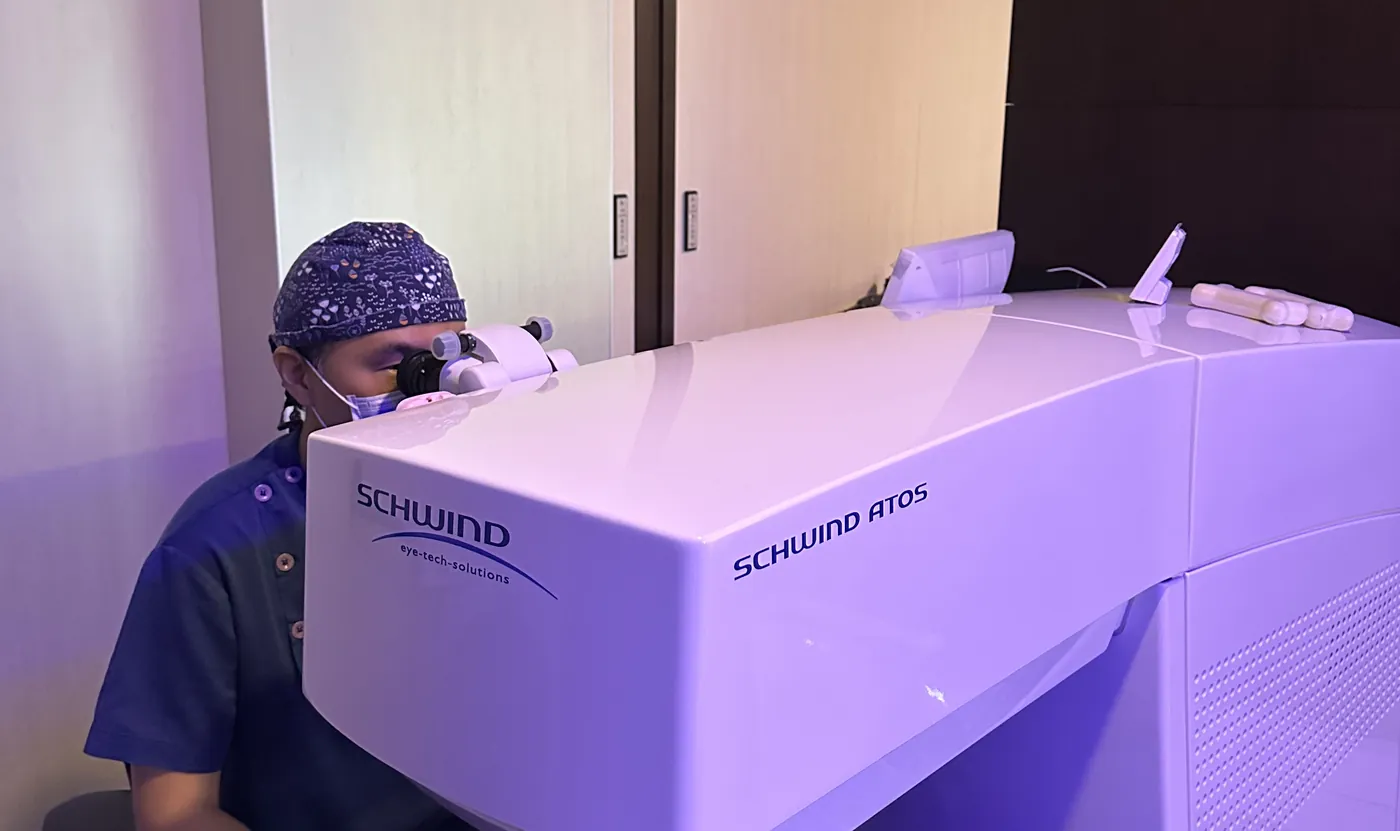
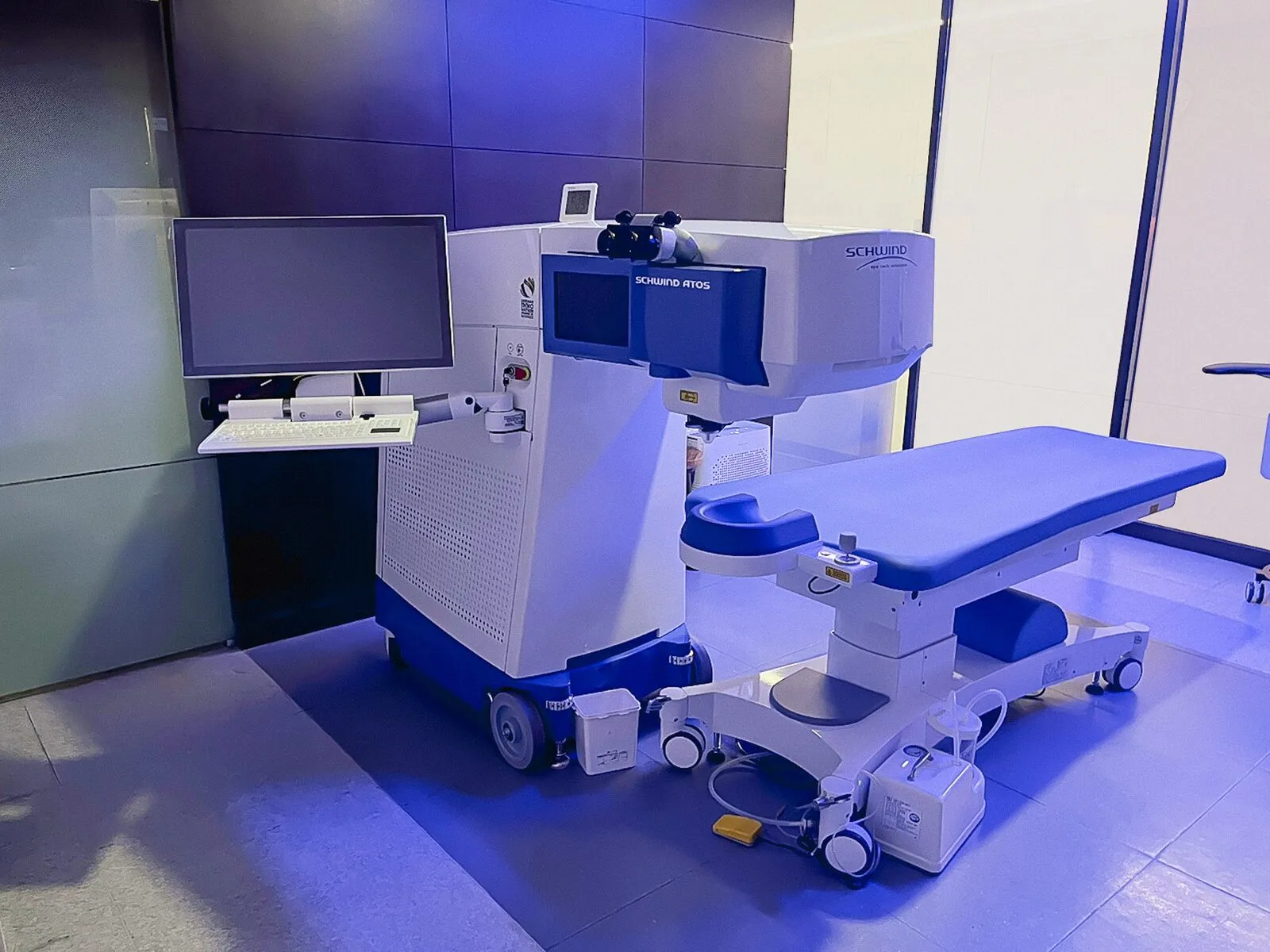
| New SMILE LASIK (SCHWIND ATOS) | High myopia with thin corneas, and you want no flap | No flap, so no flap complications; generally treats myopia and astigmatism, not long-sightedness |
| Smart Nova LASIK (SCHWIND ATOS with CenTrax) | The same flapless approach, with CenTrax correcting rotation and docking error | Ask whether your astigmatism makes that alignment step matter for you |
| ICL lens implant (EVO/EVO+) | High myopia, a thin cornea or dry eye; no corneal tissue is removed | Surgery inside the eye carries its own risks, such as raised eye pressure or an earlier cataract |
You can read more about LASIK with Co-Wave customization, the no-flap New SMILE LASIK and the EVO ICL lens implant.
If an eye exam at home has already given you a corneal thickness reading or a topography printout, send a photo of it on WhatsApp with your prescription, and ask which row of this table your numbers point toward. You can write in English.
Dryness, night halos and a weakened cornea: the risks to weigh
The temporary effects most people notice are dryness, sharpness that fluctuates through the day, and halos or glare around lights at night, usually easing over weeks to a few months. After LASEK, add several days of discomfort while the surface heals. Less common are a flap problem after LASIK, or a small leftover prescription that needs a top-up.
The rare but serious one is ectasia, the cornea weakening and bulging after tissue removal. It is the main reason the shape and thickness readings carry so much weight.
You would usually be asked to wait, or to choose another route, if:
- your prescription has changed in the past year
- you're under 18
- your cornea is thin or irregular, or keratoconus runs in your family
- you're pregnant or breastfeeding
- you have untreated severe dry eye, active eye inflammation, or a condition that slows healing
How you heal and how much dryness you feel varies from person to person, which is why the scans set the plan rather than this list.
Once you're back home, the practical question is who you call. The same team supports you from exam and consultation through surgery and the key post-operative checks, so build those checks into your stay in Seoul. Take copies of your scans and the surgery record home. If you get sudden pain, a sharp drop in vision, spreading redness or strong sensitivity to light, see a local ophthalmologist that day with those records, then let us know on WhatsApp.
What to check before you fly, at any clinic
Put these questions to every clinic on your shortlist, ours included. They are criteria, and the answers will tell you more than any advert.
- Does the exam map the back surface of the cornea and measure its stiffness, or only its thickness?
- Will you be given your numbers: central thickness, planned ablation depth and residual bed?
- Is the doctor who examines you the doctor who operates, and can you see that surgeon's name before the day?
- How long should your contact lenses be out before the scans?
- Will they ask for your older prescriptions to judge stability?
- Which follow-up checks must happen in person, and which records do you take home?
Here, the operating surgeon's name is published on our surgeon name disclosure page, and our complication-prevention program includes a daily equipment check. We're closed on Thursdays for equipment inspection, so plan your exam for another weekday.
Where I stand on LASIK candidacy
A candidacy question deserves numbers along with the yes or no. Several of the doctors here had LASIK or LASEK themselves, so we can describe the recovery from a patient's side, and I'm a Full Member of the Korean Society of Cataract and Refractive Surgery. None of that changes what your cornea allows. If LASIK doesn't fit it, the useful next question is which option does.
For your eyes, the readings that settle this are the residual bed and the back-surface map, with your prescription history as the tiebreaker. Sky Eye Clinic is at 723-26 Banpo-dong, Seocho-gu, Seoul, about a five-minute walk from Nonhyeon or Sinnonhyeon Station.
The consultation is free. Send the dates you could be in Seoul and any eye-exam record you already have on WhatsApp, and ask which of these readings is most likely to change the plan for your eyes.
— Dr. Kim Sang-Myung, Ophthalmologist
Results vary by individual.
Sources
Questions answered
I had LASIK years ago. Can I have it again?
Sometimes. A second treatment depends on how much tissue the first one left, so the residual bed matters even more than it did the first time. Bring the original surgery record if you have it, because it shows the old flap thickness and ablation depth instead of leaving them to estimation.
What counts as a stable prescription?
A common working rule is a change of about half a diopter or less over the past year. Prescriptions often keep creeping into the early twenties, and pregnancy can shift them temporarily, so older records from one or two years back are the most useful thing to bring.
Does astigmatism rule me out?
Regular astigmatism is usually corrected at the same time as myopia. Irregular astigmatism is different: it can be an early sign of keratoconus, and the back-surface map of the cornea is what tells the two apart.
I'm over 40. Is LASIK still worth asking about?
Yes, but the question changes. Around that age near focus starts to fade (presbyopia), and standard LASIK corrects distance vision only. Our menu also includes presbyopic LASIK and LASEK, which are planned with near vision in mind.
What happens if I'm told no after flying in?
You would talk through the alternatives on the table, such as LASEK or an ICL, or the reasons to wait. Ask for copies of your measurements so a doctor at home can see the same numbers. Deposit and payment method are only settled after the consultation, so you aren't committed before your eyes are measured.
Get your free consultation before you decide
- Free consultation and checkup, even if you decide against surgery
- Same price as Korean patients, no overseas surcharge
- Interpreters in English, Japanese and Chinese