
How Long Does LASIK Last? The Reshaping Stays, Eyes Still Age
How long does LASIK last, and is it worth a flight to Seoul if you might be back in glasses ten years from now?
On this page
What does the laser change, and what does it leave alone?
The laser's change to your cornea doesn't wear off, because tissue that has been removed doesn't grow back. What changes is the rest of the eye. A small share of people drift back slightly in the first year or two, and nearly everyone needs reading glasses from their mid-40s, with or without LASIK.
Hello, I'm Dr. Kim Sang-Myung, an ophthalmologist at Sky Eye Clinic in Seoul.
How well a result holds is mostly settled by what gets measured before surgery, so that is where I'm strict: LASIK is not for everyone, and if your scan argues against it I'll tell you. The surgeon who consults with you here is the one who performs your procedure. We have a Pentacam and a Corvis ST, instruments that map the shape and stiffness of the cornea, and you get a medical interpreter for your language at no extra charge.
If you have a recent glasses prescription, send a photo of it on WhatsApp with your age and how many years the numbers have stayed the same, and ask the one question that's holding you back. The consultation is free.
Your focus comes from three things: the curve of the cornea at the front, the lens behind the pupil, and the length of the eyeball. LASIK reshapes only the first. The lens and the length of the eye are exactly as they were.
Think of having a pair of trousers hemmed. The cloth the tailor cuts off never comes back, and if the trousers stop fitting years later, it's because you changed. A cornea works the same way: the reshaping stays, and later blur usually traces to the lens aging or the eye growing longer.
One number to hold onto: the US Food and Drug Administration's patient guidance says vision can take three to six months to stabilize after LASIK. So a wobble in week three tells you very little about year ten. In those early months, blur that comes and goes through the day, worse after long screen hours and better after a blink or a lubricating drop, is usually the tear film settling. That is a different thing from the correction fading.
How long does LASIK last at 25, 35 and 45?
The cornea holds its new shape at any age. What differs is which other part of the eye is likely to move next.
| Age at surgery | What tends to hold | What tends to change next |
|---|---|---|
| Early 20s | The corneal correction | The eye may still be lengthening, so some nearsightedness can return |
| 30s | Distance vision, often for many years | Reading vision from the mid-40s |
| Mid-40s and up | Distance vision | Reading vision is already shifting; cataracts usually arrive from the 60s on |
That first row is why a stable prescription matters more than a birthday. The usual standard is a prescription that hasn't needed changing for about a year.
Say you're 34, you test software in Manchester, and you've been minus 4.25 with a little astigmatism since you were 30. A moderate prescription that has sat still for four years is the profile where I'd expect the distance result to hold well. I'd also tell you that around 45 you'll start holding your phone further away, and that this would have happened in glasses too. If you were 23 and had gone up half a diopter last year, my advice would be to wait, even with the leave already booked.
If you're already past 45, the conversation changes. We'd talk about what you want to see without glasses, and whether a LASIK or LASEK plan designed around presbyopia fits better than a standard distance correction.
Why does some prescription creep back after LASIK?
Regression means a small part of the original prescription returns, usually within the first months to a couple of years. Two things drive it. The surface layer of the cornea thickens a little over the treated zone as it heals, and the cornea can shift slightly in response to its new, thinner structure.
It is more likely after large corrections and after farsighted treatments, and less likely with a moderate nearsighted prescription. For many people who regress, the change is small enough that they notice it only when driving at night or reading subtitles from across the room.
A separate cause gets mistaken for regression: a cornea measured while it was still molded by contact lenses. Contacts change the corneal shape temporarily, and if the laser is planned from that shape, the target is off from the start. The same guidance says to stop soft lenses two weeks before the baseline exam, toric soft or rigid gas-permeable lenses three weeks, and hard lenses four weeks. It's tempting to skip when the fortnight before a trip is busy. Wear the glasses anyway.
Can LASIK be touched up if your vision drifts?
Often yes, and the deciding measurement is how much untouched cornea sits beneath the flap. Each treatment removes tissue. A commonly used floor is about 250 microns of residual bed, and many surgeons keep a wider margin. If the first surgery left room, an enhancement is possible. If it didn't, a surface treatment or a pair of glasses for night driving is the better trade.
Timing matters as much as thickness. The guidance is to wait until measurements are consistent at two visits at least three months apart before any re-operation. If you live abroad, those measurements can be taken by an eye doctor at home, and a second flight only makes sense once the numbers have stopped moving.
This is also why the first choice of method matters for the long run. A thin cornea treated with LASIK has less in reserve, which is the reason I steer thin corneas toward LASEK, as I explain in how corneal thickness decides between LASIK and LASEK.
If your prescription moved in the past year, I'd rather you postpone than fly. A laser aimed at a number that is still changing gives a result that seems to fade, when in fact the eye kept growing. Bring two old prescriptions with dates on them. Those two slips of paper show something a scan taken on one day can't: whether the eye is still moving.
If you had LASIK years ago and things have slipped, the useful details to send on WhatsApp are the year of your surgery and your current prescription, along with whether the blur is at distance, up close, or both.
Your 40s and 60s: reading glasses, then cataracts
Presbyopia is the lens inside the eye stiffening with age until it can't pull focus up close. It arrives for nearly everyone in the 40s, and corneal surgery neither causes nor prevents it. People who had LASIK at 30 sometimes read this moment as the surgery expiring. Their distance vision is typically where it was. The near end is what moved.
Cataracts are the same lens turning cloudy, usually decades later. LASIK doesn't rule out cataract surgery. It does make one step harder: choosing the power of the replacement lens relies on corneal measurements, and the standard formulas are less accurate on a laser-reshaped cornea.
So there is one thing I'd ask anyone having LASIK to do, and it takes two minutes. Before you leave the clinic, ask for a copy of your pre-surgery numbers: the prescription before surgery, the corneal curvature readings, the corneal thickness, and how much was corrected. Keep the file somewhere you'll find it in thirty years. A cataract surgeon in your own country will be glad to have it.
How long does LASIK take, and which days should you plan around in Seoul?
The surgery takes about 15 minutes, though the time varies with the method. The calendar around it is what needs planning.
General guidance is a first check 24 to 48 hours after surgery, then visits at intervals for at least the first six months.
One constraint to plan around: we're closed on Thursdays for equipment inspection, and on Sundays and public holidays. A Wednesday or Saturday surgery puts the first check up against a closed day, so raise your exact dates before you book flights.
Two more things decide the order of your trip. Swimming pools and hot tubs are off limits for one to two months, and contact sports for at least four weeks. If Seoul is one stop on a longer trip that includes beaches or diving, put Seoul last.
Dry eye, glare and ectasia: the risks that bear on the long term
Dry eye, glare, and halos around lights at night are the reactions people notice most in the first weeks, and for most they ease over the first three to six months. A smaller number keep some dryness or night glare longer.
The rare problem that matters for durability is ectasia: a cornea left too thin or too weak slowly bulges forward, and vision gets worse over years. It is the reason corneal shape and thickness are screened before surgery, and the reason for the rule I hold to. Serious visual side effects, although rare, have occurred when surgery went ahead despite an examination result advising against it.
Reasons to wait or choose another route, as general medicine:
- a prescription that changed in the past year
- pregnancy or breastfeeding
- a thin or irregular cornea, or signs of keratoconus
- uncontrolled diabetes or an autoimmune condition that slows healing
- active eye inflammation or severe dry eye
How each of these plays out differs from one eye to the next, which is why I won't give a verdict from a prescription alone.
Once you're home, some dryness and fluctuation in the first months is expected. See a local eye doctor the same day and bring your surgical records, then send us the same details on WhatsApp.
What to check before you fly, at any clinic
- Is the surgeon who examines you the one who operates, and is that person's name published?
- Which instruments measure corneal shape, thickness and stiffness, and will you get the numbers?
- How long must contact lenses stay out before the exam?
- What is the rule if an enhancement is needed later, and who covers it?
- Will you leave with a copy of your pre-surgery measurements?
- Is an interpreter provided, and does it cost extra?
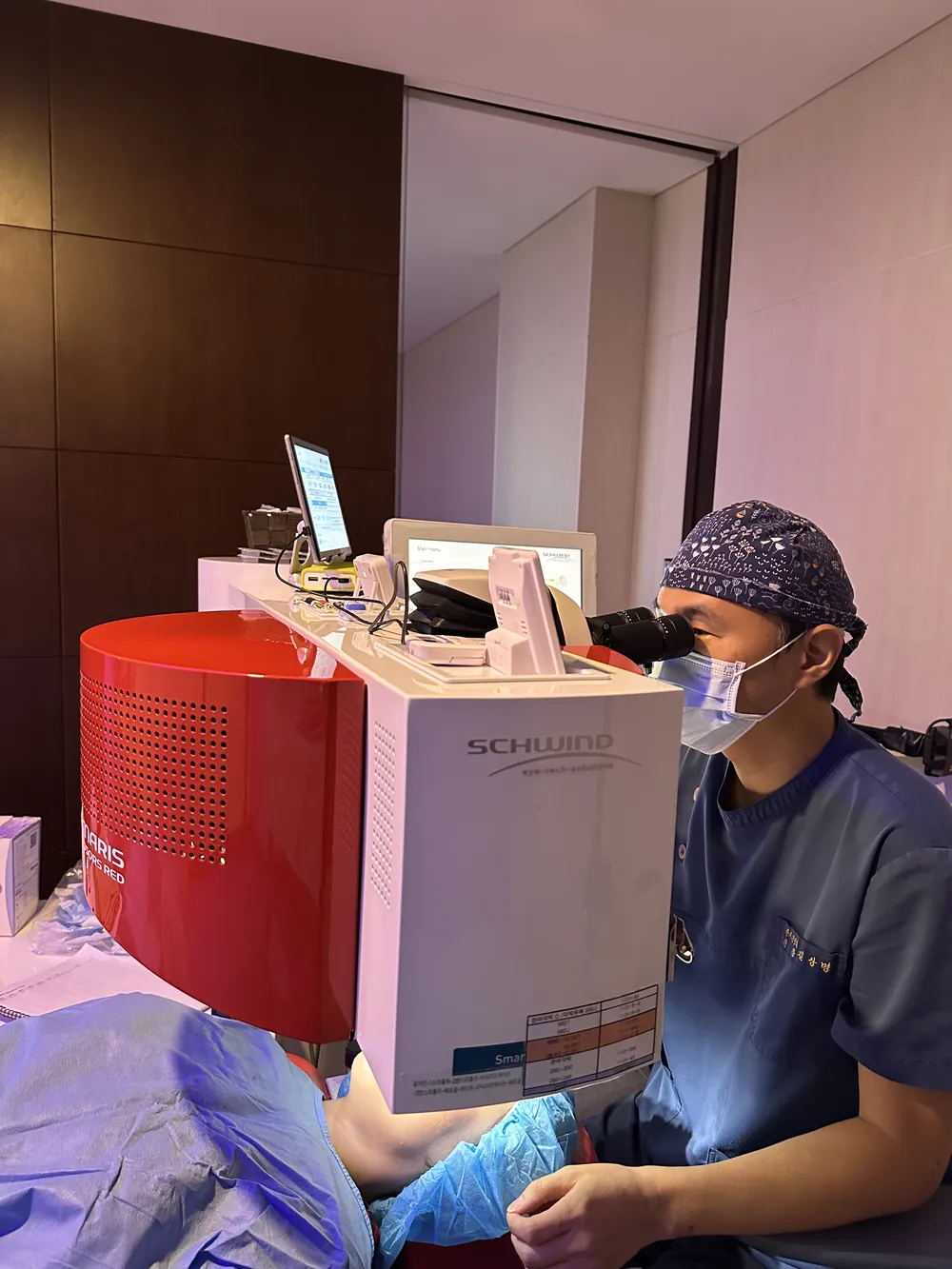
Put these to any clinic you're weighing, ours included. Some of our answers are public: we publish a named-surgeon disclosure page, equipment is checked daily under our complication prevention program, and the Thursday closure exists for equipment inspection. The procedure itself is described on our LASIK page, including the SCHWIND Amaris Red SPT laser we use for it.
Several of the doctors at this clinic had LASIK or LASEK themselves, so how it holds up over decades is a question we have a personal stake in. My position is plain: a stable prescription and a cornea with reserve are what a lasting result is built on, and when either is missing I'd choose a different method or a later date over a quick yes.
Nothing about this decision expires, so take the time to dig out your old prescriptions.
Send two dated prescriptions, your age and your travel window, and ask what is most likely to change first in your eyes: the distance or the reading. What settles how long it lasts for you is how still your prescription has been and how much cornea remains after the correction, and both can be measured. We're at 723-26 Banpo-dong, Seocho-gu, about a five-minute walk from Nonhyeon or Sinnonhyeon Station. Start with the photo of your prescription.
— Dr. Kim Sang-Myung, Ophthalmologist
Results vary by individual.
Sources
Questions answered
Does LASIK last forever?
Your vision, though, is the cornea plus the lens plus the length of the eye, and the last two keep changing with age. A realistic picture is lasting distance correction, with reading glasses from the mid-40s and, for some people, a light pair for night driving later in life.
How long does LASIK eye surgery last on the day itself?
About 15 minutes at our clinic, though the time varies with the method. Afterward you rest in the recovery room and the doctor examines your eyes before you leave.
Can you have LASIK twice?
Sometimes. It turns on how much cornea the first surgery left and whether the prescription has stopped moving. When the remaining tissue under the flap is limited, a surface treatment may be chosen for the second procedure, or glasses for specific tasks may be the wiser answer.
Can pregnancy change a LASIK result?
Hormonal shifts in pregnancy and breastfeeding can change the prescription for a while, which is why surgery is usually postponed during those periods. If you had LASIK earlier and notice blur while pregnant, have it measured again some months after breastfeeding ends before drawing conclusions or considering any enhancement.
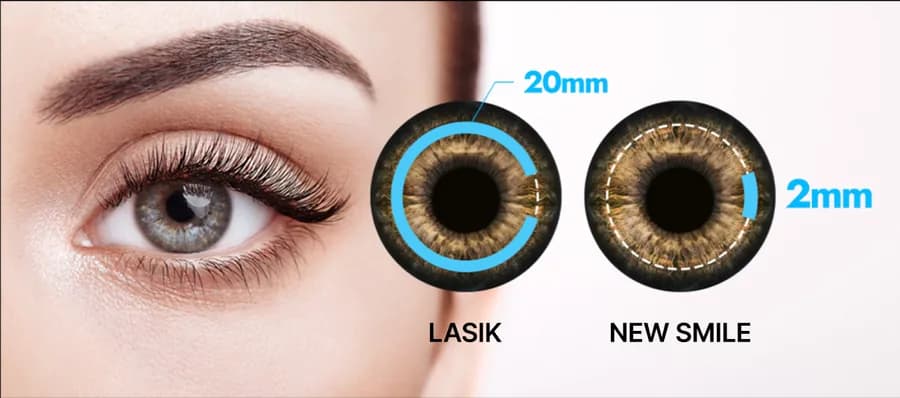
Does New SMILE LASIK or Smart Nova LASIK last longer than LASIK?
All three reshape the cornea, and the long-term result is governed mainly by how stable the eye is, not by which laser was used. Published ten-year follow-up of lenticule-based correction reports that results stayed stable. We offer all three, and the method is chosen from your corneal measurements.
Will LASIK make cataract surgery harder later?
The operation itself is done the same way. The harder step is calculating the power of the replacement lens, because standard formulas assume an untreated cornea. Surgeons use adjusted formulas for eyes that had laser correction, and your pre-LASIK measurements make that calculation more reliable.
Get your free consultation before you decide
- Free consultation and checkup, even if you decide against surgery
- Same price as Korean patients, no overseas surcharge
- Interpreters in English, Japanese and Chinese


