
How Long Does LASIK Take? Minutes to Do, Days to Fly Home
How long does LASIK take, and how many days do you really need in Seoul before you can fly home and be back at your desk?
On this page
How long does LASIK take on surgery day?
The laser itself runs for a few minutes per eye, and the whole operation is usually over in under 30 minutes. Your trip length is set by two other things: the check 24 to 48 hours after surgery, and which method your cornea allows. LASIK discomfort lasts about half a day, while LASEK can blur your vision for 5 to 7 days.
Hello, I'm Dr. Kim Sang-Myung, an ophthalmologist in the vision correction center at Sky Eye Clinic in Seoul.
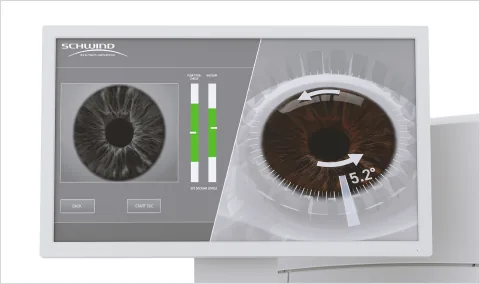
If the corneal scan says LASIK isn't safe for your eyes, I'll say no, and because that answer can add days to a trip, it comes first. The doctor who consults with you is the one who performs your surgery, and a medical interpreter for your language is provided at no extra charge. The lasers here are the SCHWIND ATOS for New SMILE LASIK and the SCHWIND Amaris Red SPT for LASIK and LASEK.
Send your current glasses prescription and the exact dates of your break on WhatsApp, and ask whether those dates leave room for the check after surgery. The consultation is free, and you can write in English.
Minutes under the laser, a few hours at the clinic, and an evening in bed.
The laser time is the part people overestimate. Once the LASIK flap is laid back down, it adheres on its own within a few minutes, without stitches. What people underestimate is the afternoon after. For a few hours the eyes usually feel scratchy or burning and tears run, so the plan for that evening is a taxi to your hotel, a nap with your eyes closed, and nothing on the calendar.
If you're given a sedative before surgery, it slows your reactions, so don't plan to find your own way across the city afterward. Most surgeons also ask you to wear a protective shield while sleeping for the first nights or longer, so you don't rub the eye without knowing it.
How long does LASIK take to heal, day by day?
For a LASIK eye the sting usually fades by that evening, many people see well enough to get around the next morning, and the first check falls 24 to 48 hours after surgery. Full settling is slower: vision can need three to six months to stabilize.
The weeks after that are mostly about what you avoid:
Risks and side effects to know
- Days 1 to 3: jogging or the gym can wait one to three days, longer if the eyes still feel sore. Keep shampoo and shower water out of the eyes.
- First two weeks: no eye makeup or creams near the eyelids.
- First month: dryness is at its peak.
- Four weeks: contact sports and anything that could hit the eye wait at least this long.
- One to two months: no swimming pools, hot tubs or the hot baths of a Korean jjimjilbang.
- Three to six months: vision finishes stabilizing. Halos around headlights at night are often the last thing to fade.
Several of our doctors had LASIK or LASEK themselves, so the advice about that first evening and the dry weeks comes from people who have been on the patient's side of it.
The number I'd protect in your plan isn't the 30 minutes in the operating room. It's the 24 to 48 hours after, because that first check is where a flap that has shifted or an early inflammation gets caught while you're still a short walk away. I would rather you lose a sightseeing day than fly before it.
Your cornea's method changes the count
LASIK, New SMILE LASIK and LASEK take similar time under the laser, but they heal on different clocks, and your corneal thickness decides which of them is open to you.
| Method | Early discomfort | What it means for your trip |
|---|---|---|
| LASIK | About half a day | A short trip can work if the check fits before your flight |
| LASEK | Up to 3 to 4 days; blurring for 5 to 7 days | Plan around a week in Seoul |
LASIK is not for everyone. When the cornea is thinner than a certain threshold for the amount of correction you need, I recommend a LASEK-type procedure, because it keeps the most cornea behind. The reasoning is laid out in why corneal thickness decides between LASIK and LASEK.
LASEK heals like a grazed knee. The thin surface layer of the cornea is removed, and it has to grow back under a protective contact lens before the sting stops and the picture sharpens. That regrowth is what costs the 3 to 4 sore days and the 5 to 7 blurry ones. New SMILE LASIK works differently: the laser removes tissue through a 2mm incision with no flap, so there are no flap complications to watch for.
How many days should you plan in Seoul?
For LASIK or New SMILE, build the trip around three fixed points: the exam, the surgery, and the check 24 to 48 hours later, then add one spare day before the flight. For LASEK, plan on about a week, because the blurring alone can run 5 to 7 days.
The calendar matters more than people expect. The clinic is closed on Thursdays for equipment inspection, and on Sundays and public holidays. Both still fall inside 48 hours, but each costs you a day of the trip. Saturday hours are listed for exams and surgeries only, so if your surgery is on a Friday, confirm at booking that the check can sit on Saturday morning.
A tip that saves a wasted exam: stop wearing contact lenses before you fly out. Soft lenses slightly reshape the front of the cornea, and most surgeons want them out for a week or two before the scans so the thickness map is accurate. Travel in your glasses. Plan for the exam to take most of a morning and confirm its length at booking; if your pupils are dilated, close-up vision stays blurry for a few hours, so keep that afternoon free.
Once the first check looks normal, most eye surgeons are comfortable with a flight. Cabin air is dry, and a LASIK eye in its first weeks already runs dry, so keep lubricating drops in your carry-on and use them often on a long leg.
Say you're 26, a junior accountant in Ho Chi Minh City, about minus 4 in both eyes, with six days off over Tet. You land on a Sunday, have the exam Monday, surgery Tuesday if the scan clears you for LASIK or New SMILE, the check Wednesday, a spare day Thursday while the clinic is closed, and fly Friday. If the scan points to LASEK instead, six days is tight: the blurry week would overlap your flight and your first days back at work. In that case I'd suggest moving the trip to a longer break.
If an eye doctor at home has ever measured your corneal thickness, send a photo of that printout with your return flight time on WhatsApp, and ask how many days a LASEK plan would need compared with LASIK.
Dry eyes, night glare and the rare flap problem
The common reactions are short. Scratchiness and burning last a few hours. Dry eyes usually ease within a month, though for some people they take longer or stay. Glare and halos at night can linger while vision stabilizes over three to six months, which is why night driving feels off for a while. How fast your eyes settle differs from person to person, and the timeline above is a typical one.
Less often, the LASIK flap can wrinkle or shift, which is one reason the first check matters; LASEK and New SMILE have no flap. Serious visual side effects are rare, but they have occurred when surgery went ahead despite an exam result advising against it. That's the reason the scan decides, not the travel dates.
Some people should wait or choose a different route: a prescription that has changed in the past year, pregnancy or breastfeeding, a thin or irregularly shaped cornea, an autoimmune condition or medication that slows healing, and severe dry eye that hasn't been treated.
Once you're home, severe pain, a sudden drop in vision or rising redness means seeing an eye doctor that day, without waiting for a scheduled visit. Before you leave Seoul, book a local ophthalmologist or optometrist for the later checks over the first six months, and carry your surgery record and the method used, so whoever examines you knows exactly what was done. The same medical team stays with you from exam through surgery and the key checks in Seoul; the later ones happen closer to home.
What should you ask any clinic before booking flights?
In short, it doesn't have to be us. Wherever you book, get these answered before you pay for a ticket:
- Which scans measure your cornea's thickness and shape, beyond the prescription itself.
- Whether the doctor who consults with you is the one who operates, by name.
- Which day your first check falls on, and whether the clinic is open that day.
- What happens to your plan if the scan rules out the method you came for.
- Whether an interpreter for your language is in the room, and at what charge.
- What records you leave with for your eye doctor at home.
Where I stand on rushing the trip
The laser is the shortest part of this, and I don't want those minutes squeezed against a departure time. I'd rather you spend one extra night in Seoul than board a plane before anyone has looked at the eye after surgery. None of this needs deciding this week; dates can move once you know which method fits.
What settles your trip length in the end is the thickness map of your cornea and how much tissue your prescription would remove from it. Sky Eye Clinic is at 723-26 Banpo-dong, Seocho-gu, Seoul, about a 5-minute walk from Nonhyeon or Sinnonhyeon Station.
Send your glasses prescription, the dates you could be in Seoul and your return flight time on WhatsApp, and ask the question that decides your booking: if my scan points to LASEK rather than LASIK, how many extra days should I hold? The consultation is free.
— Dr. Kim Sang-Myung, Ophthalmologist
Results vary by individual.
Sources
Questions answered
Are both eyes done on the same day?
With LASIK and SMILE-type surgery, both eyes are usually treated in the same session, one after the other, so the laser time is a few minutes per eye rather than two separate trips. Whether that suits your eyes is part of the exam.
When can I look at my phone or laptop again?
Short periods the next day are usually fine for LASIK or New SMILE. Screens make you blink less, which worsens the dryness of the first month, so take breaks and use lubricating drops. With LASEK, the 5 to 7 blurry days make screens hard work anyway.
Can I go to a jjimjilbang or hotel pool during my trip?
Not on this trip. Swimming pools, hot tubs and hot baths should wait one to two months after surgery, because the water can carry bacteria to a healing cornea. Keep the sauna for a later visit.
How long until night driving feels normal?
Glare and halos around headlights can persist while vision stabilizes, which may take three to six months. Many people find them fading within weeks, but if night driving is part of your job, avoid long night drives until the halos have settled and your eye doctor at home agrees.
Can I go back to work the day after I fly home?
For a desk job after LASIK or New SMILE, many people do, with drops on hand and short screen breaks. After LASEK, count from the surgery date: if the 5 to 7 blurry days aren't over when you land, take the remaining days off.
Get your free consultation before you decide
- Free consultation and checkup, even if you decide against surgery
- Same price as Korean patients, no overseas surcharge
- Interpreters in English, Japanese and Chinese