
How Long Is LASIK Surgery? Under 30 Minutes, Then 48 Hours
How long is LASIK surgery, really, once you count the exam, the time in the chair and the days your eyes need before a long flight home?
On this page
How long is LASIK surgery once you're in the chair?
The operation takes less than 30 minutes for both eyes, and the laser itself usually runs for well under a minute per eye.
Hello, I'm Dr. Kim Sang-Myung, an ophthalmologist at Sky Eye Clinic in Seoul. I completed my ophthalmology training at Yonsei Severance Hospital, and my work is vision correction: LASIK, LASEK and New SMILE.
The surgeon who consults with you is the surgeon who operates, and the clinic names its surgeons on a public page. Your cornea is measured on a Pentacam and a Corvis ST, and if those numbers say LASIK is the wrong trade for your eye, I'll tell you that before anything is booked. A medical interpreter for your language is provided at no extra charge.
If you're fitting this into a fixed block of leave, send your current glasses prescription and the dates you could be in Seoul on WhatsApp, and ask whether that window leaves room for the exam and the next-day check. The consultation is free.
Less than 30 minutes from lying down to sitting up, both eyes included.
Think of a key-cutting counter. The machine grinds for a few seconds; the rest of the visit is measuring and clamping the blank so the cut lands where it should. LASIK runs the same way. Numbing drops go in, a small holder keeps your lids open, and a thin flap about 160 micrometers thick is lifted on the upper cornea. The laser reshapes the tissue underneath, the flap is laid back, and the second eye follows.
The drops numb the surface, so most people describe pressure and bright lights rather than pain. On the day itself you may feel irritation, tearing and a grainy feeling. With LASIK on the SCHWIND Amaris Red SPT, that discomfort usually lasts about half a day.
The method changes what the next hours feel like more than it changes the chair time. New SMILE LASIK uses the SCHWIND ATOS laser through a 2 mm incision with no flap at all, so there are no flap complications to think about. Smart Nova LASIK adds CenTrax, which corrects for eye rotation and docking error during treatment.
Several of my colleagues here had LASIK or LASEK themselves, so the advice about surgery evening comes from the patient's side as well as ours. The minutes on the table go by fast. The evening is the part to plan: a taxi straight to the hotel, eyes closed, no phone, an early night.
Why is the exam the longer appointment?
Dilating drops are often part of it, and they blur near vision for a few hours, so don't schedule anything that needs reading afterward.
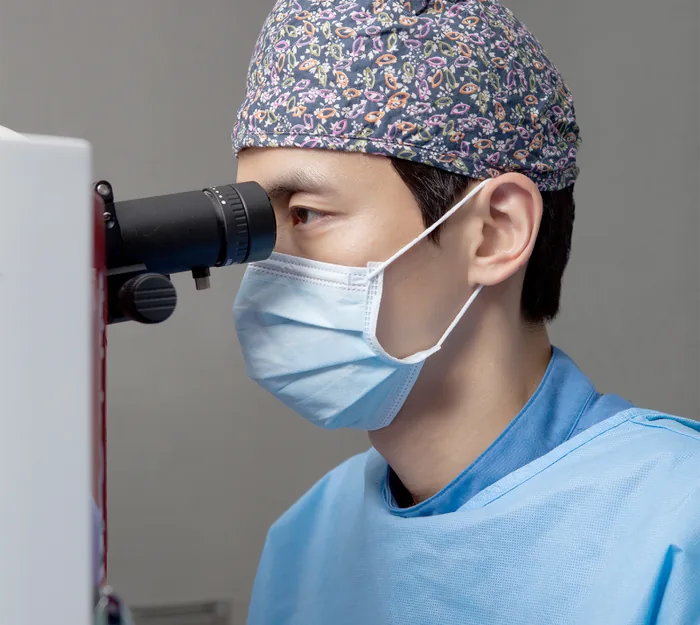
The Pentacam maps the shape and thickness of your whole cornea. The Corvis ST watches how the cornea flexes under a puff of air, which tells me something about its strength that thickness alone doesn't. The number I weigh most is the untouched cornea left under the flap and the treatment once the laser is done. Many surgeons won't go below roughly 250 to 300 micrometers there, and a stronger prescription uses more tissue, so a thinner cornea with a higher prescription reaches that floor first.
LASIK isn't for everyone. If your cornea is thinner than that threshold allows, I recommend a LASEK-type procedure, which preserves the most residual cornea. How that line gets drawn is covered in LASIK or LASEK? Why your cornea decides. Two other conditions apply before any of it: you need to be 18 or older, and your prescription should not have changed in the past year.
The tip most people learn too late is about contact lenses. Lenses bend the cornea's shape, and it takes time to settle after you stop. Soft lenses usually need to stay out for about two weeks before the measurements, rigid lenses longer. If you switch to glasses only when you land in Seoul, the scan reads a cornea that hasn't settled, and the surgery date moves.
What does recovery after LASIK look like, day by day?
The first two rows tie you to Seoul. Everything after that can happen at home, with your own eye doctor handling the later checks over the first six months.
| When | What you'll usually notice | What it means for your trip |
|---|---|---|
| Surgery day | Irritation, tearing, a grainy feeling for about half a day | Taxi to the hotel, rest, no sightseeing |
| Within 24 to 48 hours | Clearer vision; first post-op check | You need to be in Seoul for this visit |
| Days 1 to 3 | Non-contact sports can resume after one to three days | Walking the city is fine; no rubbing your eyes |
| Up to 2 weeks | No lotions, creams or makeup around the eyes | Pack accordingly |
| 4 weeks | No strenuous contact sports | Plan it for home |
| 1 to 2 months | No swimming, hot tubs or whirlpools | Skip the hotel pool and spa |
| 3 to 6 months | Vision can take this long to stabilize | Checks at regular intervals, at home |
If the exam steers you to LASEK, the timeline stretches. Discomfort can last up to 3 to 4 days and blurring 5 to 7 days while the surface layer regrows under a protective lens. That's why your corneal numbers decide the plane ticket more than the surgery does.
How many nights should you book in Seoul?
For LASIK or New SMILE, book at least two nights after surgery day and keep one spare day. If LASEK is likely, a week after surgery is more comfortable.
The calendar matters as much as the eye here. The clinic is closed on Thursdays for equipment inspection, open on Saturdays from 10:00 to 14:30 for exams and surgeries only, and closed on Sundays. Surgery on a Wednesday puts the 24-hour mark on a closed day. Surgery on a Saturday makes Monday the earliest check, right at the edge of the 48 hours.
Say you're 44, an accountant in Denver with eight days off around a holiday, minus 4.50 in both eyes and done with contacts. Your lenses have been out for two weeks, you land on a Saturday, and Sunday goes to jet lag. The exam is Monday. If the numbers point to LASIK and surgery goes ahead early in the week, the check falls before the Thursday closure, and Friday stays free as a buffer before a weekend flight. If the numbers point to LASEK, those eight days get tight, and I would rather tell you that than squeeze your eyes into the schedule.
Cabin air on a long flight is dry, and newly treated eyes feel it. Keep your lubricating drops in your carry-on, not the checked bag, and ask at your check whether you're cleared to fly.
Once you have a window in mind, message us on WhatsApp with those dates and a photo of your prescription, and ask which weekday would put your first check before the Thursday closure. Deposit and how you pay are settled after the consultation, so you can raise that in the same message.
Dry eye, glare and a moved flap: what can stretch recovery
The common reactions are temporary. Dry, scratchy eyes are the most frequent, especially by evening, along with glare or halos around lights at night and vision that fluctuates through the day. These usually ease over weeks, while full stabilization can take three to six months.
Less common is a flap that shifts, usually from rubbing or a knock in the first days, which is why keeping your hands away from your eyes matters more than any eye drop. Rare problems include infection, inflammation under the flap, and a cornea that weakens and bulges when too much tissue was removed. Serious visual side effects, although rare, have occurred when surgery went ahead despite an exam result advising against it. That is the reason the exam outranks your flight booking.
It makes sense to wait, or to choose another method, if:
- your prescription has changed within the past year
- you're under 18
- your cornea is thin or irregular on the scan
- you're pregnant or breastfeeding, since hormones can shift your prescription
- you have an active eye infection or a condition that slows healing
How quickly your own eyes settle varies, which is why the spare day matters. The same medical team supports you from the exam and consultation through surgery and the key post-operative checks while you're here. Once you're home, sudden pain, a drop in vision, rising redness or new light sensitivity means seeing an ophthalmologist that day rather than waiting. Before you leave Seoul, ask for a copy of your surgery details, the method, the laser and the treatment numbers, so the doctor at home isn't starting blind.
How long does LASIK last after 40?
The reshaping in your cornea stays. What changes after 40 is the lens behind it.
The natural lens stiffens with age and loses its ability to focus up close, which usually begins in the early to mid 40s. LASIK doesn't stop that. Higher prescriptions can also drift back slightly over the years, which is one more reason the cornea left after treatment matters.
Presbyopic LASIK and LASEK are among the options here; whether either suits you is an exam question, not a reading-glasses question. Keep your surgery record somewhere safe either way. If you need cataract surgery decades from now, the lens calculation is more accurate when the surgeon knows what was done to your cornea.
Questions to ask any clinic before you book the flight
- Is the doctor I see at the consultation the one who operates on me?
- What is my corneal thickness, and how much will remain under the treatment?
- On which day is my first check, and is the clinic open the day after surgery?
- How long must my contacts be out before the measurements?
- Can I take a copy of my surgery details home?
- Is an interpreter there for the exam and the consent, and is there an extra charge?
Ask these wherever you end up having it; the answers should arrive before the plane ticket does. Our side of the list is public: surgeons are named on the clinic's surgeon-disclosure page, and the equipment is checked every day under the complication-prevention program.
Where I stand on this: the laser is the shortest part of LASIK, and the measurement is the part I won't hurry. If your numbers say LASEK or New SMILE fits your cornea better, I'd rather change the plan, and the trip, than fit your eye to your calendar. You don't have to settle your dates before you ask.
Send your current prescription and the leave dates you're working with on WhatsApp, and ask whether surgery could fall on a Monday or Tuesday inside that window. The consultation is free. At the exam, the number that decides your trip length is the cornea left under the treatment, because it decides LASIK or LASEK, and LASEK adds days. Sky Eye Clinic is at 723-26 Banpo-dong, Seocho-gu, Seoul, about a 5-minute walk from Nonhyeon or Sinnonhyeon Station.
— Dr. Kim Sang-Myung, Ophthalmologist
Results vary by individual.
Sources
Questions answered
Does LASIK hurt while it's being done?
Numbing drops mean most people feel pressure and a brief dimming of vision while the flap is made, rather than sharp pain. The gritty, teary feeling arrives as the drops wear off and, with LASIK, usually fades over about half a day. An early night helps more than anything else.
Are both eyes done on the same day?
Usually, yes, one after the other in the same session, and the under-30-minutes figure covers both. If the exam finds a reason to treat one eye at a time, the trip gets longer, so raise it at the consultation.
When can I look at screens or work at a desk again?
Many people are back at a screen within a day or two. Screens don't harm the eye, but you blink less when you stare, so the eyes dry faster. If you plan to work remotely during the trip, keep the day after surgery as a rest day.
What if my prescription changed a little this year?
The requirement is a prescription unchanged for the past year. A tiny shift can be measurement noise, while a steady drift is a reason to wait. Bring both the old and the new prescription with their dates so the change is visible at the exam.
Do I need someone to come with me?
You shouldn't drive after surgery, and your vision will be hazy that evening, so either bring someone or arrange a taxi back to your hotel before the surgery starts.
Get your free consultation before you decide
- Free consultation and checkup, even if you decide against surgery
- Same price as Korean patients, no overseas surcharge
- Interpreters in English, Japanese and Chinese