
Korea Laser Eye Surgery Reviews and Complaints: Which Should Change Your Plans?
Reading Korea laser eye surgery reviews and complaints the week before your long weekend, and wondering which of them should actually change your plans?
On this page
Which complaints should change your plans?
Read on before you book the flight.
You'll come away knowing which complaints point to a real problem, what decides the cost, how LASEK compares with the other methods and how long recovery takes. With that, you can check a Korean clinic against your own eyes and your budget.
Hello, I'm Dr. Kim Sang-Myung, an ophthalmologist at Sky Eye Clinic in Seoul and a full member of the Korean Society of Cataract and Refractive Surgery. Vision correction is my field.
Ten ophthalmologists work here, in separate centers for vision correction, cataract and presbyopia, and retina and glaucoma. Our surgeons are named on a public page, and we close every Thursday for equipment inspection.
I wrote this because a complaint that sounds alarming online often describes normal LASEK healing, while the complaints that matter get buried under it.
The complaints worth acting on are about the exam, a surgeon you never met, and aftercare once you're home, and you can check all of them before booking. Complaints about pain and blur in the first week after LASEK usually describe normal healing: discomfort for up to 3 to 4 days and blurring for 5 to 7.
You can write in English, and having the complaint and your own number side by side makes any answer easier to weigh.
When I read Korea laser eye surgery reviews and complaints, the same few patterns come up. Each one has a check you can do before you book.
“They chose my surgery before examining me”
This one deserves attention. A method picked from a prescription alone skips the measurements that decide whether your cornea can take it. Here, your doctor confirms the procedure and the final fee at your exam, once the measurements are in. Whichever clinic you consider, ask whether the method and the fee are confirmed after the full exam.
“I never knew who operated on me”
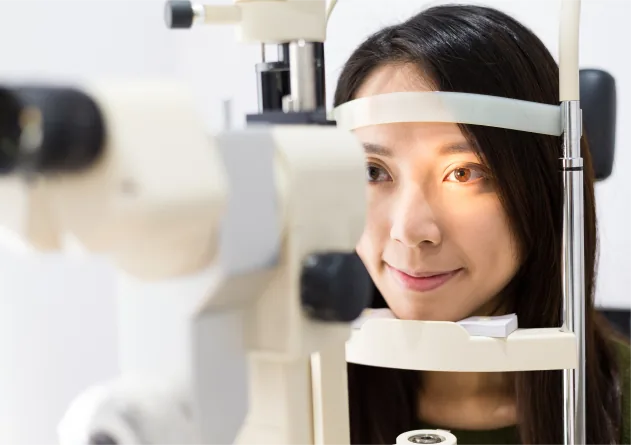
This is checkable before you fly. Look for surgeons named with their credentials, and for a first visit where you meet your doctor. At our first visit, the doctor examines your eyes with a slit-lamp microscope and holds the pre-surgery consultation. On surgery day, the doctor examines your eyes again after the operation and explains the result. The same medical team supports you from examination and consultation through surgery and the key post-operative checks.
“Nobody warned me LASEK would hurt for days”
Mostly an expectation gap. LASEK removes the surface layer of the cornea, about 50 micrometers, and that layer has to grow back. Discomfort for up to 3 to 4 days and blurring for 5 to 7 days is the expected course. What should prompt a call is pain that gets worse after the first few days, or vision that drops instead of slowly clearing.
“I flew home and had no one to call”
This is the one that worries me most. Before you leave the clinic on surgery day, you go through aftercare instructions and discuss your follow-up appointments. The CDC's medical tourism guidance adds two steps on your side: get copies of your medical records before returning home, and arrange follow-up with a local provider before you travel. An eye doctor at home who has agreed in advance to see you turns a worrying evening into an appointment.
What does the first exam check?
A complaint that sometimes appears is “they told me I wasn't a candidate after I'd flown in.” It's disappointing, and it's also the exam doing its job. Our first visit runs through these steps:
- auto-refraction, which measures myopia, astigmatism and the curvature of the cornea
- eye pressure; normal is 10 to 20 mmHg, and a higher reading leads to a detailed glaucoma exam
- corneal topography, which maps the corneal surface to detect keratoconus and irregular corneas
- fundus photography of the retina and optic nerve
- further precision tests to plan the surgery
- an optional Avellino corneal dystrophy DNA test; if it's positive, surgery is avoided
- a one-to-one session with a counselor, then the doctor's exam and consultation
Risks and side effects to know
If your results show a condition that rules out surgery, the team explains it during your consultation. Serious visual side effects, although rare, have happened when surgery went ahead despite an exam result advising against it. Sending an earlier exam result or your prescription history before you fly lowers the chance of that surprise, because a prescription that has moved within the past year is already a reason to wait.
Methods: is LASEK the right one for your cornea?
LASEK removes the surface epithelium and treats the layer beneath it, leaving the most corneal tissue behind. That's why it's the direction we take when the cornea is thinner than a certain threshold. Dry eye after LASEK tends to be milder than after LASIK. Corneal haze can develop, mainly in high myopia. We offer standard LASEK, Amaris Red LASEK and 2Day LASEK; details are on our LASEK page.
LASIK creates a flap about 160 micrometers thick, and the early discomfort usually lasts about half a day. Dry eye may persist longer than after LASEK, and flap-related complications are possible. New SMILE LASIK uses a 2mm micro-incision with no flap, and face washing, basic makeup and light exercise are possible from the next day. If you want the thickness question in more depth, our post on how your cornea decides between LASIK and LASEK covers it.
Some of the LASEK complaints you'll read come from people whose corneas left them few other laser options. When the cornea is thin for the correction, I'd choose the slower recovery over removing tissue the cornea can't spare. A week of blur is a planning problem. A weakened cornea is a medical one.
What decides the cost of laser eye surgery in Korea?
Another complaint you'll see is that the price changed after the exam. Usually that means the measurements changed the method, for example from LASIK to LASEK, or to a different LASEK option.
The method and its variant matter most, and the exam sets them. Whether you treat one eye or both comes next. Ask about each, so two figures you compare cover the same things.
Your own costs count as well. LASEK keeps your vision blurred for 5 to 7 days, so it usually means more hotel nights than a flap-free method, and you'll want a follow-up visit with an eye doctor back home.
To get the figure for your case, ask on WhatsApp what LASEK, or whichever method you're weighing, would cost with your prescription and what that figure covers.
Recovery: how many days should you plan for LASEK?
Say you're 27, you teach English in Tokyo, your glasses read -4.75, and you have a four-day weekend. Here's how I'd think it through.
If your cornea is thick and regular, a flap-free method might fit a short trip. If it turns out thin and LASEK is the right call, four days means flying home while your vision is still blurred and before the surface has finished healing. In that case I'd tell you to save LASEK for a longer school break.
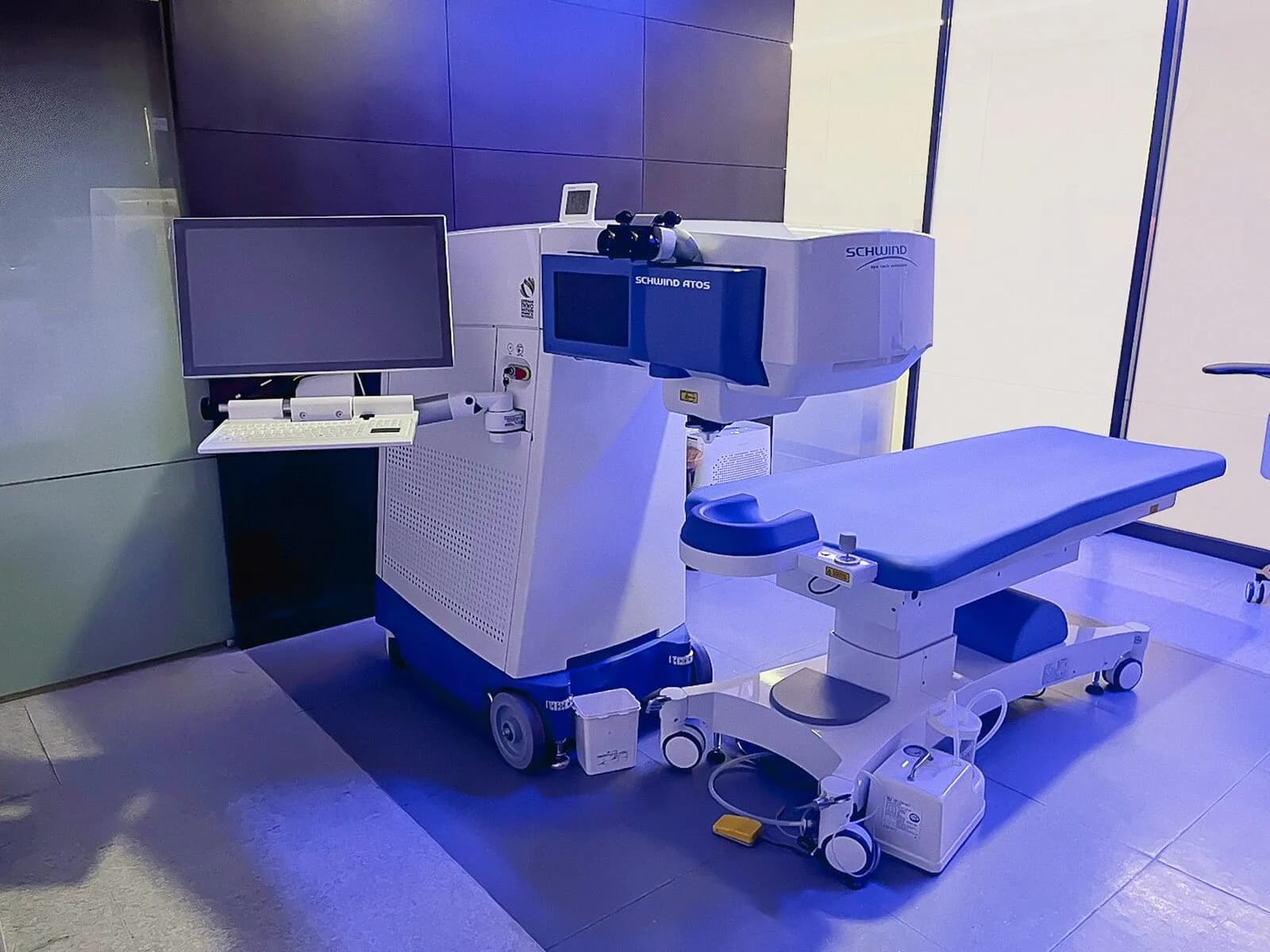
The days themselves: we're closed on Thursdays for equipment inspection and on Sundays and holidays, and Saturday hours, 10:00 to 14:30, are for exams and surgeries only. The surgery takes about 15 minutes, though that varies with the method. Afterward you rest in the recovery room, the doctor checks your eyes, and you go home with aftercare instructions.
If you already know your break dates, send them on WhatsApp and ask whether they would leave enough days if your corneas turn out to need LASEK. A booking is easier to move than a recovery.
Who should wait, and what can go wrong after LASEK
Common and temporary: discomfort, tearing and light sensitivity for the first few days, blurred vision for about a week, dryness, and glare or halos at night that often ease over the following weeks. Less common: corneal haze, mainly in high myopia, and some residual refraction. Rare but serious: infection while the surface is healing.
The US FDA describes situations where laser correction may not be right, or where waiting makes sense: a prescription that changed within the past year, pregnancy or nursing, an autoimmune disease or poorly controlled diabetes, medication that affects vision, and contact sports with frequent blows to the face.
After you fly home, keep to your drop schedule. Pain that worsens instead of easing, vision that gets worse, increasing redness or discharge, or a bandage lens that falls out early means seeing a local eye doctor that day. Bring the records you took home from Seoul.
Checking Sky Eye Clinic against this list
We opened in 2007 as Gangnam Bright Eye Clinic and were renamed Gangnam Sky Eye Clinic in 2008. Several of our doctors had LASIK or LASEK themselves before recommending it. The clinic lists English, Japanese and Chinese, and we're at 723-26 Banpo-dong, Seocho-gu, about a five-minute walk from Nonhyeon or Sinnonhyeon Station.
Overseas patients can book a consultation. Send a photo of any recent eye exam result on WhatsApp with the complaint you keep coming back to, and ask: “Would this apply to my eyes, and which method should I be reading about?” On your first visit, your doctor examines your eyes in person and recommends the approach that suits them.
Results vary by individual.
Questions answered
Are online reviews a good way to choose an eye clinic in Korea?
Reviews tell you how people felt about the service and the first few days. They can't tell you whether your cornea suits a method. Use them to spot patterns about the exam, the surgeon and aftercare, then check those points directly.
Is LASEK more painful than LASIK?
The difference is afterward: discomfort can last up to 3 to 4 days after LASEK, compared with about half a day after LASIK, because the surface layer has to grow back.
How long does the surgery itself take?
About 15 minutes, though it varies with the method. You then rest in the recovery room, the doctor checks your eyes, and you receive aftercare instructions before leaving.
Can I communicate with the clinic in English?
The clinic lists English, Japanese and Chinese, and our WhatsApp Business account is in English. If you're unsure about any part of the exam, ask on WhatsApp before you book.
Should I bring my old prescriptions or exam records?
Yes. Earlier prescriptions show whether your numbers have been stable over the past year, which the FDA lists as a condition for laser correction. Records from a previous eye exam are also worth bringing.
Get your free consultation before you decide
- Free consultation and checkup, even if you decide against surgery
- Same price as Korean patients, no overseas surcharge
- Interpreters in English, Japanese and Chinese


