
How Do You Book a Laser Eye Surgery Consultation in Korea? Exam Steps, Contact Lens Timing and the Days to Plan
Korea laser eye surgery consultation booking appointment: what do you actually book first, and how do you fit it into a few days of leave without flying in for an exam that ends in a no?
On this page
What actually happens in the consultation?
Book the eye exam and consultation first, and decide on surgery after it. The consultation is free and by appointment, the scans decide whether New SMILE, LASIK, LASEK, a lens implant or no surgery fits your eyes, and your contact lenses need to come out two to four weeks beforehand so the numbers are real.
Hello, I'm Dr. Kim Sang-Myung, an ophthalmologist on the vision correction team at Sky Eye Clinic in Seoul.
If your results rule out surgery, you hear it during the consultation, before anything else is booked. The corneal measurements here run on a Pentacam and a Corvis ST, I completed my ophthalmology training at Yonsei Severance Hospital, and a medical interpreter for your language is provided at no extra charge.
The first consultation is free.
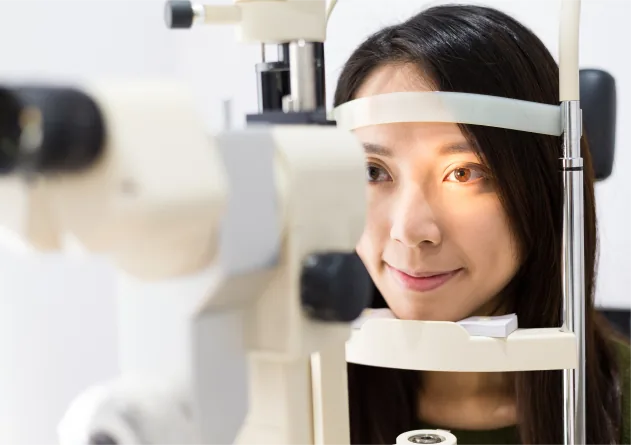
A laser eye surgery consultation in Korea is mostly measurement, followed by a conversation about what the measurements mean. At Sky Eye Clinic the first visit runs in this order:
- Registration, then a short interview about your eye history and any existing conditions.
- Auto-refraction: your myopia, your astigmatism and the curvature of your cornea.
- Eye pressure. Normal is 10 to 20 mmHg. A higher reading leads to a detailed glaucoma exam, and because pressure readings change after surgery, the baseline matters.
- Corneal topography, which maps the shape of the front of the eye to pick up keratoconus or an irregular cornea.
- Fundus photography of the retina and the optic nerve.
- Additional precision tests used to plan the surgery.
- An optional Avellino corneal dystrophy DNA test. If it comes back positive, surgery is avoided.
Two of those numbers matter more to me than your prescription. One is how thick your cornea is, and how much of it would remain after treatment. The other is how evenly it curves: a cornea that steepens in one spot can be an early sign of keratoconus, and reshaping that kind of cornea with a laser can make the condition worse.
Why does the scan decide the method?
LASIK isn't for everyone. Every laser method removes some corneal tissue, and surgeons want a safe layer of untouched cornea left underneath. If your cornea is thin for your prescription, I'd recommend a LASEK-type surface treatment, because it preserves the most cornea. How that choice plays out is covered in LASIK or LASEK and why your cornea decides.
Risks and side effects to know
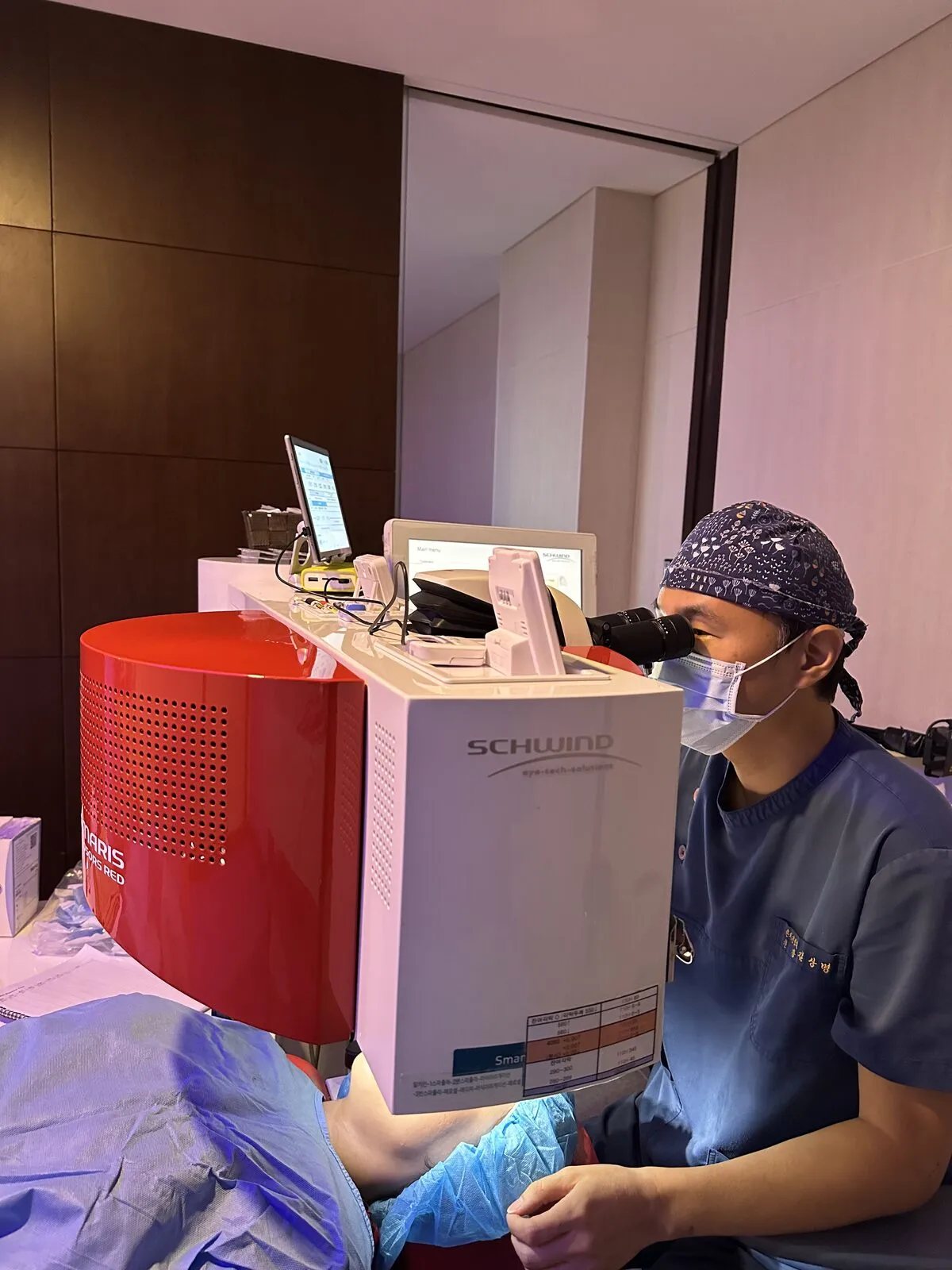
New SMILE LASIK at Sky Eye Clinic runs on the SCHWIND ATOS laser. The tissue comes out through a 2 mm incision, and there is no flap, so flap complications don't apply. It is listed for high myopia with thinner corneas, which makes it a frequent topic in these consultations.
Some eyes are better served by not reshaping the cornea at all. For very high myopia, a thin cornea or eyes that already run dry, the EVO ICL lens implant corrects vision with a lens placed inside the eye. It is still intraocular surgery, and the FDA lists risks such as raised eye pressure and cataract formation.
Serious visual side effects, though rare, have happened when surgery went ahead after an exam advised against it. So I'd rather you plan a trip that might end in "a different method" or "not now" than one built around a fixed surgery date. Our medical team had LASIK and LASEK themselves before recommending them, and that is the spirit of the exam: the result is what we'd accept for our own eyes.
Should I stop wearing my contact lenses before I book the flight?
In short, this is the step most people get wrong, and it can cost you the trip. Contact lenses press the cornea into a slightly different shape, and it takes weeks to settle back. The FDA's patient guidance is to stop soft lenses for 2 weeks before the first evaluation, toric soft or rigid gas permeable lenses for at least 3 weeks, and hard lenses for at least 4 weeks.
Say you're 29, working in Singapore, wearing toric soft lenses for astigmatism, with five days of leave around a public holiday. Count back three weeks from your exam date: that's the day your glasses go back on, at work and at the gym. If three weeks in glasses won't work this month, move the trip. A map taken from a cornea still shaped by the lens can steer the plan toward the wrong method.
Bring your glasses, and if you have older prescriptions, bring those too. A prescription that hasn't changed over the past year is part of what makes someone a candidate.
How should I plan my days in Seoul?
Saturdays run until 14:30 for exams and surgeries only. That Thursday closure matters more than it looks: the FDA advises seeing your doctor within 24 to 48 hours after surgery, so if your surgery falls on a Wednesday, the day after is a day the clinic is closed.
The early recovery the clinic lists differs by method, and that is what sets the length of your stay:
| Method | Early recovery the clinic lists | What it means for your flight |
|---|---|---|
| New SMILE LASIK | Minimal corneal damage, no flap | Keep the 24 to 48 hour check in Seoul |
| LASIK | Discomfort for about half a day | Keep the 24 to 48 hour check in Seoul |
| LASEK | Discomfort up to 3 to 4 days, blurring 5 to 7 days | The longest stay; fly once you see clearly |
If you want the exam and the surgery in the same trip, ask about it when you book, and leave at least one spare day before your flight. If the exam points to LASEK, a long weekend usually isn't enough.
Once you know which lenses you wear and when you can stop, send that on WhatsApp with your flight times, and ask how many days to hold in Seoul for the method your prescription points to.
What decides the fee, and when will I know it?
The figure for your case depends on a few things the exam settles:
- The method: New SMILE, Smart Nova LASIK with CenTrax, LASIK or LASEK with Co-Wave customization on the Amaris Red, or an EVO ICL implant.
- Whether you need a laser treatment or a lens implanted inside the eye.
- Whether one or both eyes are treated.
- How many follow-up visits you need while you're in Seoul.
Your doctor confirms the procedure and the final fee at the free exam. The deposit and how you pay are also settled after the consultation, so ask about both in the same WhatsApp message as your dates; that way you'll know what to bring before you fly.
What about dry eyes, night halos and the scan that says no?
In the first days after surgery, the FDA lists burning or itching, a feeling of something in the eye, watering, hazy vision, light sensitivity, and glare or halos around lights. These usually ease over the first few days. Dryness and halos at night can last longer, and how fast eyes heal differs from person to person.
The FDA also lists people who should hold off on LASIK: those whose prescription has changed in the past year, who are pregnant or nursing, who have an autoimmune disease, or who take medicines that can slow healing. A thin or irregular cornea, signs of keratoconus or a positive Avellino test belong on that list too.
Once you're home, keep your exam printout and the surgery record with you, and book a check with an ophthalmologist near you for the months ahead. The same team supports you from the exam through surgery and the key post-operative checks. Before you book, ask which of those checks happen in Seoul and how to reach the team on WhatsApp if something feels off after you fly. Severe pain, or vision that gets worse instead of better, means seeing an eye doctor right away, wherever you are.
What should I put in my first message?
Keep it short: the prescription from your glasses, whether you wear soft, toric or rigid lenses, and the dates you could be in Seoul. Ask how many days your trip needs if the scan points to New SMILE, and how many if it points to LASEK.
On the day, what I'll study most closely is the Pentacam map of your cornea, its thickness and how evenly it curves, because that chooses between New SMILE, LASIK, LASEK and the lens implant before your prescription does. You can check the named surgeons on the doctors page before you come. The clinic is at 723-26 Banpo-dong, Seocho-gu, about a five-minute walk from Nonhyeon Station (Line 7, Exit 5). Send those three things on WhatsApp whenever your dates are firm.
Results vary by individual.
Sources
Questions answered
Can I book the eye exam on a Saturday?
Yes. Saturday hours run from 10:00 to 14:30 and are for exams and surgeries only, so a Saturday exam suits a weekend trip. Keep in mind that Sundays and public holidays are closed, so a surgery late in the week needs a plan for the 24 to 48 hour check.
I wear daily disposable soft lenses. Do I still need to stop?
Yes. Daily disposables are soft lenses, and the FDA's guidance for soft lenses is 2 weeks without them before the first evaluation. Wear your glasses during that time, including on the flight.
What happens if the exam says I'm not a candidate for laser surgery?
The team explains it during the consultation. Depending on what the scan shows, LASEK or an EVO ICL lens implant may still be an option, or the advice may be to wait, for example if your prescription is still changing.
Should I bring exam results from my eye doctor at home?
Bring them, especially older prescriptions, because they show whether your eyes have been stable. The measurements that plan the surgery are taken again in Seoul as part of the exam program.
I don't speak Korean. How does the consultation work?
A medical interpreter for your language is provided at no extra charge, and the clinic's WhatsApp Business channel is in English, so you can arrange the booking in English before you arrive.
Get your free consultation before you decide
- Free consultation and checkup, even if you decide against surgery
- Same price as Korean patients, no overseas surcharge
- Interpreters in English, Japanese and Chinese


