
Korea Laser Eye Surgery Cost: What Changes It for a Thin Cornea or High Prescription?
Are you checking the Korea laser eye surgery cost because a surgeon at home told you your cornea is too thin, or your prescription too high, for the usual option?
On this page
Why does a thin cornea or a high prescription change the cost?
Read this before you start lining up quotes.
By the end you'll know what decides the cost for eyes like yours, what reviews get right and wrong, which methods suit which cornea, and how recovery differs between them. That makes it easier to see which option your eyes and your budget point to.
Hello, I'm Dr. Kim Sang-Myung, an ophthalmologist in the vision correction team at Sky Eye Clinic in Seoul.
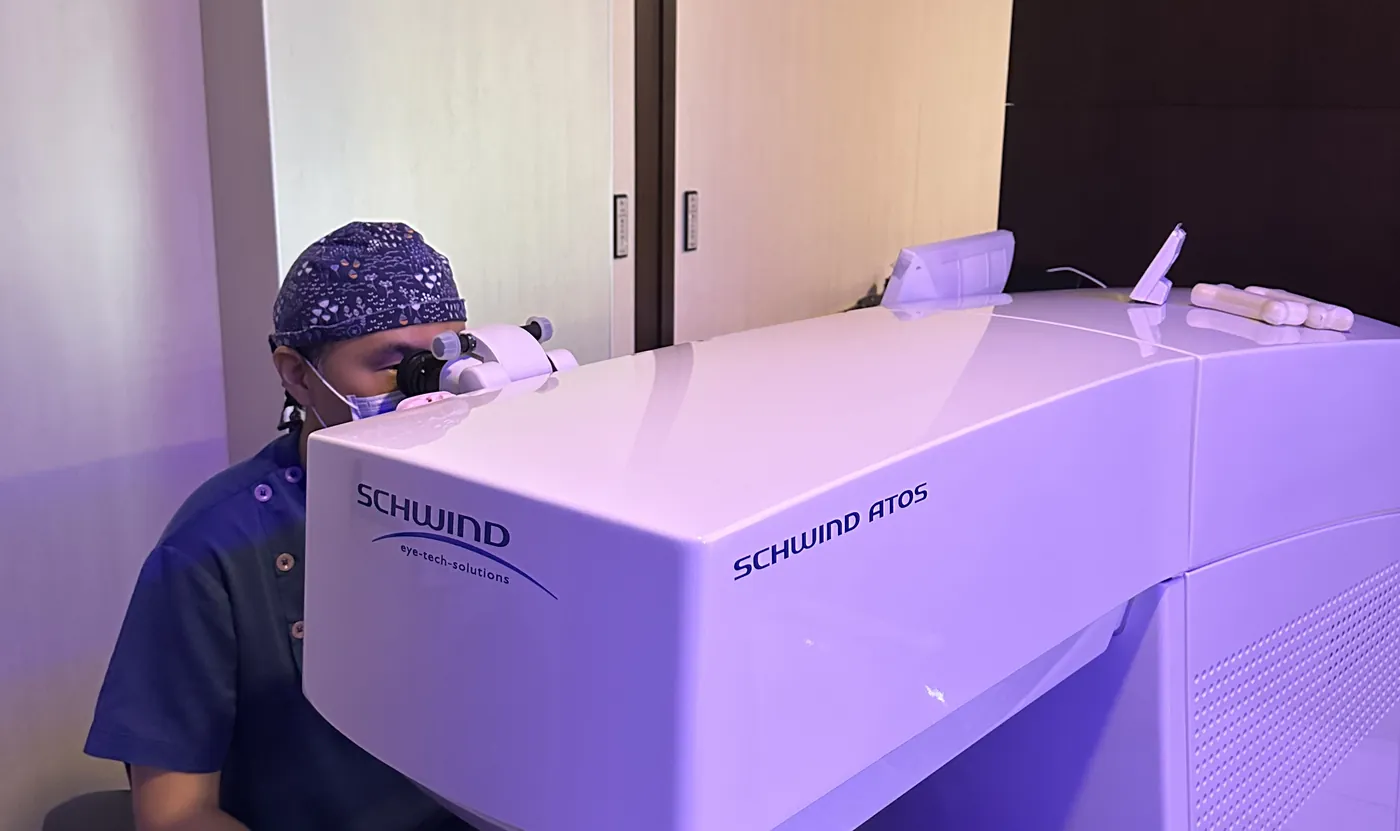
We're a clinic of ten ophthalmologists. Under one roof we offer LASEK for thinner corneas, LASIK, New SMILE LASIK and Smart Nova LASIK on the SCHWIND ATOS laser, and the EVO/EVO+ ICL lens, which removes no corneal tissue at all. Several of our doctors had LASIK or LASEK themselves.
I'm writing this because people with high prescriptions often compare one headline figure, when what sets the figure is which method their cornea allows.
There is no single Korea laser eye surgery cost for a high-prescription eye. The figure follows the method your exam points to, and the doctor confirms the procedure and the final fee at your free exam.
If you already have numbers from home, send a photo of your latest prescription on WhatsApp, plus your corneal thickness reading if your surgeon gave you one, and ask one thing: which method, and what would it cost, for eyes like mine?
Laser correction works by removing corneal tissue, and the more myopia you correct, the more tissue goes. What matters to me is what stays behind. With LASIK, a flap about 160 micrometers thick is made first and the laser works underneath it, so the flap counts against the cornea you keep.
That's why LASIK is not for everyone. When the cornea is thinner than a certain threshold, I'd point you toward LASEK, a surface procedure that preserves the most residual cornea. When even that would leave too little, a lens implant such as ICL comes into the conversation, because it corrects vision without reshaping the cornea at all.
So when someone at minus 9 asks what it will cost, the useful first answer is a question back: how thick is your cornea, and how regular is its shape? The method follows from those two numbers, and the cost follows the method. Our exam includes corneal topography to look for keratoconus and irregular corneas, and our corneal equipment includes a Pentacam and a Corvis ST.
Which methods fit which eyes
The five options below are the ones I'd weigh for a high prescription. The middle column is general guidance; your exam decides which column you actually land in.
| Method | Often considered when | What it does to the cornea |
|---|---|---|
| LASEK (standard, Amaris Red, 2Day LASEK) | The cornea is on the thin side | No flap; the surface layer regrows, keeping the most residual cornea |
| LASIK (Amaris Red SPT, Co-Wave) | The cornea is thick enough for a flap | A flap about 160 µm thick, laser underneath |
| New SMILE LASIK | Myopia with or without astigmatism, when the exam supports it | A 2 mm incision with no corneal flap, on SCHWIND ATOS |
| Smart Nova LASIK | Alignment matters, as with higher astigmatism | New SMILE plus CenTrax, which compensates for eye rotation and docking error |
| EVO/EVO+ ICL | High myopia, a thin cornea or dry eye | A lens placed inside the eye; no corneal tissue removed |
ICL isn't laser surgery, but if you were told "no" to laser at home, it's often the option that reopens the question. It has its own risks because it sits inside the eye; the U.S. Food and Drug Administration lists raised eye pressure and cataract among them. Our EVO/EVO+ ICL lens implant page covers who it's meant for.
If you're only weighing two of these, there's a separate piece on how your cornea decides between LASIK and LASEK. For astigmatism, the Smart Nova LASIK details explain what CenTrax adds, and the laser eye surgery overview puts the laser options side by side.
What decides the cost for your eyes
In short, these are the factors that move the figure for someone with a high prescription:
- The method. A surface laser, a flap laser, a small-incision laser and an implanted lens use different equipment and different steps. This is the biggest single factor.
- What the exam finds. Astigmatism, corneal shape and thickness can move you from one method to another, and the figure moves with it.
- One eye or both. Ask for the figure both ways if your two eyes differ a lot.
- Optional tests. The Avellino corneal dystrophy DNA test is optional. Ask whether it's part of what you're quoted.
- Your days in Seoul. Hotel nights, time off work and a spare day before the flight belong in your own budget, even though no clinic bills them.
- Follow-up. Ask which post-op checks happen in Seoul and what drops and visits are included.
The doctor confirms the procedure and the final fee at the free exam, so any figure you hear before your cornea is measured is a figure for a method you may not end up having. To get a number for your own case, ask on WhatsApp what it would cost for your eyes, and mention the method your home surgeon suggested or ruled out.
An example: minus 9 with a cornea your surgeon called thin
Say you're -9.00 in both eyes with 1.50 of astigmatism, you've worn soft lenses for fifteen years, and a surgeon at home said LASIK would leave too little cornea. Here's how I'd reason through it.
First, I'd want the thickness and shape measured again after a proper break from contacts, because lens wear can change the cornea's shape and throw off a reading. If the shape is regular and the thickness supports a surface procedure, LASEK stays on the table, with a slower first few days than LASIK.
If the numbers leave too little residual cornea even for LASEK, I'd talk with you about EVO/EVO+ ICL. If the topography suggested keratoconus, laser would come off the list, and the conversation would turn to the cornea's stability; we also treat keratoconus and offer corneal cross-linking. Each of those branches carries a different cost, which is why asking about your eyes gets you further than asking for a list.
If your exam says laser isn't right for your eyes, I'll say so, even after you've flown in. Serious visual side effects, although rare, have happened when surgery went ahead despite an exam result advising against it. A trip that ends with "not laser for these eyes" still tells you something true and useful. I would rather have that conversation with you than steer you into the wrong procedure.
What do reviews get right about cost and recovery?
Review threads about laser eye surgery in Korea repeat a few claims. Some hold up; some need a qualifier.
"You can do the exam and the surgery on the same day." It can happen when the exam is clear and you've been out of contacts long enough, but it isn't a given. A finding on the topography, or a positive Avellino result, ends that day's plan. Book your trip as if you might need a second day.
"The price you see online is what you pay." Treat any figure before your exam as a starting point. Measurements can change the method, and the final fee comes with it.
"Blurry on day two means something went wrong." Vision that's sharper one hour and softer the next is common while the eye heals, especially after LASEK. Steady worsening, pain or growing redness is different and needs an eye doctor.
"No flap is always the better choice." A small-incision procedure avoids a flap, which suits some eyes and some lifestyles, such as contact sports. Whether it suits yours comes back to the same thickness and shape numbers as every other option.
How long is recovery with each method?
The operation itself takes about 15 minutes, though that varies with the method. Afterward you rest in the recovery room, the doctor examines your eyes and explains the result, and you go over aftercare and follow-up appointments before you leave. The same medical team supports you from the exam and consultation through surgery and the key post-op checks.
LASIK uses numbing eye drops only. On the day you may feel irritation, tearing and a grainy feeling, and for LASIK that usually lasts about half a day. LASEK is slower at the start: the American Academy of Ophthalmology's EyeWiki describes the surface layer regrowing over the first several days, with more discomfort and a later return of clear vision than LASIK.
For New SMILE LASIK, Smart Nova LASIK and ICL, ask about the expected first days for your method rather than borrowing another method's timeline. Before you book the flight home, ask how many post-op checks your method needs in Seoul, and leave a spare day.
What can go wrong, and who should wait?
Risks and side effects to know
The common reactions are temporary for most people: dry, gritty eyes, glare or halos around lights at night, and vision that fluctuates for a while. The FDA also lists under- or overcorrection, which may mean glasses for some tasks or a further procedure. ICL carries risks inside the eye, including raised eye pressure and cataract, which is why it needs its own discussion.
In general medicine, these are reasons to wait or reconsider: a prescription that has changed in the past year, being under 18, pregnancy or breastfeeding, conditions or medications that affect healing, and a thin or irregular cornea, including early signs of keratoconus. How fast you heal and what you end up seeing varies from person to person, and the in-person exam decides whether you're a candidate at all.
If something feels wrong after you fly home, such as pain, a sudden drop in vision or redness that keeps building, see an ophthalmologist near you promptly. The U.S. Centers for Disease Control and Prevention advises medical travelers to carry copies of their records, so ask for a copy of your surgery details before you leave Seoul and keep your drop schedule with you.
If one of those lines fits you, say a prescription that moved recently or a thickness reading that worried your home surgeon, send photos of your last two prescriptions on WhatsApp with their dates. Two readings a year apart show whether your eyes have been stable, which is the first question for any method.
How do your days in Seoul fit our hours?
We see patients Monday to Wednesday and Friday from 10:00 to 16:30, with lunch from 13:00 to 14:00. Thursday is closed for equipment inspection, Saturday runs 10:00 to 14:30 for exams and surgeries only, and Sundays and holidays are closed. Exams, surgeries and consultations are all by appointment.
If you land on a Wednesday night, your exam falls on Friday at the earliest. The exam moves through auto-refraction, eye pressure, corneal topography, fundus photography and further precision tests, then a counselor goes through your results before the doctor's exam with the slit lamp. Plan for the exam to take most of a morning, and confirm at booking.
The FDA advises stopping contact lenses for a period of weeks before the evaluation, longer for rigid lenses, so check that window before you fly. We're about a 5-minute walk from Nonhyeon Station (Line 7 Exit 5 or Sinbundang Line Exit 4) or Sinnonhyeon Station (Line 9 Exit 2).
Your next step is one message. On WhatsApp, send a photo of your current prescription and the dates you could be in Seoul, and ask which method your numbers suggest and what it would cost for your case.
Results vary by individual.
Sources
Questions answered
Is ICL counted as laser eye surgery?
No. ICL places a lens inside the eye and removes no corneal tissue. It comes up when a cornea is too thin for laser, or the prescription is very high, and it has its own risks, such as raised eye pressure and cataract.
Do I have to stop wearing contact lenses before the exam?
Yes. The U.S. FDA advises stopping lenses for a period of weeks before the evaluation, and longer for rigid lenses, because lens wear can change the cornea's shape. Check the exact window for your lens type before you book flights.
What is the Avellino test, and can it change my options?
It's an optional DNA test for Avellino corneal dystrophy. If the result is positive, surgery is avoided for your safety, so it can change the plan before any fee is settled.
Which days can I come in for an exam?
Monday to Wednesday and Friday from 10:00 to 16:30, and Saturday from 10:00 to 14:30 for exams and surgeries only. Thursdays, Sundays and holidays are closed, and every visit is by appointment.
What should I bring from home?
Your current glasses or lens prescription, older prescriptions with dates, and any corneal thickness or topography reports. The CDC also advises medical travelers to carry copies of their medical records.
Get your free consultation before you decide
- Free consultation and checkup, even if you decide against surgery
- Same price as Korean patients, no overseas surcharge
- Interpreters in English, Japanese and Chinese


