
Korea LASIK recovery program: five questions to ask before you book flights
A Korea LASIK recovery program is really your own trip plan: which procedure your eyes get, how long the first days of discomfort last, which checks happen in Seoul, and who looks at your eyes once you're home. If you have a spreadsheet of clinics open, the cell that's probably still blank is the last one: what happens if something feels off a week after you land?
On this page
Which procedure will my eyes actually get?
Here is what I can tell you about this clinic up front. The same medical team supports you from examination and consultation through surgery and the key post-operative checks in Seoul. Everything else in your plan hangs on that exam, so this page is five questions to settle before you buy a ticket.
Recovery depends on the procedure, and the procedure depends on your cornea. That's why nobody can write your recovery plan before the exam.
LASIK isn't for everyone. When a cornea is thinner than a certain threshold, I recommend a LASEK-type procedure that preserves the most residual cornea, and that choice changes your first week. If you want the reasoning in detail, I've written about how corneal thickness decides between LASIK and LASEK.
| Procedure | First days | What it means for the trip |
|---|---|---|
| LASIK | Irritation, tearing and a grainy feeling for about half a day | The uncomfortable stretch is mostly surgery day |
| LASEK | Discomfort up to 3 to 4 days, blurring 5 to 7 days | The first week is the slow part, with a protective lens on while the surface regrows |
| New SMILE LASIK | 2mm incision, no flap; face washing, basic makeup and light exercise from the day after | Day two can look closer to normal life, on your surgeon's instructions |
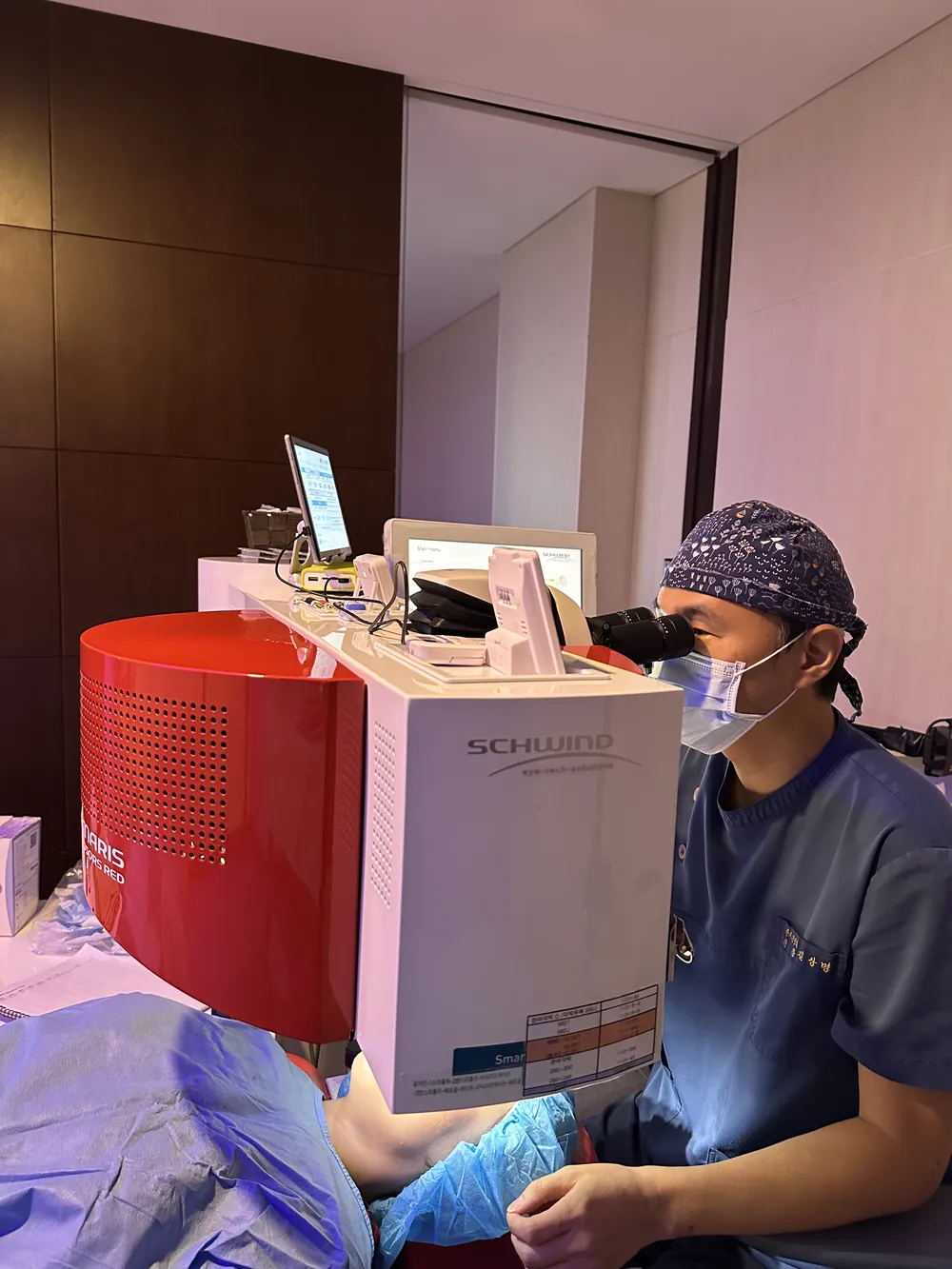
The flap and early recovery with LASIK differ from New SMILE LASIK on the ATOS laser, which removes tissue through a 2mm micro-incision. Smart Nova LASIK builds on New SMILE LASIK and adds CenTrax, which corrects eye rotation and docking errors as the laser attaches to your eye. Which of these fits is confirmed after a full eye examination.
How many days in Seoul should I plan for?
There isn't one number for every eye. The stay is built from three pieces: the exam, the surgery, and the first check after it.
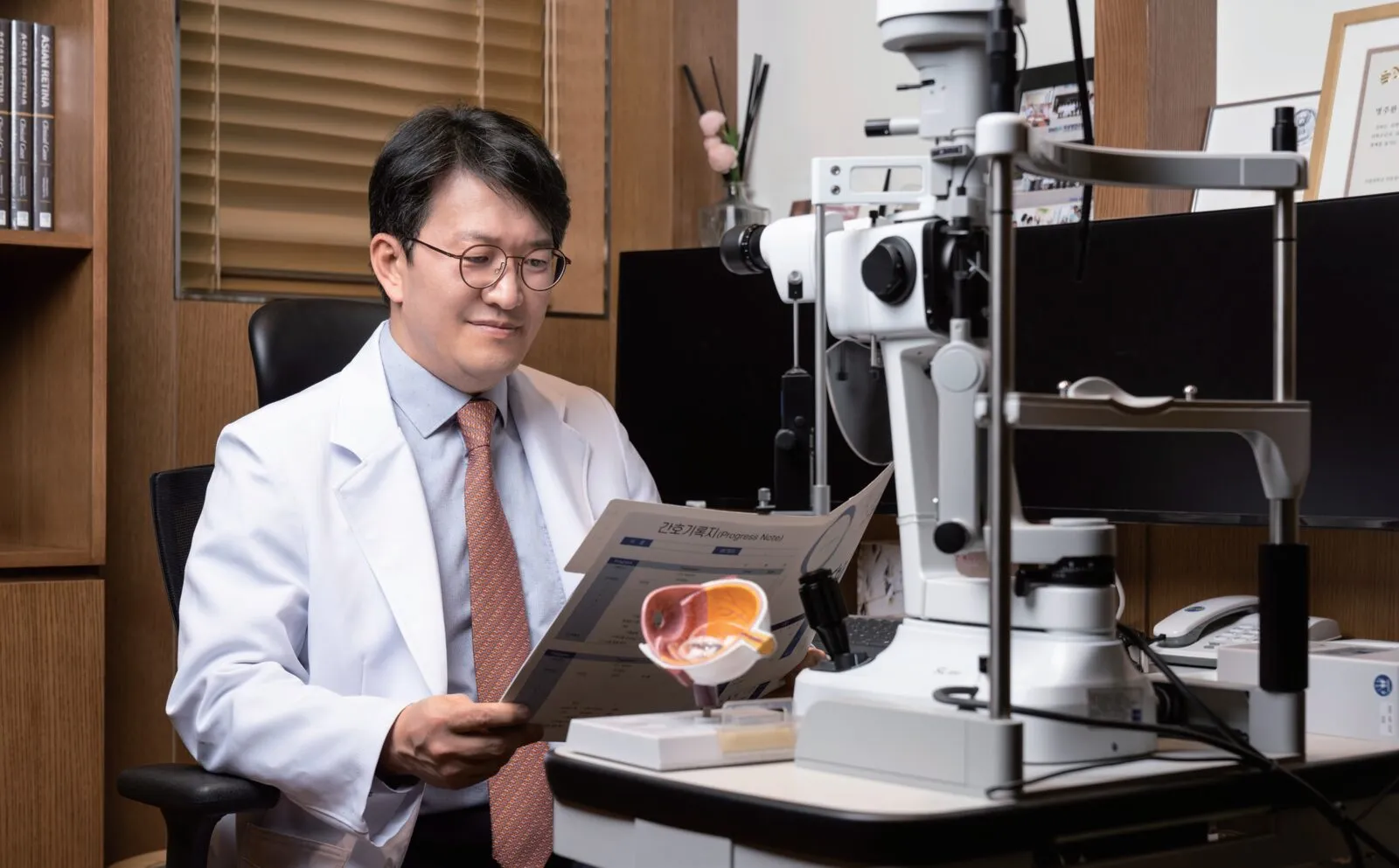
The US Food and Drug Administration's patient guidance puts the first post-operative visit within 24 to 48 hours after surgery, then regular visits for at least the first six months. So the shortest sensible version of your trip has an exam, a surgery day and a check before you leave for the airport. Two things to ask when you book: whether the exam and surgery can fall on consecutive days, and how many extra days LASEK would add if the exam points you there.
Cabin air is dry, and many people's eyes feel drier for a while after laser correction. Keep the drops you're given in your carry-on and use them as instructed. The FDA also notes that vision can take three to six months to stabilize, so the sharpness you have at the gate isn't the final picture.
If you have one spare day, put it after surgery, before the flight. A check squeezed in a couple of hours before departure leaves no room to act on what it shows. And if the exam steers you from LASIK to LASEK, I'd rather you change the flight than push the surgery into a schedule it doesn't fit.
When do I have to stop wearing contact lenses?
In short, this is the step travelers forget, because the clock starts at home, weeks before you fly.
The FDA's guidance is to stop soft lenses 2 weeks before your initial evaluation, toric soft or rigid gas permeable lenses at least 3 weeks before, and hard lenses at least 4 weeks before. Lenses can temporarily change the shape of the cornea, and measurements taken on a reshaped cornea can mislead the surgical plan. Count back from your exam date, not your departure date, and plan to work in glasses for those weeks.
After surgery, the same guidance says not to put a contact lens back in the operated eye even if your vision is blurry. Pack your glasses for the trip.
Which days is the clinic open for exams and checks?
We're open Monday to Wednesday and Friday from 10:00 to 16:30, with lunch from 13:00 to 14:00. Thursday is closed for equipment inspection. Saturday runs 10:00 to 14:30 for exams and surgeries only, and Sundays and holidays are closed.
Two traps follow from that. If you land on a Wednesday evening, your exam can't be the next morning. The clinic is about a 5-minute walk from Nonhyeon Station (Line 7 Exit 5, Sinbundang Line Exit 4) or Sinnonhyeon Station (Line 9 Exit 2), which is worth knowing when you choose where to stay.
Who checks my eyes once I'm back home?
I'd put this question at the top of any spreadsheet. A Korea LASIK recovery program that ends at the airport covers the first few days of a six-month follow-up window.
In Seoul, the same team that examined you stays with you through surgery and the key post-operative checks. Most of the remaining months fall after you've flown home. The US Centers for Disease Control and Prevention advises medical travelers to make sure they can get any needed follow-up care at home, and to get copies of all their medical records before they return.
In practice, that means three things you do before you leave home:
- Book an appointment with an optometrist or ophthalmologist for the weeks after you're back, and tell them which procedure you're planning.
- Plan to collect your records before you fly: the procedure, your measurements, and the drops you were given with how long to use them. Check that you can read them.
- Find out whether your health or travel insurance covers follow-up care for a procedure done abroad.
Burning, tearing, light sensitivity and halos usually ease within the first few days.
If you've already found an eye doctor at home, mention that in your WhatsApp message and ask which records you should bring back for them.
Risks and side effects to plan around
The common early effects in the FDA's list are burning or itching, mild discomfort, watery eyes, hazy vision, light sensitivity with glare or halos, and redness. Dry eye and night halos can last longer for some people. LASIK carries flap-related complications that LASEK and New SMILE LASIK, which use no flap, do not.
The risk I think about most with travelers is pressure from a fixed return ticket. Serious visual side effects, although rare, have occurred when surgery went ahead despite an examination result advising against it. If your exam says not this trip, the ticket should lose.
Candidates for LASIK are adults 18 or older whose prescription hasn't changed in the past year and whom a doctor approves after a full examination. Old prescriptions from home help show that stability, so bring them. Healing varies from person to person, and the in-person exam decides whether surgery suits your eyes at all.
Several doctors on our team had LASIK or LASEK themselves before recommending them to patients. So when we tell you LASEK's first days are slower, that comes from people who have sat in your chair, and it's the reason I'd plan the trip around the slower option until the exam rules it out.
What you can check about this clinic before you go
The clinic opened in 2007 as Gangnam Bright Eye Clinic and took the Sky Eye name in 2008. It has ten ophthalmologists in separate centers for vision correction, cataract and presbyopia, and retina and glaucoma. The surgeons' names are published on their own page, and the complication prevention program includes daily equipment checks, on top of the Thursday closure for inspection.
My own field is vision correction. I trained at IROC in Zurich and I'm a full member of the Korean Society of Cataract and Refractive Surgery, which is why the LASIK, LASEK and New SMILE questions above are the ones I'd want you to bring.
Your last glasses prescription and the date you plan to stop wearing contacts are enough to start a plan. Send both on WhatsApp, where the channel runs in English, and ask which day of your trip the exam should fall on.
Results vary by individual.
Questions answered
Can I go sightseeing in Seoul the day after surgery?
Walking around is usually fine, depending on the procedure and your surgeon's instructions. The FDA suggests waiting one to three days for non-contact sports and avoiding swimming, hot tubs and whirlpools for one to two months, so skip hotel pools and spa baths on this trip. Wear sunglasses outdoors if light bothers you.
Does my prescription need to be stable before I travel?
Yes. LASIK candidates are adults 18 or older whose prescription hasn't changed in the past year. Bring older prescriptions from home so the change, or lack of it, is visible at the exam.
Will I be able to talk to the team in English?
English, Japanese and Chinese are listed as the clinic's languages, and the WhatsApp Business channel runs in English.
Is LASEK worth the extra days if my cornea is thin?
If the cornea is thinner than a certain threshold, a LASEK-type procedure that preserves the most residual cornea is the recommendation instead of LASIK. It means discomfort for up to 3 to 4 days and blurring for 5 to 7 days, so plan the trip around that rather than pushing for a faster option your cornea doesn't suit.
How long until my vision settles after I'm home?
Most early symptoms ease within the first few days, but the FDA notes that vision can take three to six months to stabilize. That's why follow-up visits continue for at least six months, most of them with an eye doctor at home.
Get your free consultation before you decide
- Free consultation and checkup, even if you decide against surgery
- Same price as Korean patients, no overseas surcharge
- Interpreters in English, Japanese and Chinese


