
Korea LASIK recovery tips for a strong prescription, from a refractive surgeon in Seoul
The Korea LASIK recovery tips that matter most are short: don't rub your eyes, keep the first check-up after surgery, and build your trip around the procedure you actually end up having, because LASIK, LASEK and New SMILE heal on different clocks. If your prescription is strong and a surgeon at home has already called your corneas thin, the fear tends to be specific. You worry the healing won't fit inside your trip, and that you'll be on a ten-hour flight with eyes that aren't ready.
On this page
Does every kind of laser surgery heal on the same timetable?
Several of the doctors at Sky Eye Clinic had LASIK or LASEK themselves before recommending it to patients, so the recovery advice below comes from people who have sat in the chair. Most of the worry comes from a few beliefs that sound sensible and turn out to be wrong, or wrong for your eyes in particular.
If someone at home said “no” or “difficult”, send that exam's prescription and corneal thickness reading on WhatsApp, and ask the question you keep coming back to, for example whether those numbers point toward LASEK or New SMILE and what that would mean for your dates.
No. The first days depend on how the laser reaches the cornea, and the gap between procedures is wider than most forum threads suggest.
| Procedure | How the laser reaches the cornea | The first days |
|---|---|---|
| LASIK | A thin flap of about 160 micrometers is lifted and laid back | Irritation and tearing for about half a day |
| LASEK | The surface layer is removed and regrows under a protective lens | Discomfort for up to 3 to 4 days, blurring for 5 to 7 |
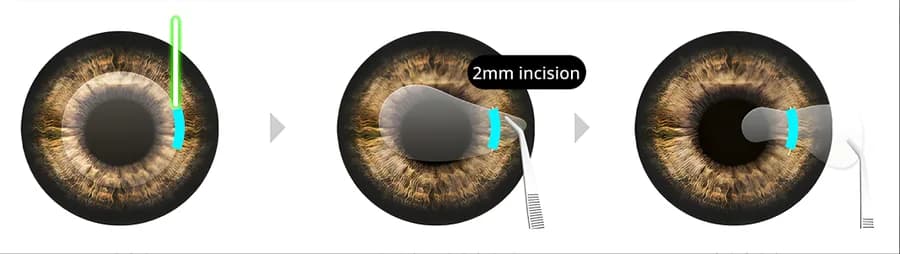
| New SMILE LASIK | Tissue is removed through a 2mm incision, with no flap | Face washing, basic makeup and light exercise from the next day |
Smart Nova LASIK is built on New SMILE LASIK and adds CenTrax, a mode that corrects small rotation and docking errors when the laser attaches to your eye.
With a strong prescription, your cornea picks the row before your preference does. LASIK is not for everyone: when the cornea is thinner than a certain threshold, a LASEK-type procedure that keeps the most cornea in place is the trade I'd recommend, even though its first week is slower. If you want the mechanism behind that, I've written about how corneal thickness decides between LASIK and LASEK. The practical tip is about sequence: don't lock your return flight around the LASIK row if your numbers might put you in the LASEK row.
If you were told no at home, I don't assume the other surgeon was wrong. Thin corneas and a high prescription are a reason to slow down, and sometimes the answer is a procedure with a slower first week, or not this year. What I'd ask you not to do is pick your procedure from a recovery table because it fits your leave days.
Is rubbing really a problem if my eyes feel fine?
Yes, and it matters most after LASIK. The flap is laid back without stitches and holds by itself while it heals. The US Food and Drug Administration warns that rubbing your eye could dislodge it, which would mean further treatment.
The urge to rub tends to show up at two awkward moments: when you wake and your eyes feel sticky, and on the plane, when dry cabin air makes them feel gritty. Keep the drops you're given next to the bed and in your carry-on, never in checked luggage. If you're given eye shields for sleep, wear them on the flight if you plan to doze.
After LASEK there's no flap, but the surface layer is regrowing under a protective lens, and rubbing can disturb that too.
Can I fly home the day after surgery?
The plane is rarely the problem; the first check-up is what your flight has to wait for. The FDA advises seeing your doctor within the first 24 to 48 hours after LASIK and at regular intervals for at least six months after that, so your departure belongs after that first check.
This is where our calendar matters. We're closed on Thursdays for equipment inspection and on Sundays and public holidays, and Saturday hours (10:00 to 14:30) are for exams and surgeries only. If you're looking at a Wednesday surgery, the next day is a Thursday, so ask at booking which day your first check would fall on before you buy a ticket.
For LASEK, where blurring can last five to seven days, I'd rather you weren't squinting at departure boards through it. Give yourself room at the end of the trip.
Before you buy tickets, send your arrival and departure dates on WhatsApp and ask which weekday your surgery and first check-up could land on, given the Thursday and Sunday closures.
Does blurry vision on day three mean something went wrong?
Usually not. After LASEK, blurring for five to seven days is part of the expected course. After any laser correction, the FDA notes that vision may fluctuate in the first few months and can take three to six months to stabilize, with glare or halos possible during that time.
What deserves a call is a different pattern: severe pain, or vision and symptoms that get worse instead of slowly settling. The FDA's advice is to contact your eye doctor right away in that case, without waiting for the next scheduled visit. Save your home eye doctor's number in your phone before surgery day, so you aren't searching for it at 2 a.m.
Do I really have to skip the pool, the gym and the sauna?
The FDA's guidance after LASIK is to wait up to two weeks before using lotions, creams or makeup around the eye, to avoid swimming, hot tubs and whirlpools for about one to two months, and to hold off on strenuous contact sports for at least four weeks. Non-contact sports can usually resume after one to three days if your doctor agrees.
Steam rooms and hot baths are still a separate question for your surgeon. If Seoul's bathhouses were going to be your reward, save them for a later trip.
Dry eyes after surgery don't mean you chose wrong
Dryness in the first weeks is one of the things people notice most often after laser vision correction, and the American Academy of Ophthalmology lists dry eye among its possible side effects. How much you get depends partly on how many corneal nerves are cut. After LASIK, dryness may last longer than after LASEK, and New SMILE LASIK's small incision means less nerve damage, which is why it tends to cause less dry eye.
Use the drops on the schedule you're given, not when you happen to remember. Blink on purpose during long screen sessions, and expect the flight home to be the driest few hours of your week.
What goes wrong when surgery goes ahead against the exam
Most early effects are temporary: grittiness, tearing, light sensitivity, fluctuating vision and halos at night. Less common are problems that need more treatment, such as over- or under-correction, flap complications after LASIK, or corneal haze after LASEK, which shows up mainly in high myopia. That last one matters if your prescription is strong.
Risks and side effects to know
The rare serious outcomes are where the exam earns its place. Serious visual side effects, although rare, have occurred when surgery went ahead despite an examination result advising against it. The FDA's list of people who may not be good candidates includes those with thin corneas and those whose prescription hasn't stabilized. For LASIK, the starting point is an adult aged 18 or older whose prescription hasn't changed in the past year.
Recovery differs from person to person, and the in-person exam decides whether surgery is right for you at all, and which kind.
Who looks after you from the exam to the last check here
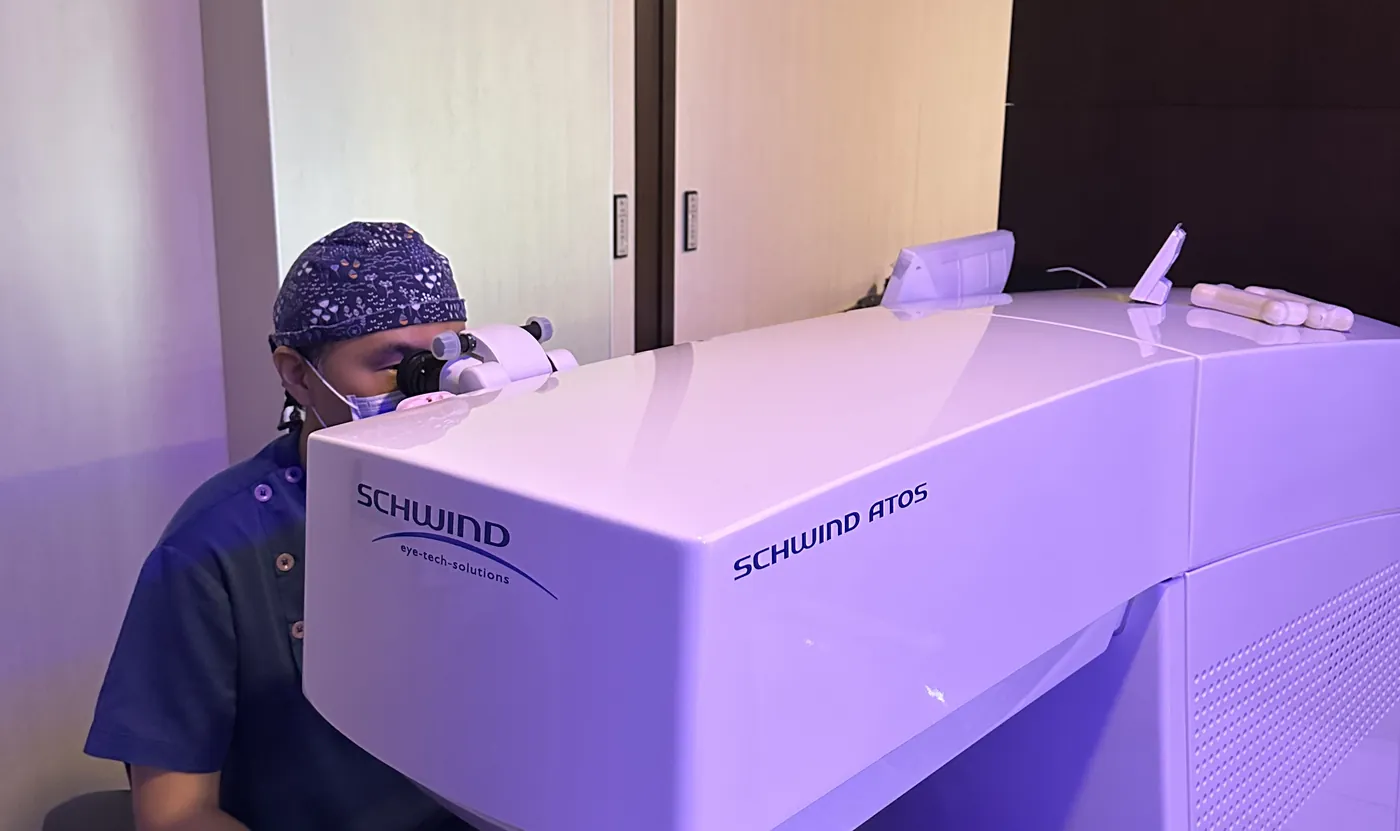
The same medical team supports you from examination and consultation through surgery and the key post-operative checks. We run a complication prevention program built around daily equipment checks, and we publish the name of the surgeon who performs your operation. The team speaks English, Japanese and Chinese.
Most Korea LASIK recovery tips assume you already know which procedure you're having. If your exam at home produced a corneal map (usually a colorful topography printout), send a clear photo of it on WhatsApp. That single page says the most about which row of the table above is yours.
Results vary by individual.
Sources
Questions answered
Should I stop wearing contact lenses before the exam in Seoul?
Yes. Contact lenses can change the shape of the cornea, and the FDA advises stopping them for a period before the baseline evaluation so the measurements reflect your cornea's own shape. How long depends on the lens type, so ask when you book the exam and build those days into your plan.
Will I feel the laser?
Surgery is done with numbing eye drops. On the day you may feel irritation, tearing and a grainy sensation. After LASIK that discomfort usually lasts about half a day; after LASEK it can last up to three or four days.
Who decides between LASIK, LASEK, New SMILE and Smart Nova?
Your surgeon, after a full eye examination. Corneal thickness and shape, the size of your prescription and how stable it has been all feed into that decision, which is why it can't be settled from a prescription alone.
Can I go sightseeing the day after surgery?
Walking around the city is usually fine once your surgeon has checked your eyes, and sunglasses help with glare and wind. Keep your drops with you, don't rub your eyes, and skip anything that splashes water or sweat into them for as long as your surgeon specifies.
Get your free consultation before you decide
- Free consultation and checkup, even if you decide against surgery
- Same price as Korean patients, no overseas surcharge
- Interpreters in English, Japanese and Chinese


