
Korea Smart Nova LASIK Recovery Cost: Is It Right for Your Eyes After 40?
Is the Korea Smart Nova LASIK recovery cost, counted in days away from home and in what you'll pay, the part you still can't pin down, now that you're past 40 and reading glasses are starting to creep into your life?
On this page
What is Smart Nova LASIK, and how does it work?
Read this before you put any dates on the calendar.
By the end you'll know what Smart Nova LASIK is and who it suits, how it compares with the other methods, what reviews get right and wrong about recovery, and what decides the cost. That's enough to tell whether it fits your eyes, your leave and your budget.
Hello, I'm Dr. Kim Sang-Myung, an ophthalmologist on the vision correction team at Sky Eye Clinic in Seoul.
Smart Nova LASIK here runs on the SCHWIND ATOS laser with CenTrax. Several of our doctors had LASIK or LASEK themselves, and the same medical team stays with you from the exam and consultation through surgery and the key post-operative checks. You can write to us in English on WhatsApp.
I wrote this because people in their 40s often weigh Smart Nova as if it would also fix their reading vision, and that expectation is where most disappointment starts.
Smart Nova LASIK is our New SMILE LASIK (a 2mm incision, no corneal flap) with CenTrax added to correct rotation and docking error. It suits adults with a stable prescription and enough healthy cornea on the scans, and the method your exam points to sets both your recovery days and your cost.
If you have your latest glasses prescription, send a photo of it on WhatsApp with the one question you'd most like answered, for example whether your age changes which method makes sense.
In short, it is a flap-free laser correction. The laser shapes a thin piece of tissue inside the cornea, and that tissue is removed through a 2mm opening, so no flap is lifted.
In plain terms, leaving the front of the cornea largely uncut is the design goal. The laser we use for it is the SCHWIND ATOS, the same platform as New SMILE LASIK.
What "Nova" adds is CenTrax, which corrects for rotation and docking error. That matters most if you have astigmatism. Your eye can turn slightly in its socket when you lie down compared with when you sit up, and astigmatism is corrected along an axis. If the treatment lands a few degrees off that axis, part of the astigmatism stays. More detail on the setup is on our Smart Nova LASIK procedure page.
Who Smart Nova LASIK suits, and who it doesn't
Put simply, it suits adults whose prescription has held steady, whose cornea is thick and regular enough on the scans, and who mainly want sharper distance vision. It does not reverse presbyopia, and it isn't for an eye whose exam advises against surgery.
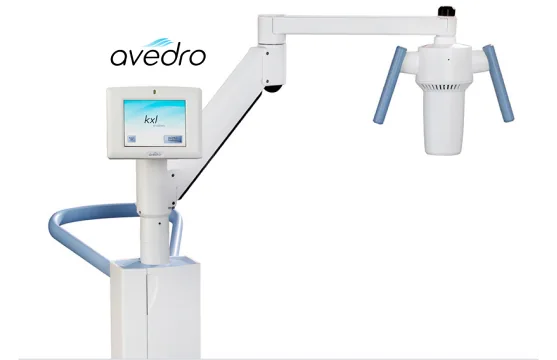
LASIK is not for everyone, and neither is any flap-free version of it. Thickness and shape are the first gate. Among our equipment are a Pentacam, which maps the shape and thickness of the cornea, and a Corvis ST, which shows how the cornea flexes under a puff of air. A cornea that steepens unevenly can be an early sign of keratoconus, and laser correction can make that worse. When a cornea is thinner than a certain threshold, I would steer you toward a LASEK-type procedure that preserves the most cornea.
The US FDA's patient guidance lists other reasons to hold off: a prescription that has changed recently, pregnancy or nursing, and conditions or medicines that affect healing. None of these are judgments about you; they're reasons to wait until the eye is ready.
The over-40 question
Say you're 46, you live in Vancouver, and you wear about minus 4 with some astigmatism. You've noticed you take your glasses off to read your phone. That trick works because your nearsightedness focuses close objects for you. If Smart Nova corrects your distance fully, that built-in reading focus goes with it, and you'll likely reach for readers for close work.
That doesn't rule you out. Which one suits your eyes is something your scans and the doctor's exam settle.
When someone in their mid-40s asks me about Smart Nova, the question I want answered is what they look at all day: a screen at arm's length, a phone, or the road. Serious visual side effects, though rare, have occurred when surgery went ahead despite an exam result advising against it. So if the scans say wait, I'd rather you go home with glasses and no regrets.
How do the methods compare?
Smart Nova uses the same 2mm, flap-free cut as New SMILE LASIK, with CenTrax alignment on top. The table uses the comparison from our LASIK page, so read the New SMILE row for Smart Nova.
| Method | How it works | Early recovery noted on our site |
|---|---|---|
| LASIK | Thin flap, laser on the stroma | Discomfort about half a day; flap-related complications possible |
| LASEK | Surface layer removed, laser on the stroma | Up to 3 to 4 days of discomfort; blurring 5 to 7 days |
| New SMILE LASIK | 2mm micro-incision, tissue removed, no flap | Minimal corneal damage; listed for high myopia with thin corneas |
Our LASIK uses the SCHWIND Amaris Red SPT with Co-Wave customization. LASEK is the route when LASIK would leave too little cornea, and we offer standard, Amaris Red and 2Day LASEK. If you're unsure where your cornea falls, the article on whether LASIK or LASEK fits your cornea walks through that split, and the New SMILE LASIK page covers the flap-free method on its own.
There is also the EVO/EVO+ ICL, a lens implant that removes no cornea at all, used for high myopia, thin corneas and dry eye. It is surgery inside the eye, and the FDA lists risks such as raised eye pressure and cataract for this lens type, so it's a choice for when laser options don't fit.
What does recovery look like once you're back home?
The FDA's LASIK guidance notes it can take up to three to six months for vision to stabilize.
The same FDA guidance gives restrictions worth putting in your calendar: no swimming, hot tubs or whirlpools for one to two months, no contact sports for at least four weeks, and no lotions, creams or make-up around the eye for up to two weeks. If you were hoping to combine the trip with a beach week, this is the part that changes plans.
On the Seoul side, our hours shape the trip. We're open Monday to Wednesday and Friday from 10:00 to 16:30, with lunch from 13:00 to 14:00. Saturday runs 10:00 to 14:30 for exams and surgeries only. Thursday we're closed for equipment inspection, and Sundays and public holidays we're closed too. If you land on a Wednesday night, your first possible visit is Friday. Ask at booking how many post-operative checks to plan before your flight home, and leave a spare day.
What decides the cost for your case
Your Korea Smart Nova LASIK recovery cost comes down to a handful of things, and most of them are set by your exam rather than by your wish list.
- The method your exam points to. Smart Nova, New SMILE, LASIK with Co-Wave, LASEK and ICL are different procedures with different fees.
- Whether near vision is part of the plan. After 40, asking about Presbyopic LASIK·LASEK is a separate conversation from distance correction.
- How many days you stay in Seoul. Hotel nights, leave from work and the post-operative checks before you fly all sit here.
- Follow-up once you're home. A visit or two with your own eye doctor belongs in your budget.
Our doctors confirm the procedure and the final fee at your free exam. Before that, you can ask on WhatsApp what it would cost for your case, and say whether you're also asking about reading vision.
Do Smart Nova LASIK reviews match the medicine?
Some do, some leave things out. Three claims come up again and again in public reviews of laser correction.
"It barely hurt." Partly true. Numbing drops mean most people feel pressure during the laser, not sharp pain. Afterward, many eyes feel scratchy or watery for some hours. That is normal, and it isn't nothing.
"Blurry one day, clear the next." True, and it's reassuring to know in advance. Early fluctuation is part of healing, which is why the FDA talks about months, not days, for stabilization.
"Back to normal life straight away." True for desk work for many people. It leaves out the swimming, contact-sport and make-up limits above, which matter for a traveler more than for someone at home.
Risks and side effects to know
Common and usually temporary: dryness, glare or halos around lights at night, sensitivity to light, and vision that fluctuates for weeks. For many people these ease as the cornea heals, though dryness can linger longer in some eyes.
Who should wait or skip it, as general medicine: a prescription that is still changing, pregnancy or breastfeeding, a thin or irregular cornea, active eye inflammation or infection, and some autoimmune conditions. Healing and results differ from eye to eye, and the in-person exam decides suitability.
If something feels wrong after you fly home, such as pain that gets worse, rising redness, discharge or a sudden drop in vision, don't wait for a scheduled visit. See an eye doctor at home right away. The CDC's medical tourism advice is to carry copies of your records and arrange follow-up care at home before you travel, so bring your surgery notes and the name of the procedure.
If an eye doctor at home has already measured your corneal thickness or mapped your cornea, send a photo of that printout on WhatsApp with the date it was taken, and ask whether it points toward Smart Nova or a different method.
Before you book
We're at 723-26 Banpo-dong, Seocho-gu, about a 5-minute walk from Nonhyeon Station (Line 7 Exit 5, Sinbundang Exit 4) or Sinnonhyeon Station (Line 9 Exit 2). Our complication prevention program includes daily equipment checks, and our surgeons are named on a public page, so you can see who operates before you arrive.
We offer a consultation for overseas patients. Send a photo of your glasses prescription and your travel dates on WhatsApp, and add the one thing that would settle it for you, maybe whether your reading vision changes the plan. When you come in, the doctor examines your eyes and recommends the method that fits them.
Results vary by individual.
Sources
Questions answered
Do I need to stop wearing contact lenses before the exam?
Usually, yes. The US FDA's LASIK guidance suggests stopping soft lenses for 2 weeks before the first evaluation, toric soft or rigid gas-permeable lenses for at least 3 weeks, and hard lenses for at least 4 weeks, because lenses change the shape of the cornea. Check the timing for your lens type when you book.
Is Smart Nova LASIK a different laser from New SMILE LASIK?
Both use the SCHWIND ATOS platform and the same 2mm, flap-free approach. Smart Nova adds CenTrax, which corrects rotation and docking error, which mostly matters when astigmatism needs an exact axis.
Can my vision change again years after Smart Nova LASIK?
Presbyopia continues after 40, cataract can develop later in life, and a small shift in prescription is possible for some people. That is why a stable prescription before surgery matters.
Which days can I come in for an exam or surgery?
Monday to Wednesday and Friday, 10:00 to 16:30 with lunch from 13:00 to 14:00, and Saturday 10:00 to 14:30 for exams and surgeries only. Thursday is closed for equipment inspection, and Sundays and public holidays are closed. All exams, surgeries and consultations are by appointment.
Is there an option if I want help with reading vision too?
Whether it fits depends on your corneal scans and how you use your eyes day to day, so mention it when you ask about your case.
Get your free consultation before you decide
- Free consultation and checkup, even if you decide against surgery
- Same price as Korean patients, no overseas surcharge
- Interpreters in English, Japanese and Chinese


