
Korea Smart Nova LASIK Recovery Program: Will It Fit Your Leave?
Planning a Korea Smart Nova LASIK recovery program around one fixed block of leave, and worried your eyes won't be ready for the flight home?
On this page
What do the first 48 hours after Smart Nova LASIK feel like?
Read this before you book the return ticket.
You'll know what the first days usually feel like, how the methods differ in recovery, which review claims hold up, and what decides the cost, so you can size the trip to your eyes and your budget.
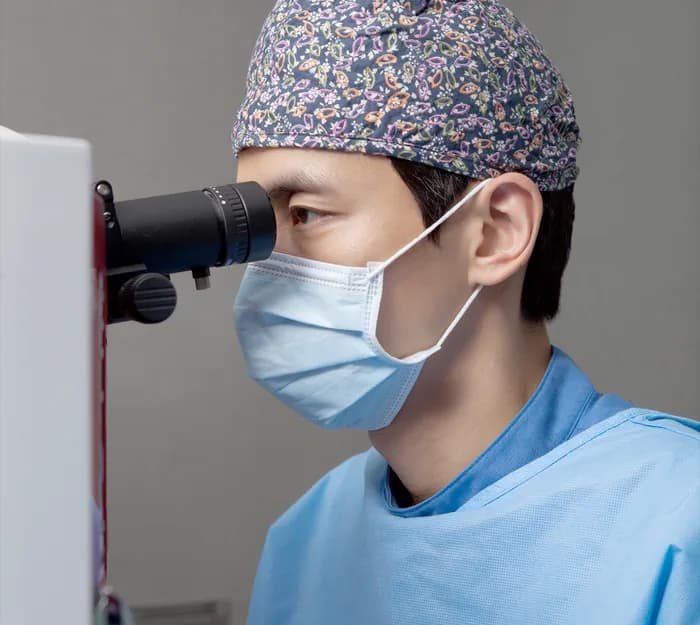
Hello, I'm Dr. Kim Sang-Myung, an ophthalmologist on the vision correction team at Sky Eye Clinic in Seoul. I completed my ophthalmology training at Yonsei Severance Hospital, and I'm a full member of the Korean Society of Cataract and Refractive Surgery.
We have 10 ophthalmologists, and several of our doctors have had LASIK or LASEK themselves. The same medical team stays with you from the exam through surgery and the key checks afterward, and our equipment is checked daily under a complication prevention program.
I'm writing this because travelers often book the flight home first and squeeze the surgery in around it, when the dates should come from the recovery.
Smart Nova LASIK is a flapless, small-incision procedure, and many people see well enough to walk around the city within a day or two. What sets your trip length is the first check within 24 to 48 hours and a spare day before you fly.
If you have a recent glasses prescription, send a photo of it on WhatsApp with the dates you can travel, and ask one thing: how many days to leave between surgery and the flight. With your numbers and dates in one message, you can plan around your own eyes from the start.
Expect the laser part to be short and the rest of the day to be quiet. Numbing drops are used for the surgery, and once they wear off, many people feel a scratchy, watery sensation and some light sensitivity for a few hours. Plan to go straight back to your hotel, keep your eyes closed, and sleep.
Smart Nova LASIK at our clinic uses the New SMILE approach on the SCHWIND ATOS laser, with CenTrax added to correct rotation and docking error. The laser shapes a thin piece of tissue inside the cornea and removes it through a 2mm incision, with no flap. Published reviews of small-incision lenticule extraction, including one by Reinstein and colleagues in Eye and Vision, explain that leaving the front of the cornea largely intact is thought to spare more corneal nerves than a flap does. That is one reason early dryness is often milder.
The US Food and Drug Administration's patient guidance says to see your doctor within the first 24 to 48 hours after surgery. Treat that visit as fixed. It's the part of a Korea Smart Nova LASIK recovery program you can't move to after your flight.
Over these two days, vision is often clear enough to read signs and a phone, but it can look hazy, especially in dim light. Don't rub your eyes, use the drops exactly as prescribed, and keep tap water and soap out of them.
The first week, day by day, and where the flight fits
Days 3 to 7 are usually about protecting the eye while it settles. Most surgeons ask you to stay away from swimming pools, hot tubs and saunas for at least the first week or two, and that includes a jjimjilbang after a long day of walking around Seoul. Dusty or smoky places and eye makeup wait too. Screen work is usually possible with breaks and drops, because dryness builds when you stare without blinking.
Sharpness often fluctuates in this period: clear in the morning and softer by evening, or the other way round. Halos around lights at night are common early on and, for many people, fade over weeks to a few months.
Cabin air is dry, so keep your lubricating drops in your carry-on and use them through the flight. Ask your surgeon at the post-op check whether you're cleared to fly; that answer comes from your eye, not from the calendar.
Our hours shape your schedule
We're open Monday to Wednesday and Friday from 10:00 to 16:30, with lunch from 13:00 to 14:00. On Saturday we're open from 10:00 to 14:30 for exams and surgeries only. We close on Thursdays for equipment inspection, and on Sundays and public holidays. A Wednesday surgery would put the next-day check on a closed Thursday, so if you have a choice, a Monday, Tuesday or Friday surgery leaves more room for the 24 to 48 hour check.
A worked example
Say you fly in from Sydney with nine days of leave, you wear soft contact lenses, and your prescription hasn't changed in two years. The FDA's guidance asks soft-lens wearers to stop wearing them for about two weeks before the baseline exam, and longer for rigid lenses, so you'd switch to glasses before you leave home.
You land Sunday evening and come in for the exam on Monday. If the exam shows your cornea suits Smart Nova and surgery happens on Tuesday, the check falls on Wednesday. Thursday we're closed, which gives you a quiet day. Friday is open if anything needs a second look. Flying home on Saturday or Sunday then leaves several days between surgery and the flight.
If the same exam pointed to LASEK because the cornea is thin, I'd call nine days tight. Our own comparison lists discomfort for up to 3 to 4 days with LASEK and blurring for 5 to 7 days, and I wouldn't want you on a long-haul flight inside that window.
Several of our doctors have had LASIK or LASEK themselves, so what we say about the first few evenings comes from the patient's side of the laser as well as the surgeon's. My view is plain: give the recovery one day more than you think you need. A spare day costs you a hotel night. A rushed flight with a hazy, dry eye costs you a miserable trip home and a check you couldn't keep.
If your leave is fixed, send on WhatsApp how many days you have and whether you wear soft or rigid lenses, and ask whether that window fits Smart Nova or would be tight for LASEK. Knowing that before you book means your flight dates follow your eyes.
Smart Nova, New SMILE, LASIK or LASEK: how do the methods recover differently?
The exam decides the method, and the recovery follows the method. This is how our own comparison of the main options reads, with Smart Nova added.
| Method | What the laser does | Recovery-related notes |
|---|---|---|
| Smart Nova LASIK | New SMILE approach on SCHWIND ATOS, plus CenTrax correcting rotation and docking error | 2mm incision, no flap |
| New SMILE LASIK | Removes tissue through a 2mm micro-incision | Minimal corneal damage; no flap, so no flap complications |
| LASIK | Thin flap, laser on the stroma (Amaris Red SPT, Co-Wave) | Discomfort about half a day; flap-related complications possible |
| LASEK | Surface epithelium removed, laser on the stroma | Discomfort up to 3 to 4 days; blurring 5 to 7 days |
LASIK has the shortest early discomfort in that comparison, but it leaves a flap, which matters if your cornea is on the thin side. LASEK takes the longest to settle, yet it preserves the most cornea; that trade-off is covered in how your cornea decides between LASIK and LASEK. LASIK is not for everyone, and when the cornea is thinner than a certain threshold, a LASEK-type procedure is the one I'd point you to.
For the details of each flapless option, see the Smart Nova LASIK procedure page and the New SMILE LASIK procedure page. The LASIK procedure page explains who a flap-based procedure suits.
What do reviews get right about Smart Nova LASIK recovery?
Read recovery reviews from any clinic and three claims come up again and again.
'Back to normal the next day.' Partly true. Many people see well enough the next day to get around, and some return to desk work within days. The drops, the no-rubbing rule and the water precautions still continue for weeks, and normal at night can still include halos.
'Sometimes blurry, sometimes clear.' True, and common. Fluctuation in the first weeks is part of the cornea settling and is not by itself a sign that something went wrong.
'It didn't hurt at all.' The surgery is done under numbing drops, so most people feel pressure more than pain. Afterward, a few hours of grittiness and watering is common. Expecting zero discomfort only sets you up to worry about something normal.
What reviews rarely mention is the exam. Serious visual side effects, although rare, have happened when surgery went ahead despite an exam result advising against it, and a review written a week after surgery can't tell you that.
What decides the cost of Smart Nova LASIK and the trip?
Any figure given without an exam would be a guess. These are the things that move it for you:
- The method your exam points to: Smart Nova, New SMILE, LASIK or LASEK.
- Whether both eyes are treated and how much correction each needs.
- What the exam finds, since a thin or irregular cornea can change the plan entirely.
- How many nights you stay in Seoul, which the recovery sets more than the surgery does.
- Follow-up once you're home, with an ophthalmologist near you.
Your doctor confirms the procedure and the final fee at the exam. To get a figure for your own case before you travel, ask on WhatsApp what Smart Nova would cost for your prescription.
Risks and side effects to know
Common, temporary effects are dryness, glare and halos at night, light sensitivity, and vision that fluctuates. For many people these ease over weeks to a few months; for some, dryness lasts longer and needs ongoing drops. Less often, the eye ends up under- or over-corrected, or inflammation or infection develops near the incision.
As general medicine, these are reasons to wait or skip it: a prescription that is still changing, a thin or irregularly shaped cornea (which can be an early sign of keratoconus), pregnancy or breastfeeding, active eye inflammation or infection, and some autoimmune conditions or medicines that slow healing. The FDA lists factors of this kind in its guidance on when LASIK is not for you.
If something feels wrong after you fly home, such as pain that is getting worse, a red eye with discharge, or a sudden drop in vision, see a local ophthalmologist the same day and bring your surgery records. The US Centers for Disease Control and Prevention advises medical travelers to carry copies of their records and to arrange follow-up care at home before they leave. Healing differs from person to person, which is why the in-person exam decides who is suitable.
Before you book anything, send one message on WhatsApp in English: when your prescription last changed, and the question you most want answered before you request leave. When you come to Seoul, we examine your eyes and recommend the method that fits them, and the same team stays with you through surgery and the key checks after it.
Results vary by individual.
Sources
Questions answered
Can I fly home the day after Smart Nova LASIK?
FDA guidance is to see your doctor within 24 to 48 hours of surgery, so flying the next day usually means missing that check. Leave room for the check plus a spare day, and ask your surgeon at the check whether you're cleared to fly.
When can I go back to screen work?
Many people manage screens within a few days after a flapless procedure, using lubricating drops and regular breaks. Dryness and shifting focus are common early on, so plan lighter screen days in the first week if you can.
Do I really need to stop wearing contact lenses before the exam?
Yes. Lenses change the shape of the cornea and can skew the measurements. FDA guidance asks soft-lens wearers to stop about two weeks before the baseline exam and rigid-lens wearers for longer, so start at home before you travel.
Who looks after my eyes once I'm back home?
Find an ophthalmologist near home before you leave and bring copies of your surgery records. If you notice worsening pain, a red eye with discharge or a sudden drop in vision, see them the same day.
Is Sky Eye Clinic open on Thursdays?
No. We close on Thursdays for equipment inspection, and on Sundays and public holidays. Saturday hours, 10:00 to 14:30, are for exams and surgeries only.
Get your free consultation before you decide
- Free consultation and checkup, even if you decide against surgery
- Same price as Korean patients, no overseas surcharge
- Interpreters in English, Japanese and Chinese


