
Korea Smart Nova LASIK Side Effects Reviews: Do They Apply After 40?
Reading Korea Smart Nova LASIK side effects reviews in your 40s and wondering whether any of them describe eyes like yours?
On this page
What is Smart Nova LASIK, and how does it work?
Read this before you search for flights.
You'll come away knowing what decides the cost, how the methods differ, how recovery tends to run and which review claims stand up medically, so you can judge whether this surgery makes sense for your eyes at this age.
Hello, I'm Dr. Kim Sang-Myung, an ophthalmologist at Sky Eye Clinic in Seoul. Vision correction is my field, and I completed my ophthalmology training at Yonsei Severance Hospital.
Our clinic has ten ophthalmologists and separate centers for vision correction, for cataract and presbyopia, and for retina and glaucoma. That split matters after 40, when the question often reaches past the cornea to the lens behind it.
I'm writing this because a review usually describes one person's early weeks and rarely gives their age, so people in their 40s end up reading about recoveries that may not predict their own.
Smart Nova LASIK is a no-flap laser procedure whose usual side effects are early dryness, fluctuating vision and glare at night. It can't stop the age-related loss of close-up focus, and that's the part reviews seldom mention.
If you've started holding your phone farther away, send your distance prescription and your reading-glasses strength on WhatsApp, with this question: what would surgery do to my close-up vision?
Send your prescription and your near-vision question on WhatsApp
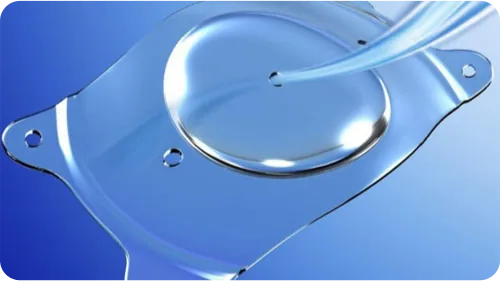
Smart Nova LASIK is New SMILE LASIK with CenTrax added, performed on a SCHWIND ATOS laser. In New SMILE LASIK, tissue inside the cornea is removed through a 2mm incision. No flap is made, so flap complications don't apply.
CenTrax corrects for rotation and docking error, meaning small misalignments between your eye and the laser. Eyes can rotate slightly when you lie down. That matters most if you have astigmatism, because astigmatism has a direction and the correction has to line up with it.
Who it suits, and the question I'd ask first after 40
The general candidate is an adult whose prescription has been stable for at least a year, whose corneal measurements allow surgery, and who finds glasses or contacts a real problem. New SMILE LASIK is listed for high myopia with thin corneas. If corneal thickness is your open question, this piece on how your cornea decides between LASIK and LASEK goes further than I will here.
After 40, I'd want to know how you read a menu. The lens inside your eye stiffens with age, and laser reshaping of the cornea doesn't reverse that. Reading glasses arrive on their own schedule, with or without surgery.
Say you're 47, about minus 3, and you take your glasses off to read. Many nearsighted people do this without thinking, because their uncorrected eyes focus up close. Correct that myopia fully for distance and you'd likely see road signs without glasses, then need reading glasses for your phone. You'd be swapping one pair for another, and some people are happy with that trade while others regret it.
That's the conversation I'd have with you before any talk of lasers. If you value reading without glasses more than driving without them, surgery aimed purely at distance may be the wrong plan, and presbyopic LASIK or LASEK or no surgery at all deserves a look.
What do reviews get right about side effects?
Most Korea Smart Nova LASIK side effects reviews say a few of the same things. Here's how I'd sort them.
"Some days it's blurry, some days it's clear." This one is accurate. Vision commonly fluctuates in the early weeks after laser correction, and dryness is often part of the reason.
"It hardly hurt." Partly accurate. Numbing drops cover the procedure itself, and many people describe pressure more than pain. Scratchiness or stinging afterward is common, and people differ in how much they feel it.
"I could see clearly the next morning." Sometimes true, and not a promise. No flap doesn't mean every eye is sharp on day one. With this type of procedure, some people's vision takes days or weeks to sharpen.
A review written in week three can't tell you about night driving in month six, and it won't mention the writer's age, prescription or dry-eye history.
For a longer view, I'd look past reviews to published follow-ups of small-incision lenticule surgery, including five-year results in the British Journal of Ophthalmology and ten-year outcomes in Clinical and Experimental Optometry. Those studies weren't done on Smart Nova specifically, so I read them as evidence about the technique and not about this laser.
Risks and side effects to know
Common and usually temporary: dry, gritty eyes, fluctuating vision, and glare or halos around lights at night. These often ease over weeks to a few months, though dryness can last longer, and age can make dry eyes more likely. The American Academy of Ophthalmology lists dry eyes, glare and halos, and under- or overcorrection among the risks of LASIK surgery generally. Less often, vision may be under- or overcorrected, or dryness may persist. Infection and inflammation are rare but serious. Recovery differs from one person to the next.
These are general reasons to postpone or skip surgery:
- a prescription that's still changing
- pregnancy or breastfeeding
- autoimmune disease, or poorly controlled diabetes, or medication that affects healing
- significant dry eye or eyelid inflammation
- thin or irregular corneas
- early clouding of the lens
The U.S. Food and Drug Administration's page on when LASIK isn't advisable covers several of these, and it's worth reading alongside any clinic's page.
If you're back home and get strong pain, sudden loss of vision or worsening redness, see a local ophthalmologist that same day and bring your surgery records. The U.S. Centers for Disease Control and Prevention advises medical travelers to plan follow-up care at home before leaving, so find that ophthalmologist before you fly.
Serious visual side effects, although rare, have occurred when surgery went ahead despite an examination result advising against it. If your exam points away from surgery, please don't go looking for someone who'll say yes. I'd rather you keep your glasses than have surgery your eyes argued against.
How do the methods compare after 40?
We offer several approaches, and age shifts how I'd weigh them.
- Smart Nova and New SMILE LASIK: no flap, a 2mm incision. Smart Nova adds CenTrax alignment.
- LASIK: a thin flap, then laser on the stroma, using the SCHWIND Amaris Red SPT. Early discomfort is listed at about half a day, and flap-related complications are possible.
- LASEK: the surface epithelium is removed and regrows under a protective lens. Discomfort can last up to 3 to 4 days and blurring 5 to 7 days. It's advised when LASIK would leave too little cornea.
- Presbyopic LASIK or LASEK: aimed at the reading problem, which generally means accepting some compromise between near and far.
If your lens is already starting to cloud, laser on the cornea may be the wrong place to start. That's when a look from our cataract and presbyopia center makes sense, where Dr. Kim Dong-Soo is Center Director.
With your prescription, add a line about any regular medication or diagnosis, such as diabetes treatment, and ask on WhatsApp whether it changes which of these methods you should read about.
Send your prescription and your near-vision question on WhatsApp
What decides the cost?
The figure for your case turns on a handful of things:
- which method your exam points to, and whether alignment technology such as CenTrax is part of it
- whether you need a distance-only plan or a presbyopia approach
- how many days you stay in Seoul for checks after surgery
- what follow-up you'll arrange at home, and with whom
Your doctor confirms the procedure and the final fee at your exam, because the method can change once your eyes are measured. To get a figure for your own case in the meantime, ask on WhatsApp what it would cost, with a photo of your prescription.
How recovery tends to run
The first hours often bring stinging, tearing or light sensitivity, so plan on being escorted back to where you're staying and resting your eyes. In the days after, the general guidance is to use your drops as prescribed and to avoid rubbing your eyes. The FDA's LASIK guidance also warns against swimming, hot tubs and contact sports for a period after surgery. Ask your surgeon how those limits apply to a no-flap procedure.
Over the following weeks, expect vision to move around, and expect screens and airplane cabins to make your eyes feel drier. Over the next months, most changes tend to settle. This is also when close-up focus becomes easier to judge, since dryness and early blur no longer muddy the picture.
For your calendar: the clinic is closed on Thursdays for equipment inspection, and on Sundays and holidays. It's open 10:00 to 16:30 on Monday to Wednesday and Friday, and 10:00 to 14:30 on Saturday, for exams and surgeries only that day, with lunch from 13:00 to 14:00. When you book, ask when your post-op check falls and set your flight home after it. The same medical team supports you from examination and consultation through surgery and key post-operative checks.
On WhatsApp, send one photo of your latest prescription and ask the question that brought you here, whether that's your reading vision, dryness or how long to stay. You can ask before booking anything. When you come to Seoul, the doctor examines your eyes and recommends the treatment that fits them.
Results vary by individual.
Sources
- When is LASIK not for me?
- What should I expect before, during, and after surgery? (LASIK)
- LASIK — Laser Eye Surgery
- Medical Tourism
- Five-year results of Small Incision Lenticule Extraction (ReLEx SMILE) (Blum M, et al. Br J Ophthalmol 2016;100(9):1192-
- Ten-year outcomes following small incision lenticule extraction for up to -10 Dioptres myopia (Xia F, et al. Clin Exp Op
Questions answered
Will I still need reading glasses after Smart Nova LASIK?
If you're in your mid-40s or older, probably at some point. Age-related near-focus loss comes from the lens inside your eye, and corneal laser surgery doesn't stop it. Nearsighted people who now read without glasses often notice the change most.
Is Smart Nova LASIK the same as regular LASIK?
No. Regular LASIK creates a thin flap. Smart Nova LASIK is New SMILE LASIK with CenTrax, using a 2mm incision and no flap. The name is similar, but the corneal step differs.
Can I have laser eye surgery if I have diabetes?
It's possible for some people. Poorly controlled diabetes can affect healing and is a common reason to postpone. Tell your doctor about your diagnosis, medication and any diabetic eye changes before planning a trip.
How much weight should I give star ratings?
Use them to judge things like communication and how a visit felt. They say little about your own medical outcome, because they don't account for prescription, corneal shape, age or how long ago surgery took place.
Do I need to stop wearing contact lenses before the exam?
Usually, yes. Contacts can temporarily change the shape of the cornea and affect measurements. The FDA's LASIK guidance gives about 2 weeks for soft lenses, 3 for toric or rigid gas permeable lenses and 4 for hard lenses. Confirm your own timing when you book.
Get your free consultation before you decide
- Free consultation and checkup, even if you decide against surgery
- Same price as Korean patients, no overseas surcharge
- Interpreters in English, Japanese and Chinese


