
Korea Smart Nova LASIK vs PRK: Which One Fits Your Cornea?
Stuck on Korea Smart Nova LASIK vs PRK, and worried that picking the quicker recovery could cost you corneal tissue you can't get back?
On this page
Smart Nova LASIK and PRK change the cornea in different places
Read this before you book the flight to Seoul.
By the end you'll know how the two surgeries differ, who suits each one, how recovery and reviews compare, and what decides the cost. That's enough to see which question matters most for your corneas, your work and your budget.
Hello, I'm Dr. Kim Sang-Myung, an ophthalmologist at Sky Eye Clinic in Seoul. Vision correction (LASIK, LASEK and New SMILE) is my field.
Here, Smart Nova LASIK runs on the SCHWIND ATOS laser with CenTrax, and our surface treatment is LASEK on the SCHWIND Amaris Red SPT. Several of our doctors had LASIK or LASEK themselves before recommending them to patients, and our WhatsApp channel is in English.
I wrote this because people tend to frame the choice as new technology against an older method, and that framing points them at the wrong question.
The answer: if your cornea is thick and regular enough for your correction, Smart Nova usually gives you the easier first week. If your cornea is thin for the amount of correction you need, a surface treatment (PRK, or LASEK as we do it here) keeps the most cornea behind. Your scans settle it.
If you have a corneal thickness reading or a topography printout from a past eye exam, send a photo of it on WhatsApp with your current glasses prescription, and ask the one thing you most want to know about your own cornea.
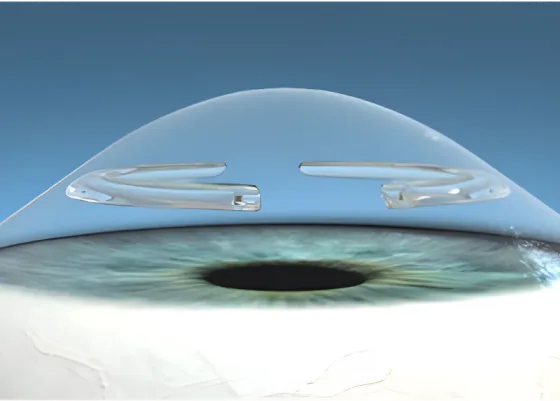
PRK works from the outside. The thin surface skin of the cornea, the epithelium, is removed, the laser reshapes the layer underneath, and the epithelium grows back over several days under a bandage contact lens. LASEK belongs to the same surface family. The surface options on our menu are standard LASEK, Amaris Red LASEK and 2Day LASEK.
Smart Nova works from the inside. The laser shapes a thin disc of tissue within the cornea, and that tissue is removed through a 2mm incision. The surface skin stays where it is and no flap is cut. Smart Nova is our New SMILE LASIK with CenTrax added, which corrects for eye rotation and docking error during treatment. The small-incision approach itself is described in detail in a review by Reinstein and colleagues in Eye and Vision.
| Smart Nova LASIK | PRK / LASEK | |
|---|---|---|
| Where the laser works | Inside the cornea, tissue removed through a 2mm incision | On the surface, after the epithelium is taken off |
| Flap | None | None |
| Early discomfort | Minimal damage to the corneal surface | Up to 3 to 4 days, with blurring for 5 to 7 days |
Both remove corneal tissue to change its focus. What separates them for your eye is how much untouched cornea remains after the correction, and whether the shape of that cornea is even to begin with.
Who is a good candidate for Smart Nova LASIK, and who is better off with surface treatment?
Smart Nova tends to fit someone with a stable prescription, a regular corneal shape and enough thickness for the correction. It suits people who need to be back at a screen soon, and people who play contact sports or work where the eye can take a knock, because there's no flap to dislodge. A high prescription alone doesn't rule it out: on our vision correction pages, New SMILE is listed for high myopia with thin corneas.
Surface treatment comes into the conversation when the cornea is thin relative to the correction. In that situation a LASEK-type procedure preserves the most residual cornea, and that is the trade I'd make. It can also come up when the surface skin itself is uneven, or with very low prescriptions, where there may be too little tissue to shape into a removable disc.
Some eyes should wait for both. The US Food and Drug Administration lists an unstable prescription, pregnancy or nursing, and thin corneas among the reasons laser surgery may not suit someone. A cornea that steepens unevenly can be an early sign of keratoconus, and laser vision correction can make that worse. For those eyes, the conversation turns to keratoconus treatment and corneal cross-linking rather than either laser.
LASIK-type surgery is not for everyone, and neither is Smart Nova. If your scans point to surface treatment, I'd rather you hear it in Seoul than talk yourself into the quicker recovery. Serious visual side effects, though rare, have happened when surgery went ahead despite an exam result advising against it.
What does the exam decide that your prescription can't?
Your minus number tells me how much to correct. It doesn't tell me whether your cornea can afford it. The number I look at first is how much cornea would remain after the correction, and next to it, the topography map showing whether the cornea steepens evenly or toward one spot.
Our exam equipment includes a Pentacam, which maps the front and back of the cornea and its thickness, and a Corvis ST, which looks at how the cornea flexes under a puff of air. Neither reading is about which procedure sounds more modern. Together they show whether a given correction leaves enough strength behind.
If you've already read our post on whether LASIK or LASEK fits your cornea, the same logic applies here. The new piece is that Smart Nova adds a third path, with no flap and the surface left intact, and that path has its own thickness and prescription limits.
An example: minus 5, a borderline cornea and reading glasses on the horizon
Say you're 43, about minus 5 with some astigmatism, and you've been in contact lenses for twenty years. A surgeon at home mentioned PRK because your corneas measured on the thin side. You lift weights, you work at a screen all day, and lately you hold your phone farther away to read it.
Here's how I'd reason. If the scans show a regular shape and enough cornea left after a Smart Nova correction, it fits your screen-heavy week and your gym routine. If the remaining thickness is tight, I'd steer you to LASEK and plan for the slower start. If the map shows uneven steepening, I wouldn't offer either laser on that trip.
The reading glasses are a separate issue. Neither Smart Nova nor PRK stops the age-related change in near focus, so at 43 it's worth asking whether presbyopic LASIK or LASEK, which is on our menu, makes sense for you, or whether you'd rather correct for distance and keep readers for close work.
How does recovery compare in the first week?
With LASEK, early discomfort can last up to 3 to 4 days, and vision is usually blurry for 5 to 7 days while the surface skin grows back under the bandage lens. Plan those days as rest days with little screen time.
With Smart Nova LASIK, the surface skin isn't removed, so for many people the first days are more comfortable and sharp vision returns sooner. For either procedure, vision keeps settling over the following weeks, and dryness is common early on. The FDA's after-surgery guidance includes not rubbing your eyes and keeping away from swimming pools and hot tubs for the period your doctor sets.
For your calendar: we're open Monday to Wednesday and Friday 10:00 to 16:30, closed Thursdays for equipment inspection and on Sundays and holidays, and Saturday 10:00 to 14:30 is for exams and surgeries only. If surface treatment turns out to be the plan, read about our LASEK options before you book flights, because the bandage lens and the slower first week change how many days you'll want in Seoul.
Before you lock in flights, send your travel dates on WhatsApp along with the day you need to be back at work, and ask how many days in Seoul each option would take.
What do reviews get right and wrong about these two?
Reading threads about Korea Smart Nova LASIK vs PRK, you'll see three claims again and again.
The first is that PRK hurts for days. That's partly true: the first few days after surface treatment are the uncomfortable part, and our own figure for LASEK is up to 3 to 4 days of discomfort. It is temporary, and pain after day four or five is worth reporting.
The second is that Smart Nova means no discomfort at all. That isn't accurate. Most people feel less early on because the surface is left intact, but dryness, light sensitivity and fluctuating vision in the first weeks still happen.
The third is that the final result will be the same either way. For well-chosen eyes, studies generally find that surface and small-incision procedures reach similar distance vision over time. The catch is the phrase well-chosen eyes. A thin or irregular cornea is exactly where the choice of procedure stops being a matter of preference.
What decides the cost for your eyes?
I can't give you a figure without seeing your eyes, but the factors are clear:
- The method: Smart Nova LASIK, LASIK, or one of the LASEK versions (standard, Amaris Red or 2Day LASEK).
- Whether presbyopia correction is part of the plan, which matters if you're in your 40s.
- Your days in Seoul: surface treatment's slower first week usually means more nights away, which affects your own travel costs.
- Follow-up: the checks you need before flying home.
Your doctor confirms the procedure and the final fee at your free exam. To get a figure for your case before that, ask on WhatsApp what Smart Nova and LASEK would each cost for your prescription.
Risks and side effects to know
Common and usually temporary: dry eyes, glare or halos around lights at night, and vision that's sharper on some days than others for the first weeks. After surface treatment, the first few days of discomfort and blurring are expected, and some people develop a faint corneal haze that usually fades over months. A small number of eyes end up slightly under- or over-corrected.
Who should wait or skip it: anyone whose prescription is still changing, anyone who is pregnant or nursing, eyes with a thin or irregular cornea or signs of keratoconus, and anyone with active eye inflammation or severe dry eye until it's treated. These are general medical cautions. Your own exam sets the line for you.
If something feels wrong after you fly home, such as pain that gets worse, rising redness, discharge or a sudden drop in vision, see an ophthalmologist near you promptly and bring your surgery record. Then message us on WhatsApp so we know what's happening. The same medical team supports you from examination and consultation through surgery and the key post-operative checks in Seoul, so those records are easy to pull together before you leave.
Your first message
Send your glasses prescription or any eye-exam printout on WhatsApp with the dates you're considering and the one question you'd ask me first. When you come in, I'll examine your eyes and recommend the method that fits them, whether that's Smart Nova, LASIK or LASEK.
Results vary by individual.
Sources
Questions answered
Is LASEK the same as PRK?
They belong to the same family of surface treatments. Both reshape the cornea after the surface skin is moved aside, and both recover over several days under a bandage contact lens. The surface options on our menu are standard LASEK, Amaris Red LASEK and 2Day LASEK.
Is Smart Nova LASIK the same as New SMILE LASIK?
Smart Nova is our New SMILE LASIK with CenTrax added. It uses the same small-incision method on the SCHWIND ATOS laser, and CenTrax corrects for eye rotation and docking error during treatment.
I play contact sports. Does that rule out either option?
The FDA notes that people in contact sports may not be good candidates for flap-based LASIK. Smart Nova and surface treatment both avoid a flap, so the sport matters less than your corneal thickness and shape.
I'm in my 40s. Will either surgery fix my reading vision?
No. Neither Smart Nova nor PRK stops the age-related change in near focus. Presbyopic LASIK and LASEK are separate options worth asking about, or you can correct for distance and keep reading glasses.
Can I fly home soon after surgery?
Flying doesn't harm a treated eye, but cabin air is dry, so use lubricating drops often on the flight. What matters more is having your post-operative check before you leave, so ask how many days each option needs before you book flights.
Get your free consultation before you decide
- Free consultation and checkup, even if you decide against surgery
- Same price as Korean patients, no overseas surcharge
- Interpreters in English, Japanese and Chinese


