
Korea SMILE LASIK Side Effects Long Term: What Do You Trade for No Flap?
Reading threads about Korea SMILE LASIK side effects long term and wondering what you might still be living with ten years on, a long way from the surgeon who operated?
On this page
What do the five- and ten-year studies actually show?
Give this ten minutes before you book anything.
You'll see what the long-term studies show, what decides the cost, which review claims don't survive a look at the data, how the methods trade off and how the first days set your trip length. That should help you judge whether the trade fits your eyes and budget.
Hello, I'm Dr. Kim Sang-Myung, an ophthalmologist at Sky Eye Clinic in Seoul, and I work in vision correction.
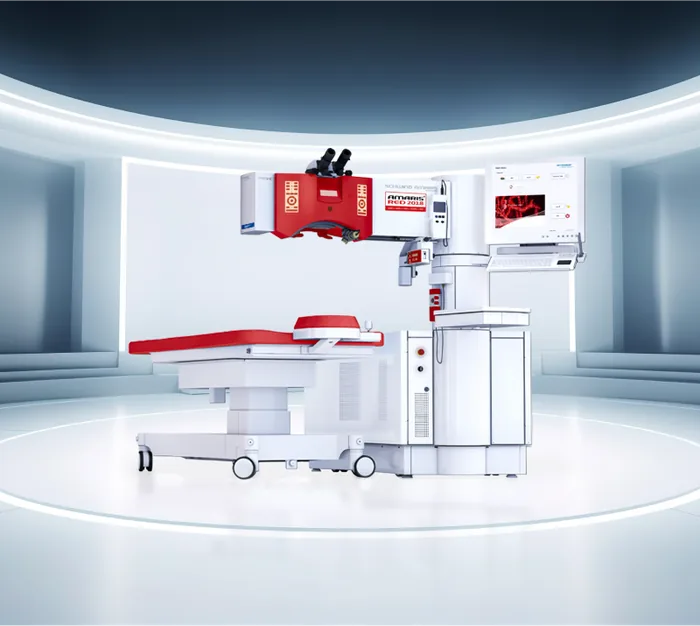
Our New SMILE LASIK uses the SCHWIND ATOS laser with a 2mm micro-incision and no flap. The clinic has a Pentacam, a Corvis ST and a Cirrus OCT 6000, and our complication prevention program includes daily equipment checks.
I wrote this because forum threads blur the first few weeks together with the long term, and people end up planning a trip around the wrong one.
In published follow-ups of up to ten years, the main findings are a small drift back toward myopia and an increase in higher-order aberrations. Dryness and reduced corneal sensation are mostly early problems that improve over months, though not for everyone.
If one of these is the side effect that worries you, send a photo of your latest prescription on WhatsApp and ask about that one by name.
Most data on Korea SMILE LASIK side effects long term comes from small groups, so read these numbers as direction rather than as your personal forecast.
A ten-year study by Xia and colleagues (Clinical and Experimental Optometry, 2024) followed 32 eyes treated for up to -10 D. Average regression was -0.32 D over the decade, about -0.03 D a year. Corneal elevation stayed stable, while horizontal and vertical coma and the incidence of higher-order aberrations increased significantly compared with before surgery.
A five-year study by Blum and colleagues (British Journal of Ophthalmology, 2016) re-examined 56 of the original 91 eyes and reported regression of 0.48 D. It tracked scars, ectasia, persistent dry eye and cataract, but the published abstract gives no counts for them.
Two limits matter to you. Thirty-two eyes can't rule out a rare event, and these studies used another manufacturer's laser. Our ATOS laser works on the same principle of removing tissue through a small incision, but I can't hand you ten-year numbers specific to it, and I'd be wary of anyone who claims to have them for a platform this recent.
The trade you make for having no flap
With New SMILE LASIK there's no flap, so flap complications are off the table. You still accept a different set of risks. A 2014 review by Reinstein and colleagues cites a series of about 1,800 eyes:
- Epithelial abrasions: 6%
- Trace haze: 8%
- Difficult lenticule extraction: 1.9%
- Small incision tears: 1.8%
- Irregular topography: 1.0%
- Suction loss during surgery: 0.8%
The same review describes lenticule remnants as a problem unique to SMILE, one that can cause irregular astigmatism. It also calls visual recovery slightly slower than LASIK, though day-one results had been improving with changes to laser settings.
The long-term trade people overlook is retreatment. There's no flap to lift if you drift, so a later correction usually means surface treatment or converting the cap, and thin-flap LASIK can run into problems at the old interface. It's a good thing to ask about before surgery, because it's hard to think clearly about once you're home with blurry vision.
Smart Nova LASIK is New SMILE LASIK with CenTrax added to correct rotation and docking errors. It's too new for me to quote separate long-term figures. Other methods make other trades: LASIK carries flap-related risks, and LASEK lists up to 3 to 4 days of discomfort and 5 to 7 days of blurring. If thickness is your question, this piece on choosing between LASIK and LASEK by cornea covers it.
Your recovery, stage by stage, and what it does to the trip
The long term happens at home. Your days in Seoul only have to cover the early stage, so that's what should set the length of your stay. The FDA figures below are written for LASIK, and I'm using them as a planning guide for corneal laser in general. Your surgeon's instructions come first.
| When | What's common | What it means for your trip |
|---|---|---|
| Surgery day | Watering, light sensitivity, haze | Arrange a ride and keep the day empty |
| 24–48 hours | First check; sharpness may lag behind LASIK | Stay in Seoul; we close Thursdays and Sundays |
| First week | Dryness, vision that comes and goes | Light sightseeing; non-contact sports after 1–3 days |
| 1–2 months | Eyes still healing | No swimming or hot tubs; home by now |
| 3–6 months | Vision settling; sensation returning | Checks with your eye doctor at home |
The sensation figures come from Reinstein's own 156-eye study, where it was back to baseline in 76% of eyes by 3 months and 89% by 6 months. So dryness at week three doesn't tell you much about year three.
Count your stay from the checks your surgeon asks for, plus a spare day. Our Thursday closure can stretch that by a day, depending on when your surgery falls.
When you write, add your return date and tell us whether your eyes already feel dry by evening. Then ask: "Is that a problem for New SMILE?"
How I'd think about someone with screen-tired eyes
Say you're 34, about minus 5, at screens ten hours a day, and your contacts feel gritty by evening. You've read that SMILE avoids dry eye. I'd slow you down there, because the review supports less loss of corneal sensation and better tear scores than LASIK. It doesn't support no dry eye at all, and the FDA notes that LASIK tends to worsen existing dryness.
So my first interest would be the surface of your eye, and only then the method. If your tears are poor, the choice of laser becomes a smaller question than whether surgery is wise right now.
The question I'd ask you is what you'd want your eye doctor to have in twenty years. Keep your pre-op measurements and the surgery details. Corneal laser changes how lens power is calculated for cataract surgery later and can make eye pressure read differently on glaucoma checks. These are small things now, and hard to reconstruct later. Surgery also won't stop the reading glasses that come with age.
What decides the cost once you look past surgery day?
The doctor confirms the procedure and the final fee at your free exam. These factors shape your total:
- Method and laser: New SMILE, Smart Nova, LASIK or LASEK, according to your cornea and prescription.
- Days in Seoul: the early checks and any spare days.
- Retreatment: ask what would apply if you drifted later.
- Care at home: the CDC warns that treating complications after medical travel may be costly and may not be covered by insurance.
For your own figure, ask on WhatsApp what it would cost in your case, and attach your prescription.
What reviews claim, set against the data
"SMILE has no dry eye." That's untrue. The evidence supports less of it than LASIK, and all tear measures worsened early in both groups in one study the review cites.
"No flap means no risk." Also untrue, as the list above shows.
"Results fade after a few years." Partly true. Some drift is measurable in the studies above, though the average was under half a diopter in both.
"Halos last forever." The evidence here is mixed. Most people find glare fades over the early months, but the ten-year study did find more higher-order aberrations, and large pupils can make night symptoms worse. If you drive at night for work, say so at your exam.
Before surgery: who should wait, and what to do abroad
Risks and side effects to know
Common temporary reactions include dryness, light sensitivity, glare and fluctuating vision, typically over the first weeks to months. Results and healing times differ between people.
The FDA's list for LASIK is a useful starting point for who should wait or skip surgery:
- A prescription that changed in the past year
- Pregnancy or breastfeeding
- Autoimmune disease, immunodeficiency, diabetes, or use of retinoic acid or steroids
- Dry eye, thin corneas or keratoconus
- Glaucoma, uveitis or a past herpes eye infection
Serious visual side effects, although rare, have occurred when surgery went ahead despite an exam result advising against it, so please take that result seriously.
If something new, unusual or worsening appears after you've flown home, the FDA's advice is to contact your eye doctor immediately. Severe pain and worsening vision shouldn't wait for a scheduled visit. The CDC recommends taking copies of all your medical records home with you, so find a local eye doctor before you leave and ask for your records in English.
One photo of your prescription and the long-term side effect you most want to ask about is enough. When you come, the doctor examines your eyes and recommends the treatment that fits them.
Results vary by individual.
Sources
- Ten-year outcomes following small incision lenticule extraction for up to -10 Dioptres myopia (Xia F, et al. Clin Exp Op
- Five-year results of Small Incision Lenticule Extraction (ReLEx SMILE) (Blum M, et al. Br J Ophthalmol 2016;100(9):1192-
- Small incision lenticule extraction (SMILE) history, fundamentals of a new refractive surgery technique and clinical out
- What should I expect before, during, and after surgery? (LASIK)
- When is LASIK not for me?
- Medical Tourism
Questions answered
Can SMILE cause dry eye years later?
The long-term studies here give no clear count for persistent dry eye. Sensation recovers within months for most eyes, but a share of people have lasting symptoms, more often if their eyes were already dry.
Does vision get worse over time after SMILE?
Small regression is reported, with an average of -0.32 D over ten years in one group of 32 eyes. A changing eye, or high myopia, can move this, and reading vision will still change with age.
Is ectasia a concern?
Ectasia is a rare, progressive bulging of the cornea and a concern with any corneal laser. Corneal elevation stayed stable in the ten-year group, but that group is too small to exclude rare events, so screening before surgery matters.
Which long-term issues could affect my care at home?
Future cataract lens calculations and glaucoma pressure readings are the main two. Give your eye doctor your pre-op measurements and surgery records.
Can SMILE be repeated if my vision drifts?
Options exist, most often surface treatment or converting the cap, and a repeat SMILE was still described as a future option in the 2014 review. Ask about this before surgery.
Get your free consultation before you decide
- Free consultation and checkup, even if you decide against surgery
- Same price as Korean patients, no overseas surcharge
- Interpreters in English, Japanese and Chinese


