
Typed “laser eye surgery korea”? When I would tell you not to
If you typed “laser eye surgery korea” because a surgeon at home said your corneas are too thin or your prescription too high, the real question is probably this: why would a clinic abroad say yes when someone at home said no? Sometimes it won't. Several of the ten ophthalmologists at Sky Eye Clinic had LASIK or LASEK themselves, so they know the recovery from the patient's side as well as the surgeon's.
On this page
Why might a Seoul clinic say yes after your surgeon at home said no?
Laser is one tool among several. When it's the wrong tool for your eyes, the most useful result of the trip is hearing that clearly, along with whether a flapless method or a lens implant could still work for you.
If a surgeon at home has already said no, take a photo of that exam report or your current prescription and send it on WhatsApp. Add one question: “Was the reason I was given about LASIK only, or about laser surgery in general?” With your own numbers and the exact reason written down, that first exchange is about your eyes. You can write in English.
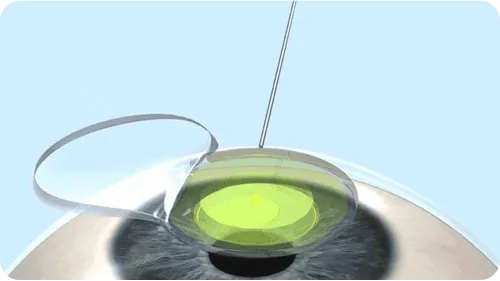
Often the difference is the range of options, and the medical standard is the same. LASIK lifts a thin flap, about 160 micrometers thick, before the laser reshapes the tissue underneath. You can see the steps on our page about how LASIK's flap works. If your cornea is thin for the amount of correction you need, that flap plus the tissue the laser removes leaves too little behind. A clinic that offers only LASIK will reasonably say no at that point.
A “no” to LASIK is not always a no to vision correction. When the cornea is thinner than a certain threshold, a LASEK-type surgery that preserves the most residual cornea is the usual recommendation instead, and our earlier post explains why some corneas suit LASEK better than LASIK. New SMILE LASIK removes tissue through a 2mm incision with no flap, and the clinic lists high myopia with thin corneas among the people it suits. The surgeon still has to confirm that with a full corneal exam.
Risks and side effects to know
Then there is the option that doesn't involve a laser at all. An ICL lens implant corrects vision with a lens placed inside the eye and leaves the cornea uncut. That's why it comes up for high myopia, thin corneas and dry eyes.
What doesn't change with the country is the reason behind a no. If your surgeon at home turned you down because of your corneal shape, an eye disease or a prescription that keeps moving, that reason comes with you on the plane.
The findings that rule laser out, wherever you live
In short, these are the results that stop laser surgery, or at least put it on hold. Some come from our own exam program; others are on the US Food and Drug Administration's list of reasons LASIK may not be right for you.
| What the exam finds | What it means for laser |
|---|---|
| An irregular or steepening corneal map (possible keratoconus) | Laser can make it worse; stabilising the cornea comes first |
| A prescription that changed within the past year | Wait until it has stayed the same for a year |
| A positive Avellino corneal dystrophy DNA test | Surgery is avoided |
| Eye pressure above the normal 10 to 20 mmHg | A detailed glaucoma exam comes before any decision |
| A cornea too thin for a flap plus your correction | LASIK is off; LASEK-type surgery, New SMILE or ICL may be discussed |
| Pregnancy, breastfeeding, or a condition or medicine that slows healing | The FDA lists these as reasons to hold off |
The first row matters most. Keratoconus is a thinning, bulging cornea, and taking tissue away from a weak cornea can speed it up. If your map points that way, the conversation moves to keratoconus treatment such as corneal cross-linking, and vision correction waits.
The FDA also flags a few situations that aren't findings at all: a job whose rules restrict refractive surgery, regular contact sports, and being under 18. Our own eligibility line is adults 18 or older whose prescription hasn't changed in the past year, after a doctor has approved them on a full exam.
A cornea that steepens unevenly worries me more than a minus-ten prescription. A high number tells me which tool to reach for. An irregular map tells me whether to reach for any tool at all. If your scan shows early keratoconus, I would rather talk with you about protecting that cornea than about getting rid of your glasses.
What does the first visit actually check?
The exam is long because each step answers a different question. After registration and a short interview about your eye history, you go through auto-refraction (your myopia, astigmatism and corneal curvature), an eye pressure test, corneal topography to detect keratoconus and irregular corneas, and fundus photography of the retina and optic nerve. Further precision tests follow.
The Avellino corneal dystrophy DNA test is optional. If it comes back positive, surgery is avoided for your safety. A counselor then goes through your results with you, and the doctor examines your eyes on the slit lamp before the full pre-surgery consultation. If something in your results rules surgery out, the team explains it during that consultation. The first visit guide lists every step in order.
The FDA's patient guide asks people to stop wearing contacts for weeks before the baseline exam, and longer for rigid lenses than soft ones, because lenses temporarily change the shape of the cornea.
What can still go wrong when the answer is yes?
A yes doesn't make the risks go away. The FDA's guide to what to expect before, during and after LASIK covers dry eyes, glare and halos around lights at night, and under- or over-correction that can leave you needing glasses for some tasks. How your eyes heal varies, and whether you're a candidate is settled at the in-person exam.
Each method carries its own extra risk. Our own comparison lists flap-related complications as possible with LASIK. LASEK has no flap, but the start is slower, with discomfort for up to three to four days and blurring for five to seven, and corneal haze can develop, mainly in high myopia. New SMILE LASIK has no flap, so flap complications don't apply, and the clinic says face washing, basic makeup and light exercise are possible from the next day.
For high prescriptions the trade gets bigger. More correction means more tissue removed and, for many people, more noticeable halos when driving at night. That's why, with a strong prescription and a cornea on the thin side, I'd want to compare any laser plan against ICL before you decide.
If the risk side is the part you can't settle, send your last exam result or glasses prescription on WhatsApp together with the dates you're thinking of travelling. Ask which of these risks applies most to your numbers, and how many days in Seoul to allow before you buy a ticket.
Planning the flight home around your eyes
A lot of people who search “laser eye surgery korea” book the flight first and fit the exam around it. Do it the other way round. The clinic is closed on Thursdays for equipment inspection and on Sundays and public holidays. Saturday runs 10:00 to 14:30 for exams and surgeries only, and weekdays close at 16:30 with a lunch break from 13:00 to 14:00. It's in Banpo-dong, Seocho-gu, about a five-minute walk from Nonhyeon Station (Line 7 or the Sinbundang Line) or Sinnonhyeon Station (Line 9).
On surgery day the operation itself takes about 15 minutes, though it differs by method. Afterwards you rest in the recovery room, the doctor checks your eyes and explains the result, and you go over aftercare and follow-up appointments before leaving. Ask then how many follow-up visits you need before flying.
The question P2 readers ask most is who looks after them at home. The US CDC's advice on medical tourism is to talk with your home doctor before you go, arrange follow-up care for when you're back, and bring copies of your medical records. For eye surgery that means telling your optometrist or ophthalmologist at home what you're planning, and asking for copies of your exam results and surgery record before you leave Seoul. The surgeon's name is public too: our surgeon profiles list who operates.
If you've been told no once, a second no is not a failure. It means two sets of measurements agree. What I want you to leave Seoul with is either a clear plan or a clear reason, and either way, a copy of your numbers to show the doctor who sees you next.
One step you can take this week: find your last exam report, write down the exact reason you were given at home, and check your leave against a clinic that is closed on Thursdays and Sundays. Then send those three things on WhatsApp and ask what you should bring to the exam.
Results vary by individual.
Sources
Questions answered
Can I have laser eye surgery in Korea with a very high prescription?
Sometimes. A high prescription mainly affects which method fits, because more correction removes more corneal tissue. The clinic lists high myopia with thin corneas among the people New SMILE LASIK suits, and ICL corrects vision without cutting the cornea. Corneal thickness and shape on the exam decide which, if any, applies to you.
Does laser eye surgery hurt?
Surgery is done with numbing eye drops. On the day you may feel irritation, tearing and a grainy feeling. After LASIK this usually lasts about half a day. After LASEK, discomfort can last up to three to four days, with blurring for five to seven.
Is the Avellino DNA test required?
It's optional in the exam program. If the result is positive, surgery is avoided, because laser surgery can worsen that corneal dystrophy.
I had LASIK years ago. Can I have more laser surgery?
The FDA lists previous refractive surgery as a reason for extra caution. Whether more treatment is possible depends on how much cornea remains, so bring any records from your first surgery to the exam.
How long should my contact lenses be out before the exam?
The FDA advises stopping contacts for weeks before the baseline exam, longer for rigid lenses than soft ones, because lenses change the shape of the cornea for a while. Ask at booking how long applies to your lens type.
Get your free consultation before you decide
- Free consultation and checkup, even if you decide against surgery
- Same price as Korean patients, no overseas surcharge
- Interpreters in English, Japanese and Chinese


