
Can You Get LASIK With Astigmatism? Usually, If It's Regular
Can you get LASIK with astigmatism, or does that extra cylinder number on your prescription mean toric contacts for the rest of your life?
On this page
Why astigmatism used to mean no
Most people with astigmatism can. Modern lasers correct regular astigmatism in the same treatment as nearsightedness. What rules people out is an irregular cornea, a cornea too thin for the combined correction, or a prescription that hasn't held steady for a year.
Hello, I'm Dr. Kim Sang-Myung, an ophthalmologist on the vision correction team at Sky Eye Clinic in Seoul.
LASIK is not for everyone. If your scans say laser is the wrong call, I'll tell you plainly and talk you through LASEK or a lens option instead. The first exam includes corneal topography, which maps the shape of your cornea to pick up keratoconus and irregular astigmatism. The surgeon who consults with you is the one who performs your surgery. A medical interpreter is available at no extra charge.
The consultation is free. Take a photo of your most recent glasses or contact lens prescription, send it on WhatsApp, and ask whether your cylinder and axis numbers are in the range laser usually treats. Those two numbers are the most useful thing you can share, and you already have them.
Astigmatism means the front of your eye curves more steeply in one direction than the other. Picture a marble next to an egg lying on its side. Light passing through the egg-shaped surface comes to focus at two different distances, so lines running one way look sharper than lines running the other.
On your prescription it shows up as two extra numbers. The cylinder says how much astigmatism you have, in diopters. The axis says which direction it runs, from 0 to 180 degrees. A right eye written as -3.25 -2.25 x 175 has a sphere of -3.25, a cylinder of -2.25 and an axis of 175.
The idea that astigmatism disqualifies you dates back to early laser surgery, when treatments were mostly designed for nearsightedness alone. Current excimer and lenticule lasers remove more tissue along the steep direction than the flat one, so the cylinder is corrected in the same pass as the sphere. The useful question isn't whether you have astigmatism. It's what kind you have, how much, and what your cornea has to spare.
Is your astigmatism regular or irregular?
In short, this is the question that decides most cases. On a topography map, regular astigmatism looks like a symmetrical bow tie: the steep and flat directions sit at right angles, and the two halves of the bow tie match. Laser reshaping usually handles this pattern well.
Irregular astigmatism looks different. The bow tie is lopsided, the steep areas don't line up, or the lower part of the cornea is steeper than the upper part. That last pattern can be an early sign of keratoconus, a condition where the cornea weakens and bulges. Removing tissue from a cornea like that can make it weaker still.
Here's a clue you can check at home. If your glasses never made things fully crisp even with an up-to-date prescription, but rigid contact lenses did, that sometimes points to an irregular surface that glasses can't fully correct. Mention it at the exam.
We have a Pentacam and a Corvis ST. The Pentacam maps the front and back surfaces of the cornea and its thickness across the whole surface. The Corvis ST records how the cornea flexes under a puff of air, which gives a sense of its stiffness. There is also an optional Avellino corneal dystrophy DNA test; if it comes back positive, surgery is avoided. If the map shows keratoconus, laser vision correction is off the table, and the conversation turns to keratoconus treatment and corneal cross-linking instead.
When I see a lopsided bow tie on the map, the cylinder number on your prescription stops being the main story. Serious visual side effects, though rare, have happened when surgery went ahead against an exam result that advised against it. That's a line I won't cross to fit anyone's travel dates. If the map says wait or says no, I'd rather you fly home in glasses with a clear explanation of why.
Can you have LASIK with astigmatism and a thin cornea?
Correcting astigmatism uses up corneal tissue, and it adds to the tissue used for nearsightedness. Take the -3.25 -2.25 eye above. One direction of that eye needs -3.25 of correction, and the other needs -5.50.
The number that decides it is the residual stromal bed: the untouched corneal tissue left under the flap once treatment is done. A common safety guideline in refractive surgery is to keep at least about 250 microns there, and many surgeons want more margin. When a thick cornea meets a modest cylinder, the margin is comfortable. When a thin cornea meets a large combined correction, it isn't.
If your cornea is thinner than that threshold allows, a LASEK-type surface treatment that preserves the most residual cornea is what I'd recommend. The trade-offs between the two, including the slower recovery of LASEK, are set out in LASIK or LASEK? why your cornea decides. New SMILE LASIK is another route: it works through a 2 mm incision and creates no corneal flap.
Will the laser line up with your axis when your eye rotates?
Put simply, this is the part of astigmatism correction most people never hear about. Your eye rotates slightly in its socket when you lie down, often by a few degrees. The axis on your prescription was measured while you sat upright, and surgery happens while you lie flat.
For nearsightedness alone, a small rotation doesn't matter. For astigmatism, it does, because the correction has a direction. Basic optics says that if the treatment lands 10 degrees off your true axis, roughly a third of the cylinder is left uncorrected. That is why rotation tracking matters more to someone with astigmatism than to someone without it.
Smart Nova LASIK is New SMILE LASIK performed on the SCHWIND ATOS laser with CenTrax, which compensates for rotation and docking errors. For flap-based treatment, LASIK on the SCHWIND Amaris Red SPT uses Co-Wave customization. Which one fits your eye depends on your map and your thickness, so treat the table below as a starting point.
| Option | What happens to the cornea | Often considered when |
|---|---|---|
| LASIK (Amaris Red SPT, Co-Wave) | Thin flap lifted, laser reshapes the tissue beneath | Regular astigmatism with ample corneal thickness |
| LASEK | Surface layer moved aside, no flap, most residual cornea kept | Regular astigmatism on a thinner cornea |
| New SMILE / Smart Nova (SCHWIND ATOS) | Lens-shaped tissue removed through a 2 mm incision, no flap | Regular astigmatism, with CenTrax for rotation on Smart Nova |
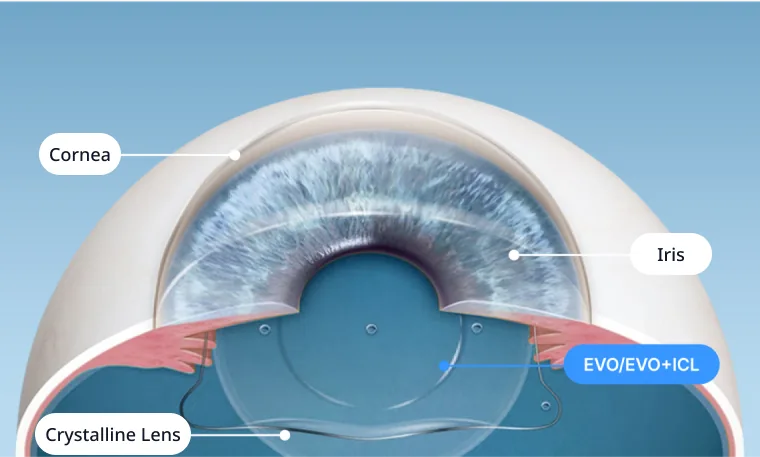
| EVO/EVO+ ICL | Lens placed inside the eye, cornea not reshaped | High myopia, thin cornea or dry eye; ask whether it covers your cylinder |
Your toric lenses can hide your real numbers
So can you get LASIK with astigmatism if you've worn toric contacts for ten years? Contact lenses press on the cornea and can temporarily change its shape, which shifts both the cylinder and the axis your scans pick up. The US FDA's patient guidance asks people wearing toric soft lenses or rigid gas permeable lenses to stop for at least three weeks before the first evaluation, and people in standard soft lenses for two.
That three-week gap is the step travelers most often get wrong. Bring an older prescription too. One of the criteria for LASIK is that your prescription hasn't changed in the past year, and two dated prescriptions show that faster than anything else.
Say you're 31, working in product design in Denver, with -3.25 and -2.25 of astigmatism in the right eye and a milder prescription in the left. Your toric dailies rotate whenever you rub your eyes, and evenings at the screen are blurry. Your first job is the glasses switch and digging out last year's prescription. If your map then shows a symmetrical bow tie and the residual bed stays well clear of the floor, laser is a reasonable conversation. If the bow tie is lopsided, I'd steer you away from removing tissue at all.
One scheduling detail: the clinic is closed on Thursdays for equipment inspection, and on Saturdays it is open until 14:30 for exams and surgeries only. Build your exam day around that before you book flights.
Halos, regression and dry eye after astigmatism correction
The common effects after laser vision correction are temporary for most people: dry, gritty eyes, vision that fluctuates through the day, and glare, halos or starbursts around lights at night. These usually settle over weeks to a few months. How strongly you notice them differs from one eye to the next, which is why your scans and your night-driving needs belong in the same conversation.
Astigmatism adds two specific possibilities. A small amount of cylinder can remain after treatment, and some of the correction can drift back as the surface heals, which happens more often with larger corrections. If astigmatism keeps increasing over months, that is a reason to recheck the cornea's shape rather than simply treat again.
Who should wait or skip laser for now, as general medical guidance:
- Your prescription has changed within the past year
- You're pregnant or breastfeeding
- Your map shows signs of keratoconus or irregular astigmatism
- You have an active eye infection or inflammation
- You have a condition or take a medication that slows healing
- You're under 18
Risk and redness: what to watch for
After you fly home, the risk that matters most is a problem you can't bring back to Seoul quickly. Before you leave, ask for copies of your scans and your surgery record, and book a check with an ophthalmologist near home. Pain that gets worse, a sudden drop in vision or spreading redness needs a local eye exam the same day. Once you've been seen, message the clinic on WhatsApp with what changed. The same medical team supports you from examination and consultation through surgery and the key post-operative checks, so plan your flight around those checks in Seoul.
Before you book anything, send your current prescription along with an older one from a year or more ago on WhatsApp. Ask whether the change between them is small enough to plan surgery around. If it isn't, it's better to know before you buy a ticket.
What should you ask any clinic about astigmatism?
In practice, it doesn't have to be us. Wherever you go, a clinic should be able to answer each of these with your own numbers:
- Can I see my topography map, and is my bow tie symmetrical?
- How many microns of residual stromal bed will I have once the full cylinder is treated?
- How does the laser account for my eye rotating when I lie down?
- Is the doctor who examines me the one who operates?
- How long should I be out of toric lenses before the exam?
- If my vision changes after I fly home, how do I reach the team, and in what language?
A clinic that gives you a number for the second question and shows you the map for the first has measured your cornea, not just your prescription.
Where I stand on astigmatism and laser surgery
I see astigmatism as a measurement to plan around, not a reason to turn someone away. When I do say no, it's because of the cornea under the astigmatism: its shape, its thickness, or a prescription that won't sit still. Several of the doctors here had LASIK or LASEK themselves, so the dry, scratchy first days are something our team knows from the patient's side.
There's no deadline here. Your eyes will be just as measurable next season as this one. What will decide your case is whether the map around your steep axis is symmetrical, and how much cornea remains once the full cylinder is treated. The consultation is free: send your two most recent prescriptions and your travel dates on WhatsApp, and ask what you'd need to stop wearing, and when, before your exam.
— Dr. Kim Sang-Myung, Ophthalmologist
Results vary by individual.
Sources
Questions answered
Can you get LASIK with an astigmatism in only one eye?
Yes. Each eye is measured and treated to its own numbers, so one eye can get a cylinder correction while the other gets sphere only. A large difference between the two eyes is worth raising at the exam, because it changes how your eyes work together while they heal.
Is there a limit to how much astigmatism laser can correct?
Yes, and there are two limits. Each laser platform is approved for a range of cylinder, and your cornea has to keep enough residual thickness after the full correction. When very high cylinder meets a thin cornea, a lens-based option or a surface treatment may come into the conversation instead.
Does treating astigmatism make the surgery longer or more uncomfortable?
Not noticeably. Surgery takes about 15 minutes overall, depending on the method, and what you feel is mostly pressure and the drops, much the same as a sphere-only treatment.
I have astigmatism and I'm starting to need reading glasses. Does LASIK fix both?
Standard LASIK corrects the astigmatism and nearsightedness but not presbyopia, which comes from the aging lens inside the eye. Presbyopic LASIK and LASEK are separate options that aim to reduce dependence on readers, and whether they suit you depends on your age, your work distance and your scans.
Can astigmatism appear again years after LASIK?
Some small drift is possible as the cornea heals, usually within the first months. Much later, astigmatism can also come from changes in the eye's natural lens with age, which is a separate issue from the original surgery. Keep your surgery record, since any future eye doctor will want it.
Get your free consultation before you decide
- Free consultation and checkup, even if you decide against surgery
- Same price as Korean patients, no overseas surcharge
- Interpreters in English, Japanese and Chinese