
Should I Get LASIK? Only After the Scan Says Yes
Should I get LASIK in Seoul with only five days of leave, before I even know whether my eyes qualify?
On this page
Can I get LASIK, or will the scan point me elsewhere?
If those numbers say no, I'll tell you no, even with a return flight booked. Foreign patients also get a medical interpreter at no extra charge, so the reasoning behind that answer reaches you in full.
Hello, I'm Dr. Kim Sang-Myung, an ophthalmologist on the vision correction team at Sky Eye Clinic in Seoul.
The consultation is free, and the two prescriptions side by side show you straight away whether the one-year stability rule is already met.
Most people wondering whether they can get LASIK are thinking about their prescription. The number on your glasses matters less than the cornea under it: how thick it is, how evenly it curves, and how much would remain after the laser has done its work.
With LASIK, a flap about 160 micrometers thick is lifted, the laser reshapes the tissue beneath it, and the flap is laid back down. Surgeons generally want roughly 250 to 300 micrometers of untouched cornea left under that flap, so a thin cornea paired with a high prescription can rule LASIK out even when everything else looks fine. Shape counts as much as thickness. A cornea that steepens unevenly toward the bottom can be an early sign of keratoconus, and removing tissue from it can make that condition worse.
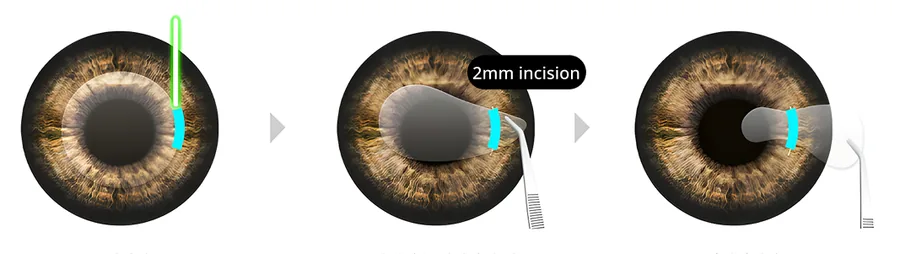
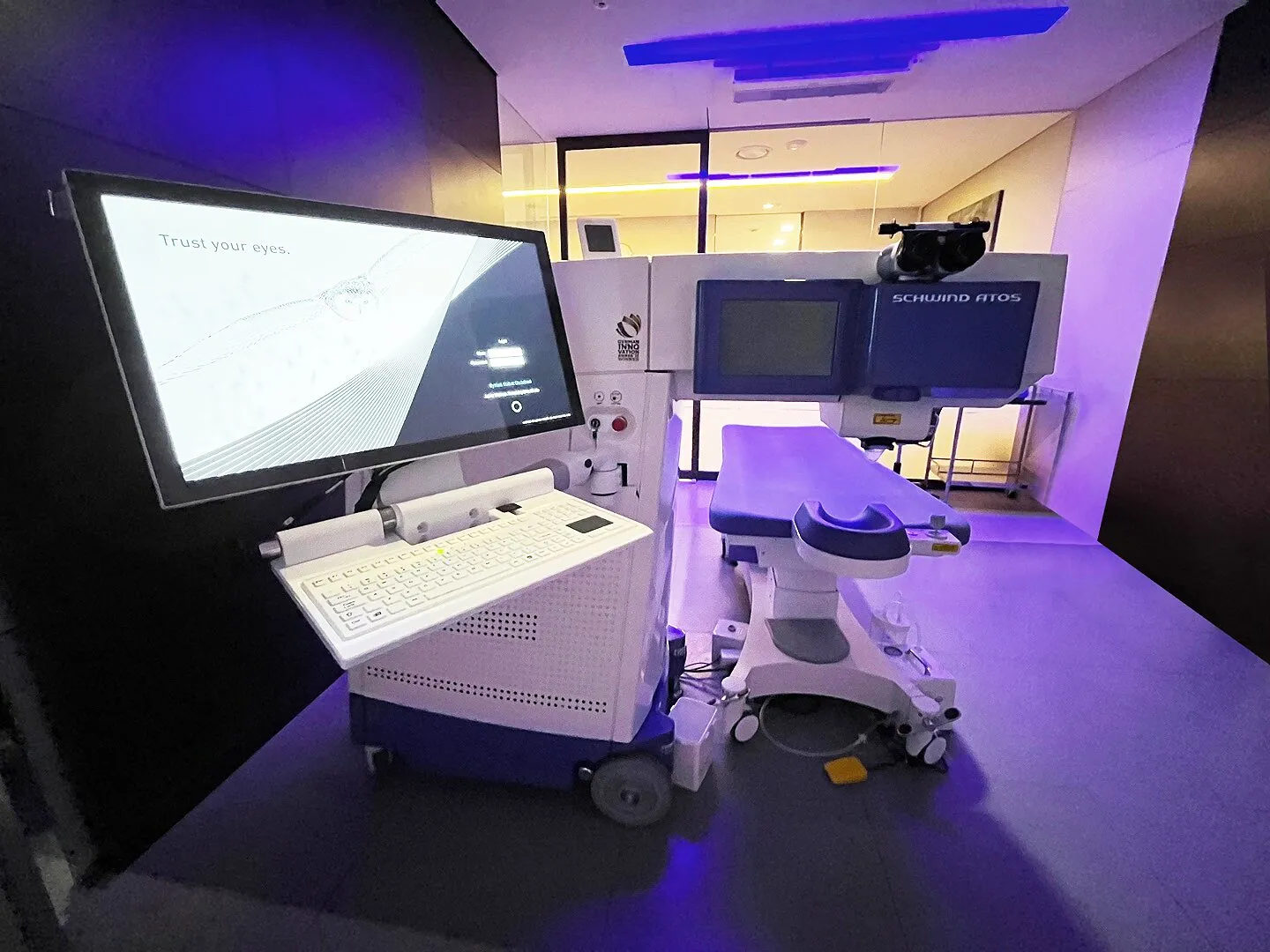
When LASIK isn't the right fit, the scan usually points to another method. New SMILE LASIK works through a 2 mm incision with no flap, using the SCHWIND ATOS laser. LASEK treats the surface layer and preserves the most corneal tissue. An ICL lens implant leaves the cornea untouched altogether, which is why it comes up for high myopia or very thin corneas; because it is surgery inside the eye, it carries its own risks, such as raised eye pressure or an earlier cataract. If your numbers sit near the line, the thin-cornea choice has its own post: LASIK or LASEK, and how your cornea decides.
If your map shows a cornea that's too thin or shaped like early keratoconus, I won't offer you LASIK, whatever your travel plans are. Serious visual side effects, though rare, have happened when surgery went ahead after an exam advised against it. A changed flight costs you a few days; a weakened cornea stays with you.
Reasons to hold off this year
Some eyes are suitable, just not yet. The U.S. Food and Drug Administration keeps a short list of situations where LASIK may not be for you, and a few of them matter most in your twenties:
- Your prescription is still moving. LASIK is for adults 18 and over whose prescription hasn't changed in the past year. Plenty of eyes are still drifting at 22 or 23.
- You're pregnant or breastfeeding. Hormone shifts can change the prescription for a while, so measurements taken then may not hold.
- You have an autoimmune condition or take medicine that slows healing. Bring the name of every regular medication to the exam.
- You fight or play rough contact sports. A hard blow can dislodge a LASIK flap, which is one reason a no-flap method is worth raising if you box or do martial arts.
- Your eyes are already dry by mid-afternoon. Laser correction tends to make dryness worse for a while, and that needs to be discussed before choosing a method.
One thing worth packing: proof of stability. An old prescription slip, or your old glasses so their power can be read, turns the one-year question into a fact you can show on exam day.
How many days should I plan in Seoul?
Your trip starts two weeks before the flight. Soft contact lenses need to come out about two weeks before the exam, and firmer lenses longer, because lenses press the cornea slightly out of shape and the scan would measure that effect along with your eye. Arriving in your lenses can cost you the exam day.
Day one in Seoul is the exam. If dilating drops are used, close-up vision blurs for a few hours, so leave that afternoon free of anything that needs reading. Whether surgery can follow on the same day or the day after is the first thing to ask when you book.
On surgery day, numbing drops are used and the laser part takes minutes per eye. Plan nothing afterward except the hotel and closed eyes. With LASIK, irritation, tearing and a grainy feeling usually ease within about half a day.
Then comes the first check, which by general practice falls 24 to 48 hours after surgery. Here is the scheduling catch: we're closed on Thursdays for equipment inspection and on Sundays, and Saturday hours are for exams and surgeries only. Surgery on a Wednesday puts the next-day check on a closed day, so either confirm a Friday check or move surgery earlier in the week.
LASEK changes the arithmetic. Early discomfort can last three to four days, and vision stays blurry for five to seven while the surface layer regrows under a protective lens. A five-day trip gets tight at that point.
A five-day break, worked through
Say you're 28, teaching English in Osaka, around minus 5 in both eyes, with five days off around a long weekend. Your soft lenses come out two weeks before you fly, and you wear glasses to class in the meantime. You land on Sunday, when the clinic is closed, and take the exam on Monday morning.
If the scan says LASIK or New SMILE LASIK suits you, surgery on Tuesday gives a first check on Wednesday, and you can fly back on Thursday with a day to spare. Should I get LASIK on a five-day break, then? For you, yes, as long as Monday's scan agrees.
If the scan says LASEK instead, I'd think twice about squeezing it into those five days, because you'd board the plane at the blurriest point. Keeping the Monday exam, flying home with your measurements, and returning with a longer break is the steadier plan. Several of our doctors had LASIK or LASEK themselves, and LASEK's first few days are not when you want to be finding your gate.
When the dates start to take shape, send them on WhatsApp together with the date your contact lenses will come out, and ask whether a check falls on a Thursday in your plan. Ask in that same message how the deposit and payment work, since both are settled after the consultation.
Is the flight home a problem for healing eyes?
Cabin pressure isn't what bothers a treated cornea; dry air is. A long flight can leave freshly treated eyes gritty, so keep your prescribed drops in your cabin bag and use them regularly through the flight.
If you sleep on the plane, don't rub your eyes when you wake, and wear the eye shields if you were given them. For the ride to the airport, sunglasses help with glare. The parts of a combined holiday to drop are the water ones: swimming, hot tubs and beach plans are off for a while (the FAQ has the timing).
Dry eyes, night halos and flap problems once you're home
The common effects are temporary: dry, gritty eyes for weeks to months, and halos or glare around lights at night while vision settles, which can make night driving harder at first. Less often, the result lands slightly under or over the target, or the eye drifts back a little over time. With LASIK, flap-related complications are possible; New SMILE has no flap, so those particular problems don't apply. How quickly each settles differs from one person to the next.
In Seoul, the same medical team supports you from the exam and consultation through surgery and the key post-operative checks. Take copies of your scans and surgery record with you, and book an appointment with a local eye doctor for the weeks that follow your return.
Pain that's getting worse instead of better, vision that drops after it had cleared, or redness with discharge all mean seeing an eye doctor the same day, wherever you are. Don't wait for a scheduled visit. You can also ask on WhatsApp who you contact at the clinic if something like that happens.
My own view is narrow. LASIK makes sense for a stable prescription on a healthy cornea with room to spare, and the trip should be built around the checks. When any of those is missing, I'd rather point you to LASEK, an ICL or next year than fit you into a booking.
The consultation is free. Send a photo of your glasses prescription and an older one, the date your lenses come out, and your travel days on WhatsApp, and ask the one question that decides your plan: if my scan points to LASEK, does my trip still work? What settles it in Seoul is how thick your cornea is and how much would remain after treatment. Sky Eye Clinic is at 723-26 Banpo-dong, Seocho-gu, Seoul, about a 5-minute walk from Nonhyeon or Sinnonhyeon Station.
— Dr. Kim Sang-Myung, Ophthalmologist
Results vary by individual.
Sources
Questions answered
How long do my contact lenses need to stay out before the exam?
Soft lenses need about two weeks out, toric soft or rigid gas-permeable lenses at least three weeks, and hard lenses at least four, with glasses full time in between. If you wear toric lenses, count back three weeks from your exam day, not your flight day.
Can I swim or go diving on the same trip after LASIK?
Not on that trip. General guidance is to avoid swimming and hot tubs for one to two months after surgery and to wait at least four weeks before contact sports. Light, non-contact exercise is usually fine after one to three days, and makeup around the eyes waits up to two weeks.
How long until my vision stops changing after LASIK?
It can take three to six months to stabilize. Night glare during that stretch is the reason to be careful driving after dark early on, and the reason the checks with your local eye doctor matter.
Will LASIK mean I never need reading glasses?
No. LASIK corrects your distance prescription, but presbyopia, the stiffening of the eye's natural lens that makes close reading harder, usually starts in your 40s either way. If you're near that age, ask about presbyopic LASIK or LASEK at the consultation.
Do I need to speak Korean for the exam?
No. The clinic's WhatsApp Business line is in English, and foreign patients get a medical interpreter for their language at no extra charge.
Get your free consultation before you decide
- Free consultation and checkup, even if you decide against surgery
- Same price as Korean patients, no overseas surcharge
- Interpreters in English, Japanese and Chinese