
Over 40 and Considering Smart Nova LASIK in Korea? Who Qualifies and How Long to Stay
Do the Korea Smart Nova LASIK candidate qualifications still fit you in your 40s, and will one trip to Seoul give you enough time to recover before the flight home?
On this page
What qualifies you for Smart Nova LASIK, measured in micrometers
After a flapless procedure like Smart Nova, many people see well enough to get around the next day. Even so, I'd plan the stay around the slower option in case the scan points there instead, and that means roughly a week, not a long weekend.
Hello, I'm Dr. Kim Sang-Myung, an ophthalmologist on the vision correction team at Sky Eye Clinic in Seoul.
Past 40, your scan tells me more than your prescription does. The clinic's exam equipment includes a Pentacam for corneal shape and a Corvis ST for corneal stiffness, and if those readings say laser surgery is the wrong trade for your cornea, I would rather say no than operate. A medical interpreter for your language is provided at no extra charge, so the exam results reach you in words you follow.
The consultation is free.
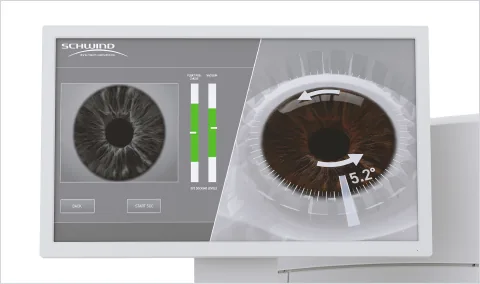
Smart Nova LASIK is our New SMILE LASIK with CenTrax added, which corrects for eye rotation and docking error, performed on the SCHWIND ATOS laser. Like New SMILE, it works through a 2mm incision and leaves no flap, so flap complications don't apply. That design is part of why New SMILE is listed for high myopia with thin corneas.
It doesn't make thickness irrelevant. Every laser that corrects myopia removes tissue, and the number that decides candidacy is how much untouched cornea would be left after your correction. For flap LASIK, the long-standing floor refractive surgeons work with is around 250 micrometers of residual stromal bed, and many want a wider margin than that. A higher prescription removes more tissue, so a cornea with plenty of room for minus 3 can be tight for minus 8.
Shape matters as much as thickness. A cornea that steepens toward the bottom on the map, or flexes more than expected on a stiffness test, can be an early sign of keratoconus, and laser vision correction can make that condition worse. Those two readings are where I slow down, whatever the prescription says.
If your numbers land on the thin side, I've written separately about how LASIK and LASEK split on corneal thickness, so I won't repeat it here.
Your 40s change the question
Around the mid-40s, the eye's own lens starts losing its focusing range. Correcting distance in a 46-year-old eye fixes distance. It doesn't bring reading vision back, and if your mild myopia is the reason you read your phone without glasses today, you may reach for readers after surgery.
This is a decision to make before you book a flight. Presbyopic LASIK·LASEK is on our menu for people who want to rely less on readers, and whether it fits comes down to your eyes and how you use them. At this age the lens itself matters too: if early clouding has started, reshaping the cornea answers the wrong problem, and the clinic has a separate cataract and presbyopia center for lens-based options.
How many days does recovery take after Smart Nova LASIK?
For many people, clear enough to walk around and read a phone the next day, with sharpness improving over the first week. Flapless procedures can take a few days longer than flap LASIK to feel fully crisp, which is worth knowing if you expect perfect vision at breakfast.
| When | Smart Nova (no flap) | If the exam points to LASEK |
|---|---|---|
| Surgery day | Watering, light sensitivity and a scratchy feeling for a few hours; rest and sleep | The surface starts to heal under a protective lens |
| Days 3–7 | Sharpness keeps improving; some haze early on is common | Blurring for about 5 to 7 days |
| Weeks 2–12 | Dryness and small day-to-day swings settle gradually | Vision keeps settling over the following weeks |
The LASEK column is why I tell people to size the trip for the slower option. Several doctors on our team had LASIK or LASEK themselves before recommending them, so the first evening and the gritty days after LASEK are described to you by people who have been through them.
Korea Smart Nova LASIK candidate qualifications start at home
The most useful thing you can do happens before you leave. Contact lenses press on the cornea and change its shape, and a scan taken on a lens-molded cornea can mislead everyone. The FDA's patient guidance asks soft lens wearers to leave them out for about two weeks before the baseline exam, toric soft and rigid gas permeable wearers for at least three, and hard lens wearers for at least four. Do that at home, wear glasses on the plane, and the scan in Seoul reflects your real eye.
Then fit the trip around the clinic's week. The clinic is closed on Thursdays for equipment inspection, as well as Sundays and public holidays, and on Saturdays it runs until 14:30 for exams and surgeries only. Ask at booking whether your exam and surgery can fall on the same day or need separate days, because that answer moves everything else.
Say you're 46, about minus 5 with astigmatism, and you have ten days of leave from Toronto. Arrive at the weekend, take the exam early in the week, and keep Thursday out of any plan that needs the clinic. If the scan says Smart Nova, the next-day check and a few quiet days leave room to spare. If it says LASEK, the 5 to 7 days of blur still fit inside ten days, but they would not fit inside five.
I'd book the flight home for the far end of the window and keep the lubricating drops in your carry-on, since cabin air dries the eyes.
When you write, include your current prescription and last year's if you still have it, and ask the one thing that matters for your dates: whether a ten-day window covers both the Smart Nova and the LASEK timeline.
Dry eye, halos and the rare serious problems
The common reactions in the first weeks are dryness, glare or halos around lights at night, and vision that is sharper in the morning than in the evening. These usually ease over the first few months, though how fast varies between people, and lubricating drops do most of the work while they settle.
Risks and side effects to know
Some people should wait or choose something else. The FDA lists reasons for caution that include a prescription that changed in the past year, pregnancy or breastfeeding, autoimmune conditions or medicines that affect healing, significant dry eye, thin corneas, previous refractive surgery and contact sports. A corneal map suggesting keratoconus belongs on that list too.
If the scan rules laser surgery out, LASEK keeps more of the cornea, and an ICL lens leaves the cornea alone but sits inside the eye, with its own risks such as raised eye pressure or cataract.
After you fly home, book a check with an optometrist or ophthalmologist around the one-month mark and bring your surgery records with you. Sudden pain, worsening redness or a drop in vision needs a local eye doctor the same day, and a WhatsApp message to us with what happened. The same medical team supports you from exam and consultation through surgery and the key post-operative checks, which is one more reason not to leave Seoul before the first of those checks.
A no on the scan is the start of a different conversation, not the end of it. What I won't do is talk you past an exam that advises against surgery: serious visual side effects, though rare, have happened when surgery went ahead despite results like that. Every surgeon here is named on our public doctors page, and the equipment is checked every day, so you know whose hands and which laser you're trusting.
Before you book the flights
Send two things on WhatsApp: a photo of your current glasses prescription, plus last year's if you have it, and the window of dates you can travel. Ask whether those dates leave room for the first check and for LASEK if the scan points there. Deposit and how you pay are settled after the consultation, so you can raise them in the same thread.
The consultation is free, and on exam day the first numbers I'll look at are your corneal thickness map and how your near vision holds up with your distance corrected.
Results vary by individual.
Sources
Questions answered
Can I fly home the day after Smart Nova LASIK?
The reasons to wait are the first post-operative check, which the FDA describes as usually happening 24 to 48 hours after surgery, and dry cabin air. Book the flight after that check and use lubricating drops often during the flight.
When can I swim or go back to contact sports?
The FDA's guidance is to avoid swimming, hot tubs and whirlpools for one to two weeks, keep makeup and lotions away from the eyes for about two weeks, and hold off on contact sports such as boxing or football for at least four weeks. Plan beach days and pool time for the end of the trip or after you're home.
Does astigmatism rule me out of Smart Nova LASIK?
Not by itself. Smart Nova adds CenTrax, which corrects for eye rotation and docking error. Rotation matters most when astigmatism is part of the prescription, because the treatment has to line up with the right axis.
I had LASIK years ago. Can I still qualify?
Previous refractive surgery is on the FDA's list of reasons for caution, and the deciding factor is how much cornea the first operation left. Bring the old operation record if you can find it, along with your current prescription, so the remaining thickness can be judged against what was removed before.
Get your free consultation before you decide
- Free consultation and checkup, even if you decide against surgery
- Same price as Korean patients, no overseas surcharge
- Interpreters in English, Japanese and Chinese


