
Korea Smart Nova LASIK Reviews: Do They Fit Your Eyes? Seven Questions to Ask
Have you been reading Korea Smart Nova LASIK reviews Korea patients post, and wondering whether eyes like yours, with a strong prescription and corneas a surgeon at home called thin, would heal the way theirs did?
On this page
What Korea Smart Nova LASIK reviews get right, and what they leave out
Give this ten minutes before you book a flight.
By the end you'll know what the reviews get right and what they skip, how Smart Nova compares with the other methods, what decides the cost and what recovery looks like. You'll also have seven questions that show whether this method fits your cornea, or whether another one does.
Hello, I'm Dr. Kim Sang-Myung, an ophthalmologist in the vision correction center at Sky Eye Clinic in Seoul. I completed my ophthalmology training at Yonsei Severance Hospital and I'm a full member of the Korean Society of Cataract and Refractive Surgery.
Sky Eye Clinic has ten ophthalmologists. It runs the ATOS Nova Centrax laser for Smart Nova LASIK and the Amaris Red laser for LASIK and LASEK, and it offers EVO ICL lens implants, so there's more than one option for a cornea that doesn't suit laser.
I wrote this because a review tells you how someone else's eyes felt in week one. It can't tell you whether your own cornea should be treated at all.
Most reviews describe quick recovery and little discomfort, which matches how a 2mm procedure with no flap usually behaves. Whether it suits you comes down to your corneal thickness, corneal shape and how stable your prescription is, and only an exam measures those.
Most Korea Smart Nova LASIK reviews Korea patients post are written in the first weeks after surgery. That timing explains a lot about what they say.
“It barely hurt.” This one is mostly consistent with the medicine. Surgery is done under numbing eye drops, and on the day people commonly feel irritation, tearing and a grainy feeling. Smart Nova removes tissue through a 2mm incision without cutting a flap, so the surface disturbance is small. “Barely” is still one person's threshold, so expect a few uncomfortable hours rather than none.
“Some days my vision is blurry, other days it's sharp.” That's normal early on for many people. Vision after any laser correction keeps settling for weeks, and dryness makes it fluctuate across the day.
“I was back to normal life right away.” Partly true. For New SMILE LASIK, which Smart Nova builds on, the clinic says face washing, basic makeup and light exercise are possible from the day after surgery. Rubbing your eyes, swimming and contact sports follow your surgeon's instructions, not a review.
What reviews leave out is everyone who was told “not this method.” Nobody writes a review of the surgery they didn't have. If you have a high prescription, those are the people whose eyes may look most like yours.
Which methods could fit a high prescription?
| Method | How it works | Thin-cornea note |
|---|---|---|
| Smart Nova LASIK | New SMILE LASIK plus CenTrax, which corrects eye rotation and docking error; 2mm incision, no flap | The clinic lists high myopia with thin corneas among those it suits |
| New SMILE LASIK | ATOS laser separates tissue, removed through a 2mm incision, no flap | Also listed for high myopia with thin corneas |
| LASIK | A flap about 160 micrometers thick, laser on the layer beneath | May not suit; a LASEK-type method is advised |
| LASEK | Surface layer removed, laser on the stroma, surface regrows | Suitable when LASIK would leave too little cornea |
| EVO ICL | A lens placed inside the eye; no corneal tissue removed | An option for high myopia, thin corneas or dry eye |
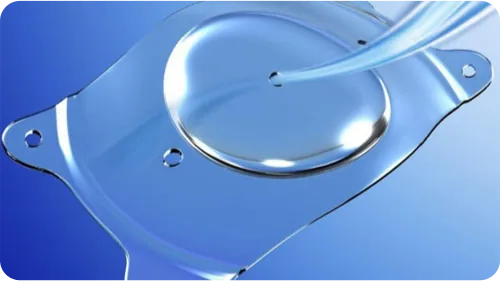
The difference between Smart Nova LASIK and New SMILE LASIK is the docking step, when the laser attaches to your eye. Small errors can occur there, and your eye can rotate slightly when you lie down. CenTrax compensates for both. The system also takes refraction input in 0.05D steps and integrates biometry automatically.
Why does rotation matter to you? Astigmatism has an axis. A correction placed a few degrees off that axis loses part of its effect, and the stronger the astigmatism, the more those degrees count.
If you want the flap-based option explained, the LASIK procedure page covers it. ICL is a different kind of decision because it's surgery inside the eye; its main risks include raised eye pressure and, less often, cataract later, so it needs its own conversation.
Seven questions to ask at your consultation, and what the answers mean
If a surgeon at home said “difficult” or “no,” you don't need a different answer. You need the reason, in numbers. These questions get you there.
1. “How much cornea would be left after my correction?”
A higher prescription removes more tissue. With LASIK the flap itself, about 160 micrometers, also comes out of your budget. A useful answer compares what remains under each method for your eyes. If the number under LASIK is low, the conversation moves to a LASEK-type method or a lens, which is the logic behind choosing between LASIK and LASEK by corneal thickness.
2. “Was my cornea's shape and stiffness checked, as well as its thickness?”
Thickness alone can look fine on a cornea that's starting to bulge. A cornea that steepens toward the bottom can be an early sign of keratoconus, and laser correction can make that worse. Sky Eye Clinic has a Pentacam, which maps the front and back surfaces, and a Corvis ST, which measures how the cornea deforms under a puff of air. Ask to see your maps and what they show.
3. “Is my prescription stable enough?”
The clinic's criteria for LASIK are adults 18 or older whose prescription hasn't changed in the past year. The US Food and Drug Administration also lists a changing prescription as a reason to wait. If your glasses changed twice in the last two years, expect “not yet.”
4. “Why Smart Nova for me, and why not the others?”
A good answer names your numbers: thickness, astigmatism, pupil size, dryness. A vague one names the laser. LASIK isn't for everyone, and several of our doctors had LASIK or LASEK themselves before recommending them, so the trade-offs get discussed plainly.
5. “What happens if some prescription remains?”
Residual refraction is one of the worries CenTrax is meant to reduce, but healing differs between eyes. Ask what the options would be for your cornea if a touch-up were ever needed, and how much tissue would be left for it.
6. “Who operates, and who sees me at the checks?”
The same medical team supports you from exam and consultation through surgery and the key post-operative checks, and the clinic publishes its operating surgeons by name. Ask who is on your team.
7. “Which checks have to happen in Seoul before I fly?”
The answer should be a schedule for your eyes, not a general rule. The FDA's patient guidance describes a first check within a day or two of surgery and further visits over the following months, so ask which ones happen in Seoul and which ones an eye doctor at home can do.
The answer I'd weigh most is the one to question 4. Serious visual side effects, although rare, have occurred when surgery went ahead despite an exam result advising against it. If your scans point away from laser, I would rather tell you that in the exam room than have you find out a year later. A method that keeps more of your cornea is a good outcome of a consultation, not a lost one.
Say you're -8.50 in both eyes with 1.50 of astigmatism, and your surgeon at home called your corneas thin. The first thing to look at is how much cornea each method would leave, then whether the Pentacam and Corvis ST maps look regular. If both look sound, a no-flap method like Smart Nova is worth discussing, and the astigmatism makes the rotation correction relevant. If the shape looks irregular, laser of any kind is off the table for this trip, and ICL or cross-linking becomes the topic.
If these are the questions you'd want answered, send any corneal thickness or topography printout you have on WhatsApp, along with the dates you could be in Seoul.
What decides the cost of Smart Nova LASIK for your eyes?
The figure isn't fixed before you're examined. Your doctor confirms the procedure and the final fee at your exam, and these are the things that move it:
- Whether both eyes are treated, and whether astigmatism correction is part of it.
- Your own days in Seoul: hotel nights and time off work depend on how many checks happen before you fly.
Ask on WhatsApp what it would cost for your case, with a photo of your current prescription.
What does recovery look like if you fly home?
On surgery day, expect a grainy, watery feeling for some hours after the numbing drops wear off. For New SMILE LASIK the clinic says face washing, basic makeup and light exercise are possible from the next day; ask whether the same applies to your Smart Nova plan.
Over the following weeks, many people notice dryness, sharpness that changes through the day, and halos around lights at night. These usually ease as the cornea heals. Use the drops you're given, don't rub, and ask your surgeon when you're cleared to fly.
For planning your days: the clinic is closed on Thursdays for equipment inspection and on Sundays and holidays. Weekday hours are 10:00 to 16:30 with lunch from 13:00 to 14:00, and Saturdays run 10:00 to 14:30 for exams and surgeries only. It's about a five-minute walk from Nonhyeon Station or Sinnonhyeon Station.
Who should wait, and what can go wrong?
Risks and side effects to know
The common reactions are temporary: irritation and tearing on the day, dry eye for weeks to months, fluctuating vision, and glare or halos at night that usually fade. Less often, some prescription remains, or dryness lasts longer. Healing differs from one eye to the next, so treat any timeline as a guide.
As general medicine, the FDA and the American Academy of Ophthalmology list reasons to wait or skip laser correction:
- A prescription that changed in the past year
- Pregnancy or breastfeeding
- A thin or irregular cornea, or signs of keratoconus
- Uncontrolled autoimmune disease or conditions that slow healing
- Active eye infection or inflammation, or severe dry eye
If something feels wrong after you're home, such as sudden pain, worsening vision, spreading redness or new light sensitivity, see an ophthalmologist locally the same day. Bring your surgery details, and message the clinic as well.
When you come to Seoul, the doctor examines your eyes and recommends the method that fits them.
Results vary by individual.
Sources
Questions answered
Is Smart Nova LASIK the same as New SMILE LASIK?
It builds on New SMILE LASIK and adds CenTrax, a mode that corrects eye rotation and docking error. It runs on the ATOS Nova Centrax laser and uses refraction input in 0.05D steps.
Does Smart Nova LASIK cut a flap?
No. The corneal tissue is removed through a 2mm micro-incision on the surface. LASIK, by comparison, creates a flap about 160 micrometers thick.
Will I feel pain during the procedure?
Surgery is done under numbing eye drops. Afterward, irritation, tearing and a grainy feeling are common on the day and usually settle within hours.
Can I have it if I was told my corneas are thin?
The clinic lists high myopia with thin corneas among the people Smart Nova suits, but the decision rests on the full corneal exam, including thickness and shape. If the scans don't support laser, LASEK or an ICL implant may be discussed instead.
How fast is the ATOS laser?
The ATOS laser runs at 4MHz, compared with 500kHz for conventional SMILE surgery. The faster speed shortens the surgery time.
Get your free consultation before you decide
- Free consultation and checkup, even if you decide against surgery
- Same price as Korean patients, no overseas surcharge
- Interpreters in English, Japanese and Chinese


