
Korea Smart Nova LASIK Procedure Steps: Step by Step and What Could Stop You
Watched a Korea Smart Nova LASIK procedure steps video and now wondering whether your own eyes, with a high prescription and corneas a surgeon at home called thin, should ever be under that laser?
On this page
What happens on surgery day, step by step
Read this before you plan a trip around it.
By the end you'll know what each step on surgery day involves, who should not have Smart Nova LASIK, what reviews get right and wrong about recovery, and what decides the cost. That's enough to judge whether this procedure fits your eyes or whether another option deserves the first conversation.
Hello, I'm Dr. Kim Sang-Myung, an ophthalmologist at Sky Eye Clinic in Seoul. I completed my ophthalmology training at Yonsei Severance Hospital, and my specialty is vision correction: LASIK, LASEK and New SMILE.
Ten ophthalmologists work at our clinic, and several of them had LASIK or LASEK themselves. Smart Nova LASIK here runs on the SCHWIND ATOS Nova Centrax laser, and the clinic has Pentacam and Corvis ST for corneal measurement. The same medical team supports you from the exam through surgery and the key checks afterward.
I wrote this because a surgery video shows an eye that was already judged suitable. The decision that protects you happens earlier, at the measurements, and no clip can show that part.
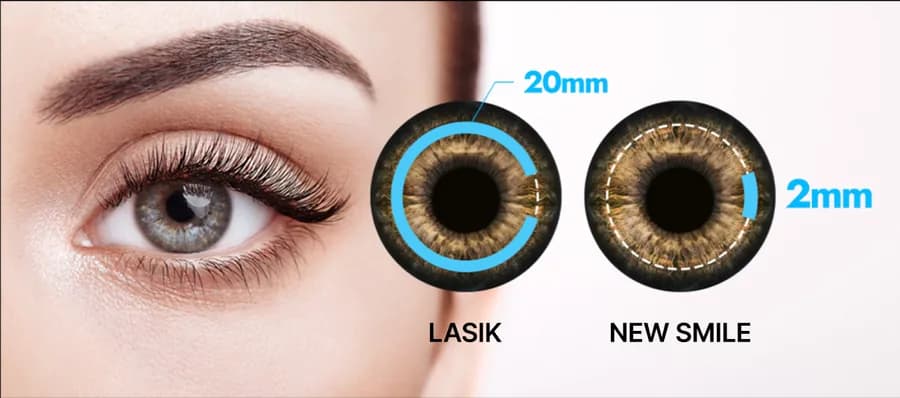
The short version: Smart Nova LASIK is New SMILE LASIK with an added CenTrax step that corrects eye rotation and docking error, and the tissue comes out through a 2mm incision with no flap. A prescription that is still changing, a cornea too thin or irregular for your correction, or certain health conditions can rule it out.
You'll be asking about your own numbers, not about the eye in someone else's video.
Send your prescription and the date it last changed on WhatsApp
The order below is the same for each eye. I've left out timings, because they change from eye to eye.
- Numbing drops. Anesthetic drops go in and a small holder keeps your eyelids open. You stay awake throughout.
- Docking. The laser's curved contact glass is lowered onto your eye and held with light suction. Your vision may dim or turn grey for a short while, which is expected.
- CenTrax correction. This is the step Smart Nova adds. Automated eye-movement correction compensates for eye rotation and any docking error, so the treatment lines up with your eye as it was measured.
- The laser pass. You look at a fixation light while the femtosecond laser shapes a thin, lens-shaped piece of tissue inside the cornea, sized to your correction, along with a small entry cut.
- Removal. The surgeon separates that tissue and draws it out through the 2mm micro-incision. No flap is lifted.
6.
Compare that with LASIK, where a flap about 160 micrometers thick is cut and lifted before the laser reshapes the tissue beneath it. If you want the technical background, the review by Reinstein and colleagues in Eye and Vision traces the history and principles of this small-incision lenticule approach.
Why is there no surgery video on this page?
If you came here for a Korea Smart Nova LASIK procedure steps video, you won't find surgical footage below.
A video would also leave out what you need most. It can't show the corneal map, the thickness reading or the prescription history that made that eye a candidate. Those are the parts worth understanding before the day.
What does CenTrax change at docking, and what can't it change?
Docking is the moment the laser attaches to your eye, and small errors can occur or remain at that stage. When you lie down, your eye can also rotate slightly compared with when you sat up for your measurements. For astigmatism that angle matters, because the correction has to line up with the axis found in your exam.
CenTrax compensates for those residual errors. The system also takes refraction input in steps of 0.05D and links automatically with the biometry equipment, so the plan reflects your own eye. The Smart Nova LASIK overview lists the rest of the equipment features.
What it can't do is turn an unsuitable cornea into a suitable one. A well-aligned treatment on a cornea that is too thin, or one that is starting to bulge, is still the wrong treatment. Alignment is about accuracy. Candidacy is about your tissue, and that is a separate question.
Who should not have Smart Nova LASIK?
LASIK is not for everyone, and the same holds for Smart Nova. Our clinic states plainly that serious visual side effects, although rare, have occurred when surgery went ahead despite an exam result advising against it. These are the situations where I'd tell you to wait or to look at something else.
Your prescription is still moving. Our LASIK guidance asks for a prescription that hasn't changed in the past year, and the U.S. FDA lists unstable vision among the reasons LASIK may not be right for you. A laser corrects today's number. If your eyes keep shifting, the result shifts with them.
Your cornea is thin or irregular for the amount of correction. The clinic lists high myopia with thin corneas among the people Smart Nova can suit, and your surgeon confirms that with a full corneal exam. A map that steepens in one area can be an early sign of keratoconus, and removing tissue from that cornea can make the condition worse. In that case keratoconus care comes first.
Your health or life stage says wait. The FDA also names pregnancy or nursing, some autoimmune or immune conditions, and contact sports that risk blows to the eye as reasons to hold off. You also need to be 18 or older.
Say you're minus 8 with 2 diopters of astigmatism, your contacts dry out by mid-afternoon, and a surgeon at home said your corneas are borderline. I'd want the full thickness map and the shape of the cornea, then how much tissue your correction would remove. If what remains leaves a comfortable margin, Smart Nova may be reasonable. If it doesn't, I'd move the conversation to LASEK or to an ICL lens, which removes no corneal tissue but is surgery inside the eye, with its own risks such as raised eye pressure or, over the years, cataract. Our earlier piece on how corneal thickness decides between LASIK and LASEK goes deeper into that trade-off.
If your numbers point away from laser, I'll tell you. Several of our doctors chose laser correction for their own eyes, and that is exactly why I don't treat it as something every eye should have. A 'not this procedure' at the exam costs you a disappointing afternoon. Going ahead against the measurements can cost you far more.
Risks and side effects to know
Common and usually temporary: dry, gritty eyes, light sensitivity, and vision that fluctuates over the first days or weeks. Halos or glare around lights at night are also common early on and fade over weeks to months for many people. The FDA's guidance on what to expect after laser surgery describes this kind of early haze and discomfort.
Less common: under- or over-correction, or leftover astigmatism, which may mean glasses for some tasks or a further procedure later. Rare: infection or inflammation in the cornea, and loss of suction during docking, which stops the laser and may mean finishing the treatment another way or on another day.
Once you're home, worsening pain, a red eye with discharge or a sudden drop in vision needs an ophthalmologist the same day. Carry your surgery record so they know exactly what was done. The CDC's medical-tourism advice is to arrange follow-up care at home before you travel, and that is worth doing before you book. Healing differs from person to person.
If anything on that 'who should not' list might apply to you, put it in your first WhatsApp message along with the date your prescription last changed. A thyroid condition, a pregnancy plan or a weekly rugby match: mention it up front so the question you ask is the right one.
Send your prescription and the date it last changed on WhatsApp
What do reviews get right about recovery?
Reviews of SMILE-type surgery repeat a handful of claims. Some hold up, and some leave out half the story.
'It didn't hurt.' Mostly true for the surgery itself, because numbing drops do the work and pressure is the common report. Afterwards a few hours of scratchiness and watering are normal, so plan a quiet evening.
'I could see clearly the next morning.' Many people do notice a quick improvement. What reviews skip is that clarity can come and go for a few weeks while the surface settles and dryness peaks.
'I was back at the gym the next day.' For New SMILE LASIK, which Smart Nova builds on, our page says face washing, basic makeup and light exercise are possible from the day after surgery. Light exercise isn't contact sport or swimming, so follow your surgeon's instructions on those.
'The night halos took ages to fade.' Some people do notice halos longer than they'd like, and a large pupil or a strong correction can play a part. That's one reason the exam looks at more than your prescription.
What decides the cost of Smart Nova LASIK?
The first factor is which procedure the exam points to. Smart Nova, New SMILE LASIK, LASIK, LASEK and an ICL lens are different operations on different equipment. After that come one eye or both, how many days you spend in Seoul around the surgery and the checks before you fly, and the follow-up you arrange at home.
Your doctor confirms the procedure and the final fee at your free exam. Before that, ask on WhatsApp what it would cost for your case, with a photo of your prescription attached.
Planning your days in Seoul
The clinic is open Monday to Wednesday and Friday from 10:00 to 16:30, with lunch from 13:00 to 14:00. Thursdays are closed for equipment inspection. Saturday runs 10:00 to 14:30 for exams and surgeries only, and Sundays and public holidays are closed. Exams, surgeries and consultations are all by appointment.
We're about a five-minute walk from Nonhyeon Station (Line 7 Exit 5, Sinbundang Line Exit 4) or Sinnonhyeon Station (Line 9 Exit 2). If you land on a Wednesday night, the next day is a Thursday, so your exam can't happen until Friday. Ask at booking how many days to stay before flying, and keep one spare day you may not need.
On WhatsApp, send your current prescription with the date it last changed, plus the one point from the 'who should not' section you're unsure about. When you come in, your eyes are measured and the doctor recommends the option that fits them, whether that turns out to be Smart Nova or something else.
Results vary by individual.
Sources
Questions answered
Am I awake during Smart Nova LASIK?
Yes. Numbing drops are used, a holder keeps your eyelids open, and you look at a fixation light while the laser works. Most people describe pressure during docking rather than pain.
How big is the incision compared with a LASIK flap?
Smart Nova LASIK removes the corneal tissue through a 2mm micro-incision and no flap is lifted. LASIK creates a flap about 160 micrometers thick, which is folded back for the laser and then repositioned.
Can Smart Nova LASIK correct astigmatism?
The clinic recommends it for people who want precise astigmatism correction, because CenTrax corrects eye rotation and docking error. Whether your astigmatism and cornea suit it is confirmed by the full eye examination.
How is Smart Nova different from New SMILE LASIK?
Smart Nova LASIK adds the CenTrax treatment mode to New SMILE LASIK. It also uses finer 0.05D refraction input and automatic integration with biometry equipment.
Which days can I book an exam in Seoul?
Monday to Wednesday and Friday from 10:00 to 16:30, and Saturday from 10:00 to 14:30 for exams and surgeries only. The clinic is closed on Thursdays for equipment inspection and on Sundays and public holidays.
Get your free consultation before you decide
- Free consultation and checkup, even if you decide against surgery
- Same price as Korean patients, no overseas surcharge
- Interpreters in English, Japanese and Chinese


