
Pain Relief With SMILE LASIK in Korea: What Helps the First Night, and Whether Your Cornea Suits It
Are you afraid the first night after SMILE in Seoul will mean lying awake in a hotel room with stinging eyes, a long way from home?
On this page
Why does SMILE usually hurt less than LASEK?
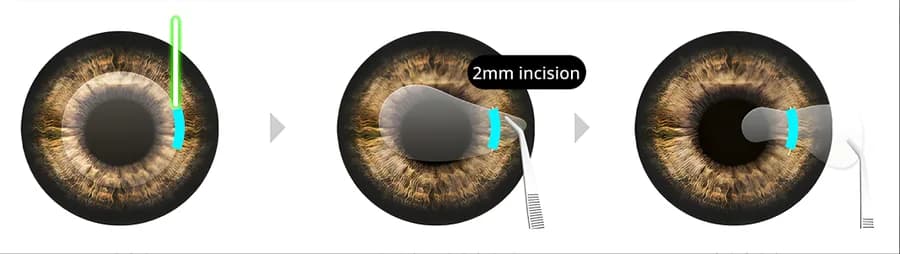
For most people it doesn't go that way. Your Korea SMILE LASIK pain relief plan is short: numbing drops cover the surgery, and afterward sleep, your prescribed drops and keeping your hands off your eyes settle most of the grit and watering. In the comparison we publish, LASIK discomfort lasts about half a day and LASEK up to 3 to 4 days. New SMILE LASIK is done through a 2mm opening with minimal corneal damage.
Hello, I'm Dr. Kim Sang-Myung, an ophthalmologist in vision correction at Sky Eye Clinic in Seoul.
Your cornea decides whether you can have SMILE, and if the scan says no, I'll tell you. Serious visual side effects are rare, but they have happened when surgery went ahead against what the exam showed. We have a Pentacam and a Corvis ST for that decision, our New SMILE LASIK runs on a SCHWIND ATOS laser, and several doctors on our team had LASIK or LASEK themselves before recommending them.
On WhatsApp, send a photo of your current glasses prescription and ask what you most want to know: how many sore days your numbers are likely to mean. The consultation is free. If English isn't your first language, a medical interpreter for your language is provided at no extra charge.
The pain after laser eye surgery comes from nerve endings on the surface of the cornea. That surface is one of the most densely supplied tissues in the body, which is why one eyelash can feel like a stone. How much of that surface is disturbed, and for how long, decides most of what you feel.
LASEK removes the thin outer skin of the cornea, the epithelium, and lets it grow back under a protective contact lens. The nerve endings stay exposed until it closes over, which is why our comparison lists up to 3 to 4 days of discomfort and 5 to 7 days of blurring. LASIK lifts a flap about 160 micrometers thick and lays it back down. Most of the surface stays intact, so the discomfort usually lasts about half a day.
In New SMILE LASIK, the surface stays where it is. The laser shapes a thin disc of tissue inside the cornea, and that disc comes out through a 2mm incision. Very little of the surface nerve layer is cut, so the first day mostly feels gritty and watery around that small opening. In their review of SMILE in Eye and Vision, Reinstein and colleagues point to the smaller cut through the corneal nerves as one of the main ways it differs from flap-based LASIK.
Smart Nova LASIK is the same New SMILE procedure with CenTrax added, which corrects for eye rotation and docking error. That matters for accuracy, especially with astigmatism. In terms of how it feels, it belongs in the same group as New SMILE.
What do you feel on the table, and what can't numbing drops do?
What people do notice is pressure: the eye is held still while the laser works, and your vision may dim or go grey for a short time. The FDA's patient guidance on laser eye surgery mentions this pressure as well. It feels strange more than sore, and it's over quickly.
Many first-timers don't know that numbing drops are only for surgery day. Used over and over, anesthetic drops slow the healing of the corneal surface and can damage it. If the first evening is uncomfortable, what helps is sleep and the drops you were prescribed, not more numbing.
What actually relieves the grit on the first evening in Seoul?
The rest of Korea SMILE LASIK pain relief happens after you leave the clinic, and it mostly comes down to doing less.
Go straight back to your room. The numbing usually wears off within an hour or so, and that's when the watering and sandy feeling are at their worst. If you're lying down with your eyes closed by then, you sleep through much of it. Plan a short taxi ride, not a dinner reservation.
Use your drops exactly as prescribed, and keep them in your pocket, not your suitcase. If you're given an eye shield, wear it at night. The FDA guidance mentions shields because people rub their eyes in their sleep without knowing it. Sunglasses help with light sensitivity on the way out.
If you still ache, the FDA notes that your doctor may suggest a mild pain reliever. Ask which one before you leave, and mention any medicines you already take. Leave your phone until the next day. You blink less when you stare at a screen, and a drying surface feels sorer.
Which method suits you if pain is your main worry?
Comfort is one factor. Your cornea is the one that decides. Here is how the methods line up, using the discomfort periods from our own published comparison:
| Method | Early discomfort | Tends to suit |
|---|---|---|
| New SMILE LASIK | Minimal corneal damage, 2mm incision | Myopia and astigmatism, also listed for high myopia with thin corneas |
| Smart Nova LASIK | Same as New SMILE, plus CenTrax alignment | Prescriptions where rotation and docking accuracy matter, such as astigmatism |
| LASIK | About half a day | Corneas with room for a flap of about 160 micrometers plus the treatment |
| LASEK | Up to 3 to 4 days, blurring 5 to 7 days | Corneas too thin for LASIK |
The number I care about most is how much cornea is left untouched. Start with your central thickness. Take away the flap or cap and the tissue the laser removes for your prescription, then look at what remains underneath. Higher prescriptions remove more tissue, so the same cornea can have plenty of room at minus 3 and very little at minus 8.
Shape matters as much as thickness. A Pentacam map that steepens toward the bottom of the cornea can be an early sign of keratoconus. A Corvis ST reading can show a cornea that is softer than its thickness suggests. Either one is a reason to stop and not offer laser at all, however much you want to avoid LASEK. Corneal cross-linking would come into the conversation instead.
Say you're minus 5.50 with 1.25 of astigmatism, you've worn soft lenses for fifteen years, and the thought of three sore days with LASEK is what has kept you from booking. If your thickness leaves a comfortable margin and the map is regular, New SMILE or Smart Nova suits both your eyes and your fear. Then we'd talk about how to get you through days two and three. If you end up weighing those two paths, our article on how corneal thickness decides between LASIK and LASEK goes through the trade-off in more detail.
LASIK is not for everyone, and neither is SMILE. A few sore days after LASEK heal. A cornea thinned past its margin doesn't grow back. If your scan leaves me choosing between your comfort this week and the strength of your cornea for the next forty years, I'll choose the cornea and explain why.
If you've already had a corneal scan at home, a photo of that printout tells more than any description.
How should you plan your days in Seoul around surgery?
Plan around one fixed point: the clinic is closed on Thursdays for equipment inspection, so neither your exam nor a check can fall on that day. The equipment is also checked daily as part of our complication-prevention program, and the operating surgeon's name is published on our site, so you can look up who will treat you before you fly.
The same team stays with you from the exam and consultation through surgery and the key checks afterward. The number of days to stay before flying depends on your method and on how those first checks look. Ask when you book, and leave a spare day before your flight home.
When is sharp pain, a red eye, or worsening vision not normal?
In the first day or two, grit, tearing and light sensitivity are expected. Over the following weeks, many people notice halos or glare at night and eyes that feel dry, and these usually ease over the following months. How quickly each person settles differs, so plan around your own checks, not a timeline someone posted online.
Risks and side effects to know
Some people should wait or skip laser correction altogether, as general medical guidance, including the FDA's list of when LASIK is not for you, makes clear. That includes a prescription that has changed in the past year, being under 18, pregnancy or breastfeeding, a cornea with signs of keratoconus, conditions or medicines that slow wound healing, and an active eye infection or inflammation.
After you fly home, discomfort that eases a little each day is expected. Pain that gets stronger, a red eye with discharge, or vision that drops after it had been clearing are not. Treat any of these as a same-day problem and see an ophthalmologist where you are. Keep your surgery record on your phone (the method, the laser and the drops you were given) so that doctor has the full picture from the start.
A first message that's easy to send
Send your glasses or contact lens prescription and your travel dates on WhatsApp, and ask: with these numbers and these dates, is SMILE possible, and how many days should I keep free in Seoul? The consultation is free. When you reach the booking stage, ask in the same chat how the deposit and payment work, since those are settled after the consultation. Ask too what records you'll take home, so a doctor near you can pick up if you ever need one. When you arrive, the first scan I'll read for your question is the thickness map, because that's where your pain-relief options are decided.
Results vary by individual.
Sources
Questions answered
How long before the exam should I stop wearing contact lenses?
The FDA's patient guidance suggests stopping soft lenses about 2 weeks before the baseline exam, toric soft or rigid gas permeable lenses about 3 weeks, and hard lenses about 4 weeks. Lenses change the shape of the cornea, and the thickness and shape maps that decide between SMILE and LASEK need your cornea as it really is. Confirm what the clinic needs when you book.
Can I fly home soon after SMILE?
The dry cabin air does make healing eyes feel gritty, so keep your prescribed drops in your carry-on and use them during the flight. Book your flight after your post-op checks, not before, and ask when you book how many days your surgeon wants you in Seoul.
Is it normal for discomfort to come back a few days later?
A dry, scratchy feeling that comes back later in the first weeks is common, especially after long screen sessions or in air-conditioned rooms. Lubricating drops as prescribed and regular screen breaks usually help. A sharp pain, a red eye or vision that gets worse is different and needs an eye doctor that day.
Does Smart Nova LASIK feel different from New SMILE LASIK?
Smart Nova is New SMILE with CenTrax added, which corrects for eye rotation and docking error during treatment. That changes how accurately the treatment is aligned, not the kind of wound left in your cornea, so you can expect the same kind of first day.
What if I don't follow the instructions on surgery day because of the language?
A medical interpreter for your language is provided at no extra charge for foreign patients. Ask when you book whether your interpreter will be with you during the exam and the aftercare explanation, so you leave knowing which drop goes in when.
Get your free consultation before you decide
- Free consultation and checkup, even if you decide against surgery
- Same price as Korean patients, no overseas surcharge
- Interpreters in English, Japanese and Chinese


